
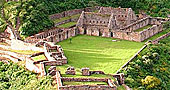


“Two Wonders, One Amazing Trek”
Tour Highlights
Choquequirao Archaeological Complex, Inca Trail Network, Machu Picchu
- Tour starts and ends in Cusco
- Departs daily, minimum 2 trekkers
- Complete 8-day trek with acclimatization
- All camping equipment and meals included
- Visit two major Inca citadels
Choquequirao to Machu Picchu Trek 11 Days
“Journey through Peru’s most remote wilderness connecting two legendary lost cities: the rarely visited Choquequirao, Machu Picchu’s sacred sister, and the iconic citadel itself. This is trekking for true adventurers…” BOOK NOW
Starting point : Cusco, Peru
Ending point : Cusco, Peru
Duration : 11 days
Activities : Extreme Trekking, Archaeological Exploration, Wilderness Camping, Cultural Immersion, Wildlife Observation
Airfares : Not included (Cusco domestic connections available upon request)
Highlights : Choquequirao archaeological complex (“Cradle of Gold”), Apurimac Canyon depths, Victoria Mine silver site, Salkantay Glacier views, Llactapata ruins, Machu Picchu sunrise
Trip Code : 11CHOQ
Price includes all credit card transaction fees and taxes
Experience Peru’s ultimate trekking adventure connecting two of the greatest Inca archaeological treasures ever discovered. This challenging 11-day expedition takes you deep into the remote Vilcabamba mountain range to Choquequirao (“Cradle of Gold”), a massive Inca city three times larger than Machu Picchu yet visited by fewer than 50 people daily. From this spectacular ruin perched 1,800 meters above the raging Apurimac River, traverse pristine wilderness across dramatic mountain passes, descend into subtropical valleys, and ultimately arrive at Machu Picchu itself. This is trekking for serious adventurers seeking solitude, pristine nature, and archaeological wonders far from tourist crowds.
Planning questions (difficulty, best months, entrance fees, route status) are answered in our Choquequirao trek guide.
Choquequirao to Machu Picchu Itinerary
11 days
(B)=Breakfast ; (L)=Lunch ; (D)=Dinner
Day 1 : Cusco Arrival and Acclimatization
Welcome to Peru! Upon arrival at Cusco’s Alejandro Velasco Astete International Airport (3,400m / 11,150ft), our representative greets you in the arrivals hall and transfers you to your comfortable hotel in the historic city center. After a brief orientation tour of the stunning Plaza de Armas—considered one of South America’s most beautiful main squares, surrounded by colonial churches and Inca stone walls—you’re free to explore independently or rest. We strongly recommend taking this afternoon easy to begin acclimatizing to Cusco’s altitude. Wander the cobblestone streets lined with boutique shops and cafes, visit the San Blas artisan quarter, or simply relax at your hotel drinking coca tea, a traditional Andean remedy for altitude adjustment. Avoid alcohol and heavy meals on your first day. Overnight at your hotel in Cusco. This crucial acclimatization day significantly improves your trekking performance and enjoyment.
Day 2 : Cusco Free Day for Acclimatization (B)
Today is dedicated to further altitude acclimatization and final trek preparations. After breakfast at your hotel, you’re free to explore Cusco at your own pace. We recommend visiting some of the city’s remarkable Inca and colonial sites: the Cathedral with its famous Last Supper painting featuring guinea pig, Qoricancha (Temple of the Sun) where Inca gold walls once dazzled Spanish conquistadors, or the nearby Sacsayhuaman fortress with its megalithic stones weighing up to 200 tons. Alternatively, take a taxi to the colorful San Pedro Market to sample local fruits, fresh juices, and purchase last-minute trekking snacks. In the evening at 6:00 PM, attend the mandatory pre-trek briefing at our Cusco office where you’ll meet your guide, receive detailed day-by-day itinerary information, discuss equipment, and ask any final questions. This is also when you’ll be weighed to ensure fair distribution of loads among pack animals. Return to your hotel for a final comfortable night before your wilderness adventure begins. Overnight in Cusco.
Day 3 : Cusco – Cachora – Chiquisca (B,L,D)
Your epic trek begins at 5:30 AM with pickup from your Cusco hotel. Board a private bus for the scenic 4-hour drive westward through the Sacred Valley, passing traditional Andean villages where farmers still use ancient agricultural techniques. Arrive at the remote mountain town of San Pedro de Cachora (2,850m / 9,350ft), the last settlement before entering true wilderness. Meet your complete support crew—professional cook, assistant cook, porters, and muleteers who will accompany you for the next 8 days. After introductions and a hearty breakfast, begin your descent into the Apurimac Canyon, one of Peru’s deepest gorges. The trail drops steeply through agricultural terraces and eucalyptus groves for 3 hours to the viewpoint at Capuliyoc (2,900m), where the first breathtaking panorama of snow-capped peaks and the canyon depths unfolds. Stop for a delicious lunch prepared by your camp cook, then continue descending another 3 hours through changing vegetation zones to reach Chiquisca camp (1,930m / 6,332ft) beside the roaring Apurimac River. As evening approaches, watch condors soaring on thermals rising from the canyon. Your tents are already erected and hot dinner awaits. Trek distance: 14 km, approximately 6 hours descent.
Day 4 : Chiquisca – Choquequirao (B,L,D)
After a fortifying breakfast, today’s challenging climb rewards you with arrival at one of Peru’s greatest archaeological treasures. The trail ascends relentlessly from the Apurimac River for 4 hours, gaining over 1,200 meters in elevation through increasingly hot and exposed terrain. Take your time, stay hydrated, and use trekking poles to reduce knee strain. Upon reaching the farming community of Marampata (2,850m / 9,350ft), enjoy a well-deserved lunch with spectacular valley views. The final 2-hour section traverses Inca agricultural terraces that supplied food to Choquequirao’s residents five centuries ago. Arrive at your camp (3,050m / 10,007ft) located on the edge of the archaeological complex around 4:00 PM. As the afternoon sun illuminates the ruins in golden light, enjoy your first views of this massive site—only 30% excavated, yet already revealing plazas, temples, terraces, and residential sectors spread across multiple levels. This evening, you’re among perhaps 10-20 people spending the night at this remote wonder, compared to 5,000+ daily visitors at Machu Picchu. The solitude is extraordinary. Trek distance: 12 km, approximately 7 hours ascent.
Day 5 : Choquequirao – Maizal (B,L,D)
Wake at dawn for a magical 2-hour guided exploration of Choquequirao (“Cradle of Gold” in Quechua) before other trekking groups arrive. Your expert guide explains the site’s history, architecture, and astronomical alignments as you visit the main plaza, ceremonial platforms, kallanka (great halls), temple sector, and the famous terraces decorated with white stone llama figures—unique in all of Inca architecture. Built during the reign of Inca Tupac Yupanqui in the late 15th century, Choquequirao served as administrative center, ceremonial site, and fortress controlling the Apurimac region. Archaeological excavations continue revealing new sectors each year. Around 10:00 AM, reluctantly depart this extraordinary place and begin today’s hardest physical challenge. Descend steeply 1,100 meters to Rio Blanco (1,950m) at the canyon bottom, crossing the river on a suspension bridge. After lunch beside the rushing water, begin an equally steep 1,100-meter ascent on the opposite canyon wall through exposed switchbacks. This demanding 3-hour climb tests your endurance, but the knowledge that you’re traveling where few tourists ever venture makes it worthwhile. Reach Maizal camp (2,950m / 9,678ft) around 5:00 PM for a deserved rest. Trek distance: 18 km, approximately 8-9 hours.
Day 6 : Maizal – Yanama (B,L,D)
Today’s trek takes you deeper into the remote Vilcabamba range through landscapes that have changed little since Inca times. After breakfast, climb steadily for 3 hours through high-altitude grasslands (puna ecosystem) where you might spot vicuñas grazing—wild relatives of alpacas with incredibly fine wool. The trail crests a ridge near the abandoned Victoria Mine (4,000m / 13,123ft), where silver ore was extracted in the early 20th century under brutal working conditions. Your guide explains the mine’s history while you explore the weathered structures and enjoy 360-degree mountain panoramas. This is your highest point today. Lunch is served at this dramatic location before beginning a long, gradual descent through changing vegetation zones. The trail drops through cloud forest rich with bromeliads, ferns, and the first orchids you’ve seen on the trek. After 4 hours of descending, arrive at Yanama valley (3,600m / 11,811ft), a remote farming community where locals maintain traditional Andean lifestyles. Your camp is established in a meadow beside a mountain stream. This is one of the trek’s most beautiful campsites, surrounded by peaks and pastoral tranquility. Trek distance: 16 km, approximately 7-8 hours.
Day 7 : Yanama – Totora – Collpapampa (B,L,D)
Enjoy a relatively moderate day after yesterday’s challenges. The trail today mostly descends, allowing you to appreciate the incredible biodiversity as ecosystems transition from high grasslands to cloud forest to subtropical vegetation. Trek gradually downhill for 4 hours through increasingly lush landscape where hanging moss drapes from trees, colorful tanagers flit through branches, and if you’re fortunate, you might glimpse the elusive spectacled bear foraging for bromeliads. Stop for lunch at the small settlement of Totora (2,900m / 9,514ft), where locals may offer fresh fruit or coca leaves. After lunch, continue descending another 3 hours through coffee and banana plantations to reach Collpapampa village (2,900m / 9,514ft). This small community has a basic shop where you can purchase beverages, chocolate, batteries, and other supplies if needed. Your camp is established on the village edge with views across the valley. The warmer climate at this lower elevation feels tropical compared to the high passes you’ve crossed. Trek distance: 14 km, approximately 7 hours mostly downhill.
Day 8 : Collpapampa – La Playa (B,L,D)
Today is the trek’s easiest day, allowing tired legs to recover before tomorrow’s climb. The well-maintained trail descends gently for 5 hours through lush subtropical forest and agricultural valleys. This region produces some of Peru’s finest organic coffee, and you’ll pass numerous small farms where families process beans using traditional methods. Stop at one farm for a fascinating demonstration of the coffee production cycle from cherry to roasted bean, with the opportunity to sample fresh-brewed cups. The trail also passes through granadilla (passion fruit) plantations and avocado groves. Around midday, reach the beautiful La Playa area (2,200m / 7,218ft) beside the Santa Teresa River, where swimming in natural pools offers refreshing relief. Your camp is established in this tropical setting surrounded by banana plants and butterflies. This is the perfect afternoon to relax, wash trekking clothes in the river, journal about your adventures, or simply appreciate how far you’ve traveled from the Apurimac Canyon depths to this lush valley. Trek distance: 10 km, approximately 5 hours easy walking.
Day 9 : La Playa – Lucmabamba – Llactapata – Aguas Calientes (B,L,D)
Begin your final full day of trekking with a 3-hour ascent through coffee plantations and cloud forest to the village of Lucmabamba (2,000m / 6,562ft). From here, continue climbing steeply for 2 hours through dense vegetation to reach the archaeological complex of Llactapata (2,840m / 9,318ft), a rarely visited Inca site rediscovered in 2003. This impressive complex features beautifully preserved agricultural terraces, ceremonial platforms, and residential structures aligned with astronomical precision. From Llactapata’s upper terraces, weather permitting, enjoy your first distant view of Machu Picchu across the Urubamba valley—a magical moment few trekkers ever experience. After your guide explains Llactapata’s significance as an administrative and ceremonial center on the Inca road network, descend steeply for 2 hours to the Hydroelectric station (1,900m / 6,234ft) in the Aobamba valley. A hot lunch revives your energy before the final 3-hour walk along railway tracks through the Urubamba Canyon to Aguas Calientes (2,040m / 6,693ft), the gateway town to Machu Picchu. The trail hugs the river through lush jungle where orchids bloom on tree trunks. Arrive in Aguas Calientes around 5:00 PM and check into your hotel for a well-deserved hot shower and comfortable bed after 7 nights of camping. Celebrate your trek completion over dinner at a local restaurant. Trek distance: 16 km, approximately 8-9 hours.
Day 10 : Aguas Calientes – Machu Picchu – Cusco (B)
Today you experience the culmination of your 8-day wilderness trek: sunrise at Machu Picchu. Wake at 4:00 AM and either hike the steep stone staircase for 45 minutes (free) or board one of the first buses at 5:30 AM for the 25-minute zigzag ascent to the entrance gate. Enter the archaeological site as dawn illuminates the ancient city and morning mist rises from the surrounding jungle-clad peaks. For the next 2 hours, your expert guide leads a comprehensive tour of Machu Picchu (2,430m / 7,972ft), visiting the Temple of the Sun with its precisely carved ceremonial windows, the Intihuatana solar clock where Incas symbolically “tied the sun” during winter solstice rituals, the Room of Three Windows overlooking the Urubamba gorge, the royal residence sector, and the agricultural terraces that supplied food to the city’s residents. Learn about current theories regarding Machu Picchu’s construction around 1450 CE, its purpose as a royal estate and ceremonial center, and its mysterious abandonment just a century later. After the guided tour, enjoy free time to explore independently, hike to the Sun Gate for a different perspective, or simply sit contemplating the incredible journey that brought you here from Choquequirao’s remote wilderness. Descend to Aguas Calientes by bus or on foot for lunch (not included), then board the Expedition train at 2:55 PM for the scenic return through the Urubamba canyon to Ollantaytambo. Transfer by private vehicle to Cusco, arriving at your hotel around 7:00 PM. Our services conclude with your arrival.
Day 11 : Cusco Departure (B)
After breakfast at your hotel, enjoy free time for last-minute souvenir shopping in Cusco’s artisan markets or visiting any sites you missed earlier. At the appropriate time based on your flight schedule, transfer to Alejandro Velasco Astete Airport for your onward journey. If your flight departs late afternoon or evening, consider optional activities like visiting Sacsayhuaman fortress, exploring the San Blas neighborhood, or taking a cooking class to learn Peruvian culinary techniques. Trip extensions to other Peruvian regions (Amazon rainforest, Lake Titicaca, Arequipa and Colca Canyon) or additional days in Lima can be arranged. This marks the end of our services. We hope your Choquequirao to Machu Picchu trek has created memories that will last a lifetime. ¡Buen viaje!
Choquequirao to Machu Picchu Trek Inclusions
- Airport transfers in Cusco (arrival Day 1 and departure Day 11)
- 3 nights accommodation in Cusco in hotel of your choice (Days 1, 2, and 11)
- 1 night accommodation in Aguas Calientes in hotel of your choice (Day 9)
- Complete 8-day Choquequirao to Machu Picchu trek package (Days 3-10)
- Professional English/Spanish-speaking trekking guide certified in wilderness first aid
- Full support crew: cook, assistant cook, porters, and muleteers
- Pre-trek briefing at Cusco office on Day 2 evening
- Private transport Cusco to Cachora trailhead (Day 3)
- All meals during 8-day trek: 8 breakfasts, 8 lunches, 7 dinners
- Vegetarian, vegan, and gluten-free options available (advise at booking)
- Quality camping equipment: 4-season tents (2 person capacity), dining tent, kitchen tent
- Personal sleeping pad (thick foam mattress)
- Toilet tent with biodegradable waste management system
- Pack animals (horses/mules) to carry all camping equipment and food
- Personal porter allowance: 10kg per trekker (carried by pack animals)
- Emergency oxygen cylinder and comprehensive first aid kit
- Satellite phone for emergency communication in remote areas
- Entrance ticket to Choquequirao archaeological site
- Entrance ticket to Machu Picchu (Circuit 2: Classic route)
- Professional 2-hour guided tour of Machu Picchu
- Round-trip bus ticket Aguas Calientes to Machu Picchu
- Expedition train ticket Aguas Calientes to Ollantaytambo (afternoon departure Day 10)
- Transfer Ollantaytambo train station to Cusco hotel – bimodal service
- Snacks and hot beverages on trail (coca tea, coffee, hot chocolate)
- 24/7 emergency contact number throughout trek
- Meals as specified in detailed itinerary
Excluded in tour cost
- International round-trip airfare to and from Peru
- Domestic flights to/from Cusco (available upon request: Lima-Cusco approx. $150 USD each way)
- Travel insurance with emergency evacuation coverage
- Personal trekking gear: backpack, sleeping bag, trekking poles, hiking boots
- Sleeping bag rental (available: $35 USD for 8 days, rated to -10°C)
- Trekking poles
- Single tent accommodation
- Lunch in Aguas Calientes on Day 10 (approx. $15-25 USD)
- Optional train upgrade Aguas Calientes to Cusco
- Tips and gratuities for guide and support staff
- Personal expenses: snacks, bottled water, alcoholic beverages, souvenirs
- Meals in Cusco beyond those specified (Days 1, 2, 11)
Note: Pack animals carry all camping equipment, food, and cooking supplies. Your personal porter allowance is 10 kilograms (including sleeping bag if renting). We strongly recommend bringing only essential items. If you plan to carry photography equipment or extra clothing beyond 10kg, request an additional mule, allowing you to trek with just a lightweight daypack containing water, snacks, sunscreen, and rain gear. This is highly recommended if you’ve never hiked at high altitude for consecutive days.