
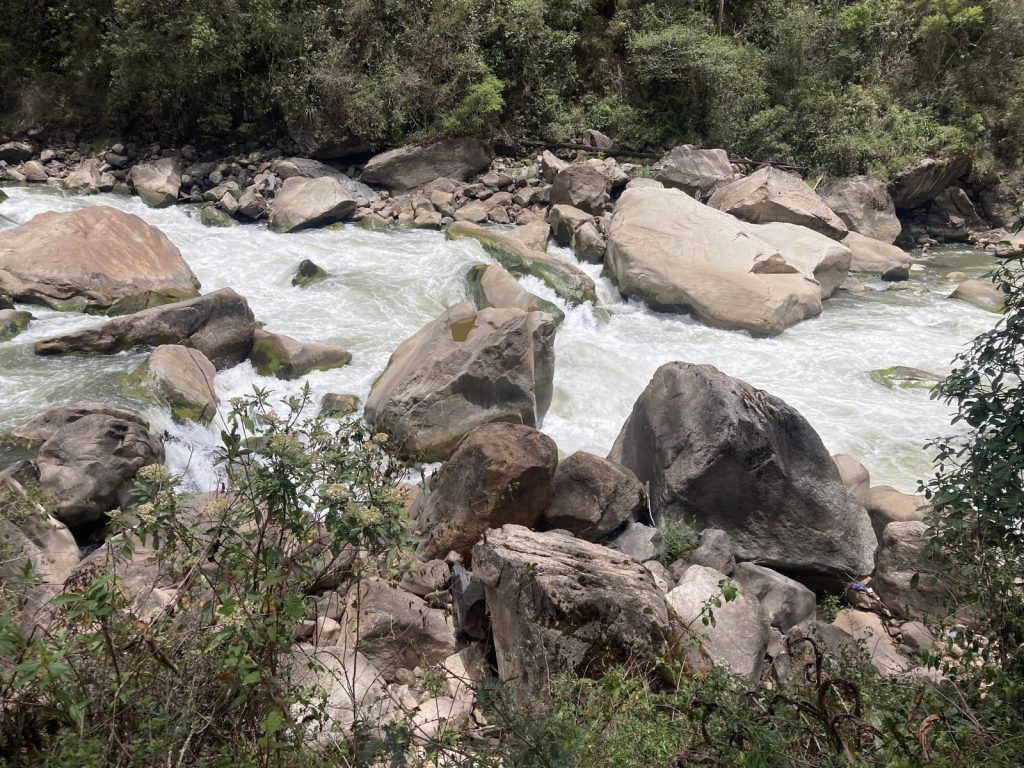
Aguas Calientes, also called Machu Picchu Pueblo, is the small town at the base of the citadel and the last stop before the ruins. There are no roads in or out. You arrive by train or, if you’re trekking the Inca Trail, on foot, and the town exists almost entirely to feed, house, and shuttle the travelers passing through on their way up the mountain.
Where you stay here shapes your whole visit more than most travelers expect. A hotel a five-minute walk from the bus queue means an extra hour of sleep before your entry window; a noisy room over the train tracks can wreck a night before an early climb. This guide breaks down aguas calientes hotels by budget, mid-range, and luxury, so you can match a place to what you actually need.
Aguas Calientes at a Glance
The town sits in a narrow cloud-forest gorge at about 2,040 meters (6,700 ft), over 1,300 meters lower than Cusco, so the air feels noticeably warmer, wetter, and easier to breathe. It’s compact and entirely pedestrian: two main streets, Avenida Imperio de los Incas and Avenida Pachacutec, run parallel to the Urubamba River and the rail line, and you can walk from one end of town to the other in about fifteen minutes.
Everything a visitor needs is packed into that small footprint: the train station, the bus terminal for the ride up to the ruins, a covered artisan market, dozens of restaurants along Pachacutec, and the hot springs at the north end of town that gave the town its name (aguas calientes means “hot waters”). Because the whole town is walkable, the difference between hotels usually comes down to noise, view, and how close you are to the plaza and the bus queue, not how far you have to travel.
- No roads connect Aguas Calientes to the rest of Peru: arrival is by train (PeruRail or IncaRail) or on foot via the Inca Trail.
- The bus queue for Machu Picchu forms early, especially in dry season, so hotels within a few minutes of the terminal have a real advantage.
- The town is small enough that even a “far” hotel is rarely more than a 10–15 minute walk from the plaza.
The town runs on tourism, which shapes both the good and the less convenient parts of staying here. Restaurants and shops cater almost entirely to travelers passing through, so English menus and ATMs are easy to find, but prices for food and basic goods run higher than in Cusco since everything has to arrive by train. It also means the town empties out noticeably once the last afternoon trains leave. Evenings are quiet, which most visitors are glad for after a long day at altitude.
Weather is worth planning around too. Because Aguas Calientes sits in a cloud forest rather than the high, dry puna above it, rain is more common here than in Cusco or on the trail itself, even in dry season. A hotel with covered walkways or an awning over the entrance is a small comfort that matters more than it sounds like on a wet evening.
Budget
Budget accommodation in Aguas Calientes typically runs roughly $20–50 per night. At this level you’re generally looking at simple hostels and family-run guesthouses: small rooms, sometimes a shared bathroom at the lower end, and hot water that can be inconsistent depending on the property’s water heating setup. Breakfast is often not included, though many budget places sit close enough to the market that a cheap breakfast is a short walk away.
The main trade-off at this price point is noise and space, not location. Because the town is so compact, budget hostels aren’t pushed out to some distant edge. You’ll still likely be within walking distance of the plaza and bus terminal. What you give up is soundproofing (rooms near the railway or the market can be lively early in the morning) and room size, plus the small extras mid-range hotels bundle in, like daily housekeeping or an on-site restaurant.
Budget accommodation makes the most sense if you’re treating Aguas Calientes as a one-night stopover: arrive by train, sleep, catch an early bus to the citadel, and head back out the same or next day. If you want a quieter night before an early Machu Picchu entry, it’s worth reading a few recent reviews before booking, since budget properties turn over and change hands more often than the established mid-range and luxury hotels.
A few things are worth checking before you book at this level, since they vary far more between budget properties than between mid-range or luxury ones:
- Whether the bathroom is private or shared, and whether hot water is described as “solar” (can run cold in the evening) or gas-heated (more consistent).
- How close the room is to the train tracks or the main market street, if you’re sensitive to early-morning noise.
- Whether breakfast is included, since many budget hostels charge for it separately or not at all.
Mid-Range
Mid-range hotels typically run roughly $60–150 per night and are where most visitors end up staying. At this level you can generally count on a private bathroom, dependable hot water, breakfast included, and a more comfortable room, often with better sound insulation than the budget tier, which matters if your bus reservation means a 4 a.m. wake-up.
Well-known names in this bracket include El MaPi by Inkaterra, Casa Andina Standard Machu Picchu, Tierra Viva Machu Picchu, Terrazas de Machu Picchu, and Casa del Sol Machu Picchu, along with a long list of smaller three-star hotels along Pachacutec and the streets just above it. Rates and amenities vary by property and season, so treat these as recognizable, established options to compare rather than a fixed price list.
Within mid-range, the biggest practical difference is elevation within the town itself: hotels closer to the river and train tracks tend to be a little noisier but a shorter walk to the bus terminal, while properties set slightly up the hillside are quieter but involve a short set of stairs or a steeper street. If you’re a light sleeper, ask for a room away from the tracks when you book.
This tier is also where you start seeing real differentiation in service, not just room quality: front desks that will store luggage while you’re at the ruins, staff who can help time your bus and train connections, and restaurants attached to the hotel that save you from hunting for a table during the dinner rush along Pachacutec, which gets busy as trains arrive in the early evening.
Luxury
Luxury properties in and around Aguas Calientes typically run roughly $300–800+ per night. The best-known names are Sumaq Machu Picchu Hotel and Inkaterra Machu Picchu Pueblo Hotel, both set on the edge of town along the river, with spa services, guided garden or orchid walks, and restaurants aimed squarely at travelers who want a full resort experience after days on the trail or a long train ride.
One property sits in a different category altogether: Belmond Sanctuary Lodge, the only hotel actually located at the entrance to the Machu Picchu archaeological site itself, not down in town. Staying there means skipping the bus ride entirely and being able to walk into the citadel before the first buses of the day arrive, which is a genuine advantage for photographers and early risers. Room counts are very limited and rates run well above the rest of this tier, so it needs to be booked far in advance, often six months to a year ahead for peak season.
For most travelers, an in-town luxury hotel delivers nearly the same comfort as Sanctuary Lodge at a fraction of the price and lead time, with the only real difference being a short bus ride up the mountain in the morning.
What you’re paying for at this level goes beyond the room itself: private transfers from the train station, dedicated concierge help with entry tickets and guides, spa treatments built around the hot springs the town is named for, and dining that reaches well past the standard tourist-menu options found along the main streets. For a honeymoon, an anniversary trip, or simply the end of a multi-day trek, it’s the tier where the extra cost buys genuine comfort rather than just a nicer bed.
| Tier | Typical Price / Night | What’s Included |
|---|---|---|
| Budget | $20–50 | Simple room, hot water (may vary), often shared bathroom |
| Mid-Range | $60–150 | Private bathroom, breakfast, reliable hot water |
| Luxury | $300–800+ | Full-service resort amenities, spa, on-site dining |
Booking Tips & Train Timing
Two train companies serve Aguas Calientes: PeruRail and IncaRail. Most travelers board in Ollantaytambo, about 90 minutes away by rail; a smaller number board further out at Poroy, near Cusco, on a longer and more expensive route. Whichever you book, match your train times to your hotel check-in and your Machu Picchu entry window before you lock in dates, because a late-arriving train and an early-morning citadel entry can mean a very short night.
Book your train and your hotel together, and do it early if you’re traveling in dry season (roughly May through September), when demand is highest and trains sell out well ahead of the date. Trains also tend to fill fast around late June, when Cusco’s Inti Raymi festival pulls extra visitors into the region. In shoulder and rainy season, you generally have more flexibility and softer pricing across every tier.
Luggage matters more than people expect: trains generally limit what you can bring into the carriage to a daypack-sized bag, so if you’re arriving with a large suitcase, check your train operator’s current luggage policy before you travel, and plan to leave bulkier bags in Cusco or Ollantaytambo rather than trying to bring them into Aguas Calientes.
How far ahead you should book depends heavily on which tier you’re aiming for. Budget hostels can often be booked just days ahead outside peak months, since new listings turn over quickly. Mid-range hotels are safest booked several weeks out in dry season, since the well-known names fill first. Luxury properties, and Belmond Sanctuary Lodge in particular, are the exception: those rooms are limited enough that waiting until the last month can mean nothing is available at any price.
Check-in and check-out timing is another detail worth confirming directly with your hotel rather than assuming. If your bus ticket to Machu Picchu is for early morning and your train doesn’t arrive until the evening before, ask whether the hotel can hold a room ready rather than making you wait for a standard afternoon check-in. Most smaller properties will accommodate this if you mention it in advance.
Staying overnight instead of doing Machu Picchu as a same-day trip from Cusco has a real payoff: you can catch one of the first buses up at dawn, before the bulk of day-trippers arrive, and because the whole town is walkable, checking in, dropping your bag, and getting to the bus terminal the next morning takes minutes, not an extra taxi ride. If a smoother citadel visit matters as much as where you sleep, it’s worth pairing your hotel choice with our guides to Machu Picchu tickets and the different Machu Picchu circuits, since both affect what time you’ll need to be at the bus stop.
For the full planning picture (permits, the citadel itself, and how Aguas Calientes fits into a broader Machu Picchu trip), see our Machu Picchu guide. And if you’d rather have transport, guiding, and hotel logistics handled for you, our Machu Picchu full-day tour bundles the train, bus, and entry into a single booking.