
Salkantay trek guide: route, difficulty and altitude
The Salkantay Trek is a 5-day, 74 km walk from the high Andes west of Cusco to Machu Picchu. It crosses the Salkantay Pass at 4,650 m (15,256 ft) under the glaciers of Salkantay Mountain, then drops about 2,600 m through cloud forest to Aguas Calientes. No trekking permit is needed, and the route stays open in February, when the Inca Trail closes.
The hard part is one day: Day 2, when you climb about 750 m from Soraypampa camp to the pass, usually before noon, then descend 1,750 m toward the cloud forest. Everything else is a long downhill and a flat walk along the railway. This guide covers the route day by day, how hard it really is, the altitude, the best months and what to pack. We run this trek from our Cusco office, so the camp names, start times and phone-signal notes below come from our own departures.
Salkantay Trek Quick Facts
- Duration: 5 days / 4 nights (standard route)
- Distance: 74 km (46 miles)
- Highest Point: Salkantay Pass, 4,650 m (15,256 ft)
- Difficulty: Moderate to challenging (one hard day at altitude)
- Permits Required: None (only Machu Picchu entry)
- Best Season: May through October
What Is the Salkantay Trek?
The Salkantay Trek is a 5-day, 74-kilometer hiking route through Peru’s Andes mountains that crosses the 4,650-meter Salkantay Pass before descending through cloud forest to Machu Picchu. Unlike the permit-restricted Inca Trail, the Salkantay route is open year-round and requires no trekking permit. The trek is named after Salkantay Mountain (6,271m), the highest peak in the Vilcabamba range and a sacred “Apu” (mountain spirit) in Andean culture.
Key answers at a glance: The Salkantay Trek takes 5 days and covers about 74 kilometers, crossing a 4,650-meter mountain pass on Day 2. No trekking permit is required, only a Machu Picchu entry ticket. A guide is not legally required, but most trekkers go with one. The leg-by-leg distances and camp altitudes are on our Salkantay Trek distance and elevation page.
How the Salkantay Trek Compares with the Inca Trail
The Inca Trail is the trek most people ask about first, and for good reason. The Salkantay Trek gives you three things it cannot: dates without a permit quota, two days under a glaciated peak, and a descent from glacier to coffee farms in four days of walking.
No Permit Limits, No Booking Stress
Peru’s Ministry of Culture limits Inca Trail access to 500 people per day. This includes guides and porters, leaving roughly 200 spots for trekkers. During peak season (June-August), permits sell out 4-6 months in advance. Miss that window and the Inca Trail is off the table for those dates.
The Salkantay Trek operates without these restrictions. No permits required beyond your Machu Picchu entry ticket. You can book weeks before departure, even during high season. February brings another advantage: the Inca Trail closes entirely for maintenance while the Salkantay remains open.
This accessibility does not diminish the experience. It removes the bureaucratic lottery that frustrates so many travelers planning Peru trips.
Closer Mountain Scenery
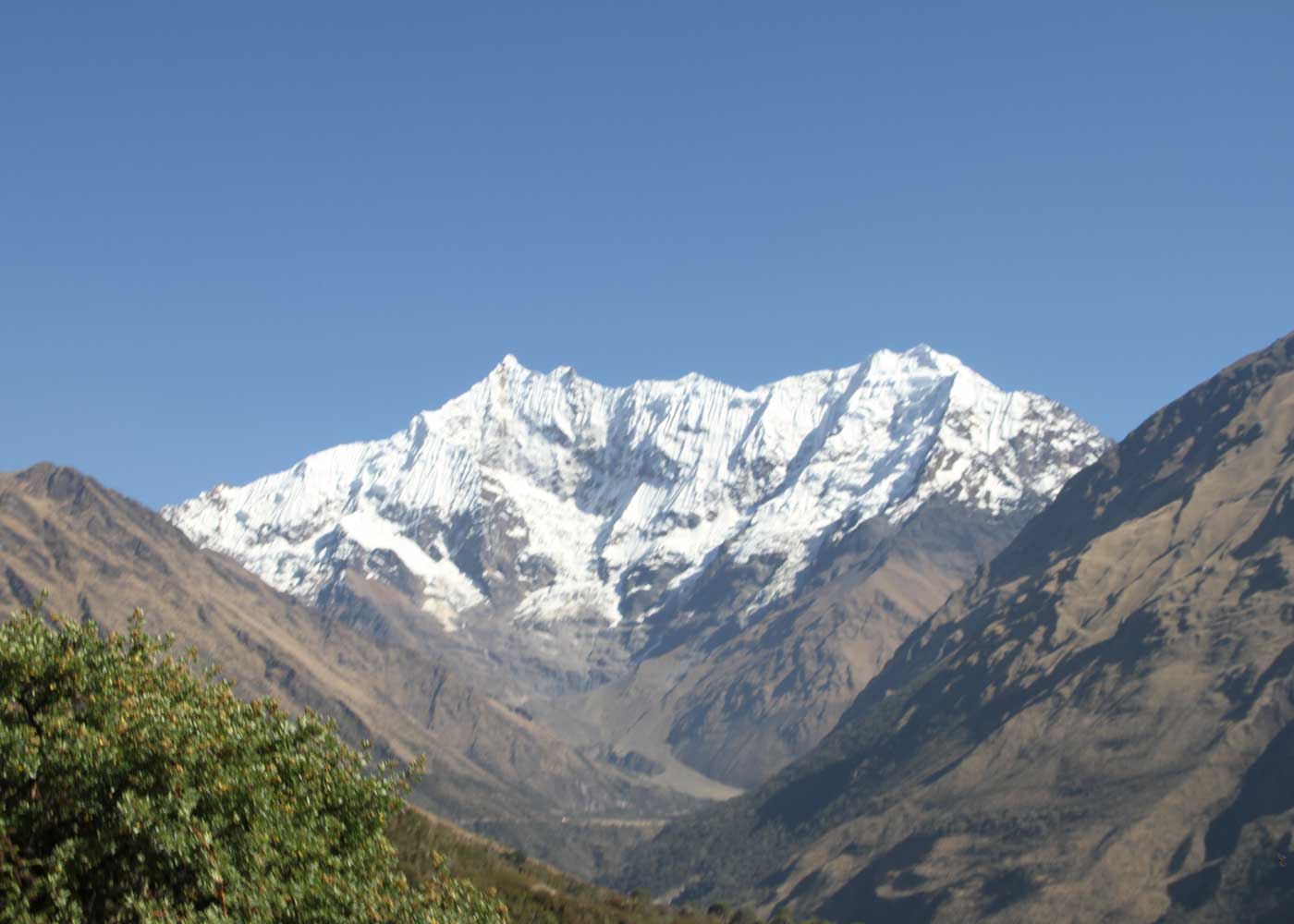
The Inca Trail winds through Andean valleys and cloud forest past Inca sites. The Salkantay Trek places you directly beneath the highest peak of the Cordillera Vilcabamba. At 6,271 meters, Salkantay fills the view for two full days of trekking.
You walk toward the mountain on Day 1, camp at its base, then cross the pass on its southern flank. The glacier face towers above the trail. On clear mornings, the ice glows pink at sunrise. This proximity to a major Andean peak creates photo opportunities the Inca Trail cannot match.
Beyond the mountain, the route traverses more diverse terrain. High alpine grasslands give way to cloud forest. Cloud forest descends into subtropical jungle. You experience multiple climate zones, each with distinct vegetation, wildlife, and atmosphere.
The Same Destination, Different Journey
Both treks end at Machu Picchu. The difference lies in the journey and in how you arrive.
The Inca Trail approaches Machu Picchu from the east, entering through the Sun Gate (Inti Punku) above the ruins. The Salkantay Trek approaches from the west, reaching Aguas Calientes town before a morning bus ride to the citadel. You miss the Sun Gate entrance but gain glacier views and ecological variety the Inca Trail lacks.
Neither trek is “better.” Choose the Inca Trail for ruins and the Sun Gate, Salkantay for glaciers and flexible dates. Our Salkantay Trek vs Inca Trail comparison sets the two side by side, and the Machu Picchu guide covers the citadel itself.
Salkantay Trek: Pros and Cons
Pros:
- No permit required (only Machu Picchu entry ticket)
- Two days of close glacier views beneath Salkantay (6,271 m)
- Diverse ecosystems from glacier to jungle
- Available year-round, including February when the Inca Trail closes
- Usually costs less than the Inca Trail, since there is no permit to buy
Cons:
- No Sun Gate entrance to Machu Picchu
- Day 2 is physically demanding (22 km with a 4,650 m pass crossing)
- Cold temperatures at high camps (-5 to 5C overnight)
- Less archaeological content along the route than the Inca Trail
Salkantay Trek Route Overview
Understanding the route helps you prepare mentally and physically for what lies ahead. The classic 5-day Salkantay Trek covers 74 kilometers of varied terrain, with one significant mountain pass and major elevation change throughout.
The Classic 5-Day Route
The classic start is Mollepata, a village at 2,900 meters about 3.5 hours by road from Cusco. Most groups now drive on past Mollepata to the trailhead at Challacancha (3,380 m) and walk up to Soraypampa base camp at 3,900 meters, which is why published trek lengths differ. The following morning brings the climb to Salkantay Pass at 4,650 meters.
After crossing the pass, the route descends steeply. Over three days, you drop from high alpine environment to subtropical jungle, losing about 2,600 meters of elevation. The trek ends in Aguas Calientes, the gateway town to Machu Picchu.
Route Statistics
- Starting elevation: 2,900m (Mollepata)
- Maximum elevation: 4,650m (Salkantay Pass)
- Ending elevation: 2,040m (Aguas Calientes)
- Total distance: about 74 km from Mollepata (about 69 km from Challacancha)
- Total ascent: approximately 3,000m
- Total descent: approximately 3,800m
Key Waypoints
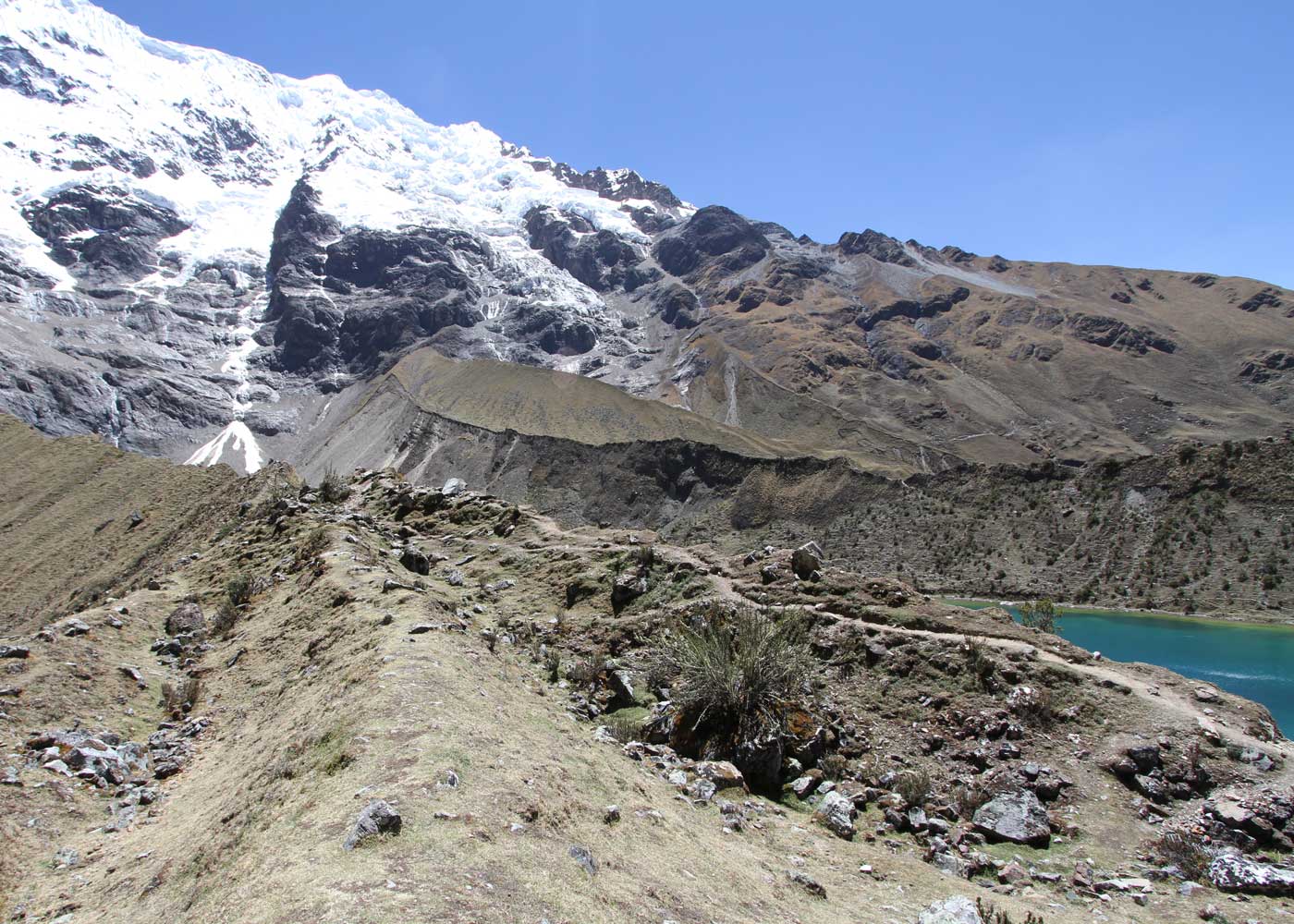
Soraypampa (Day 1 Camp): Base camp beneath Salkantay and Humantay peaks. Optional acclimatization hike to turquoise Humantay Lake (4,200 m).
Salkantay Pass (Day 2): The high point of the trek at 4,650 m. Glacier views, thin air, and stone cairns left by trekkers and local families.
Collpapampa (Day 2 Camp): Descent into warmer, greener terrain. First signs of cloud forest vegetation.
Santa Teresa (Day 3 Area): Coffee plantations, fruit orchards, and the reward of natural hot springs for tired muscles.
Hidroelectrica to Aguas Calientes (Day 4): Flat walk along train tracks through jungle terrain to reach Machu Picchu’s base town.
Alternative Route Options
4-Day vs 5-Day: The 4-day version usually walks the same first two days, then drives part of the way from the Santa Teresa side and goes straight to Aguas Calientes, skipping the third camp and the Llactapata section. You trade one night and some of the cloud forest for a longer Day 3. The 5-day route is the better choice if Day 2 leaves you tired, because Day 3 is then a shorter downhill day.
Lodge-to-Lodge: Mountain lodges with beds and hot showers instead of tents. Daily distances are shorter, some sections use vehicle transfers, and the price is several times that of a camping trek.
Salkantay + Short Inca Trail: Combines Salkantay’s scenic highlights with the final section of the Inca Trail, entering Machu Picchu through the Sun Gate. Requires Inca Trail permits for the final day.
Llactapata Variant: Some operators route the descent through the Llactapata pass and Inca ruins instead of Hidroelectrica. This adds a distant view of Machu Picchu across the valley and more original Inca trail sections, at the cost of a longer, more demanding Day 3-4. Ask your operator whether their itinerary includes Llactapata if this distant Machu Picchu view matters to you.
For the distance, elevation gain and loss of each leg, see the Salkantay Trek distance and elevation data. Dates, price and inclusions for our departures are on the 5-day Salkantay Trek tour page.
Day-by-Day Salkantay Trek Itinerary
Knowing what each day brings helps you pace yourself and anticipate the highlights. Here is what to expect during a standard 5-day Salkantay Trek.
Day 1: Cusco to Soraypampa Base Camp
- Elevation Change: 3,380m (Challacancha) to 3,900m, plus 300m to Humantay Lake
- Hiking Distance: About 7 km, 12 km with Humantay Lake
- Hiking Time: 3-4 hours
- Difficulty: Moderate
Your day begins early with pickup from your Cusco hotel around 4:30 AM. The drive to Mollepata takes approximately 3.5 hours, with a breakfast stop in Mollepata village. Stock up on last-minute supplies here; it is your final chance before the trail.
The hiking portion starts gently, following a dirt road before transitioning to trail. The ascent to Soraypampa feels gradual but steady. Do not rush. This is your acclimatization day, and pushing hard invites altitude sickness.
Upon reaching Soraypampa, most trekkers take the optional side trip to Humantay Lake. This turquoise glacial lake sits at 4,200 meters, adding 300 meters of elevation gain and approximately 2 hours round trip. The effort pays dividends: the lake’s color against the mountain backdrop creates one of the trek’s most photographed scenes.
Evening brings your first camp experience. Watch the sunset paint Salkantay Mountain while the cook team prepares dinner. Temperatures drop quickly after dark, so keep warm layers accessible.
Day 1 Tips
- Drink coca tea throughout the day
- Walk slowly; there is no prize for finishing first
- Take the Humantay Lake side trip if you feel well
- Eat a full dinner even if appetite is reduced
Day 2: Soraypampa to Chaullay via Salkantay Pass
- Elevation Change: 3,900m to 4,650m to 2,900m (+750m, then -1,750m)
- Hiking Distance: 22 km
- Hiking Time: 8-10 hours
- Difficulty: Challenging
This is the big day. Wake before dawn for an early start, ideally reaching the pass during the calm morning hours before afternoon clouds roll in.
The climb begins immediately, following a rocky trail toward the glacier. The final approach to the pass feels relentless, with the altitude making every step an effort. Take frequent short breaks. Drink water constantly. The reward comes at the top.
Salkantay Pass marks the trek’s highest point at 4,650 meters. The glacier looms directly above. Prayer flags flutter in the wind. Take time here; you have earned it.
The pass is not about speed. Most groups spend 20 to 30 minutes here if the wind allows, and guides often pause for a short offering to the Apu. Put on your warm layer before you stop, not after.
The descent proves almost as challenging as the climb. Steep switchbacks demand careful footwork, especially if rain has made the trail slippery. The terrain shifts visibly as you lose altitude. High alpine grassland gives way to shrubs, then to increasingly lush vegetation.
By late afternoon, you reach Chaullay camp at 2,900 meters. The temperature feels almost tropical compared to the morning’s glacial cold. Your body will feel the day’s effort; tomorrow brings gentler terrain.
Day 2 Tips
- Start early (4:30-5:00 AM is common)
- Bring all layers; conditions change rapidly
- Trekking poles essential for the descent
- Pace yourself; this is a long day
Day 3: Chaullay to Santa Teresa
- Elevation Change: 2,900m to 1,900m (-1,000m)
- Hiking Distance: 16 km
- Hiking Time: 6-7 hours
- Difficulty: Moderate
Day 3 brings relief. The trail continues descending through increasingly lush cloud forest. Ferns appear, then orchids. Coffee plants line the path. Banana trees and passion fruit vines indicate the subtropical climate zone you have entered.
The walking remains steady but without the punishing elevation of Day 2. You pass through small communities where locals sell fruit, cold drinks, and snacks. Take advantage of these stops; the fresh pineapple tastes remarkable after days of trail food.
Late afternoon brings the trek’s best reward: natural hot springs. The Cocalmayo hot springs offer several pools at different temperatures, and an hour in them helps legs that have just come down 1,750 m. Most groups spend an hour or more here before continuing to camp.
The Santa Teresa area camp sits at 1,900 meters in noticeably warmer conditions. Mosquitoes may appear for the first time; bring repellent.
Day 3 Tips
- Bring swimsuit for hot springs
- Apply sunscreen; you are lower but still at altitude
- Insect repellent becomes useful
- Enjoy the easier walking
Day 4: Santa Teresa to Aguas Calientes
- Elevation Change: 1,900m to 2,040m (minimal)
- Hiking Distance: 16 km
- Hiking Time: 5-6 hours
- Difficulty: Low (long but flat)
The final trekking day follows relatively flat terrain through jungle and along the railway tracks to Aguas Calientes. The physical challenge is minimal; the day serves as a transition from wilderness to civilization.
Early morning brings the option for zip-lining across the valley near Santa Teresa. This adds an adrenaline spike for those interested.
The walk to Hidroelectrica takes about 3 hours through warm, humid jungle. From Hidroelectrica, you follow the train tracks to Aguas Calientes. This 10-kilometer section takes 2-3 hours at a casual pace. Trains pass occasionally; step aside and let them through.
Arriving in Aguas Calientes feels strange after days in the mountains. Hot showers, restaurant meals, and a real bed await. Most groups enjoy a celebratory dinner together, knowing tomorrow brings Machu Picchu.
Day 4 Tips
- Pack a daypack for the walk; main luggage can be transported
- Bring water; the jungle section is warm
- Enjoy the flat walking after days of climbing
- Get to bed early; tomorrow starts before dawn
Day 5: Machu Picchu Exploration
- Wake-up Time: 4:00-4:30 AM
- Bus to Machu Picchu: 5:30 AM (first buses)
- Guided Tour: 2-3 hours
- Return to Cusco: Afternoon train
The trek’s destination awaits. Early buses carry visitors up the switchback road to Machu Picchu’s entrance. Arriving at sunrise, before the crowds intensify, provides the best experience.
Your guide leads a full tour of the citadel, explaining Inca history, architectural techniques, and the site’s astronomical alignments. Highlights include the Temple of the Sun, Intihuatana stone, and the Room of the Three Windows.
After the guided portion, you have free time to explore independently or attempt the additional climb to Huayna Picchu (requires separate ticket purchased in advance) or Machu Picchu Mountain.
Afternoon trains return you to Ollantaytambo, where transport continues to Cusco. Most arrivals reach Cusco by 8-9 PM.
For detailed information about maximizing your Machu Picchu visit, see our complete Machu Picchu guide.
Salkantay Mountain – The Sacred Apu
The mountain that names this trek deserves understanding beyond its role as scenery. Salkantay holds deep significance in Andean culture and represents one of Peru’s most impressive peaks.
The Vilcabamba Range’s Highest Peak
Salkantay rises to 6,271 meters (20,574 feet), making it the highest peak in the Vilcabamba mountain range and roughly the 12th highest in Peru. Huascaran, Yerupaja, Coropuna and Ausangate all stand taller along the country’s Andean spine.
The name “Salkantay” translates from Quechua as “Savage Mountain” – an apt description given its steep faces and unpredictable weather. Reaching its top is a serious mountaineering objective requiring technical alpine skills, and is entirely separate from the trekking route that crosses the pass below it.
Glaciers cover Salkantay’s upper reaches, though these have receded in recent decades. Peru’s National Institute of Glaciology (INAIGEM) monitors the retreat of the country’s tropical glaciers. The glacier views available today may look different in coming decades.
Spiritual Significance to Andean People
In Andean cosmology, major mountains are “Apus” – powerful mountain spirits that protect local communities and control weather patterns. Salkantay and Ausangate are the two great Apus of the Cusco region.
Local communities still make offerings to Salkantay, particularly before planting and harvest seasons. The mountain influences weather throughout the Sacred Valley; farmers read its cloud patterns to predict rainfall.
When crossing Salkantay Pass, you may notice small stone cairns and offerings left by trekkers and locals alike. Some groups pause for a brief ceremony led by their guide. Even without formal ritual, approaching the mountain with respect honors thousands of years of Andean tradition.
Glacier Views Along the Trek
The Salkantay Trek provides extended glacier viewing opportunities that few treks match. On Day 1, the mountain appears as you approach Soraypampa. Day 2 places you directly beneath its glacier for several hours.
Best viewing conditions occur in early morning before clouds build. The hours between 5:00 and 9:00 AM typically offer clearest skies. Afternoon often brings clouds that obscure the upper mountain.
For photographers, the last hour of sun at Soraypampa camp lights the glacier face from the west. Bring a tripod for long-exposure shots and wide-angle lenses to capture the mountain’s full presence.
Wildlife and Ecosystems Along the Route
The Salkantay Trek’s elevation range, from 4,650 meters down to subtropical jungle, creates habitat diversity most single treks cannot match. High alpine grasslands near the pass support hardy grazing animals and the occasional Andean fox. Keep your eyes on the sky here too: the Vilcabamba range is condor territory, and sightings of these enormous birds circling the thermals near Salkantay are not unusual, though never guaranteed.
As the trail descends into cloud forest after Day 2, the ecosystem changes within a few hours of walking. This zone is part of the spectacled bear’s range, Peru’s only native bear species, though sightings are rare given the animal’s shy, nocturnal habits. More commonly seen are hummingbirds feeding on cloud-forest flowers, along with a striking range of orchid species that bloom along the trail edges. By Day 3, coffee plants, banana trees, and passion fruit vines signal you have reached the subtropical zone described earlier in this guide.
Environmental Responsibility on the Salkantay Trek
The glaciers, cloud forest, and high-altitude grasslands the Salkantay Trek passes through are part of a landscape under real environmental pressure. A technical study on glacier retreat in the Peruvian Andes, published via Peru’s national planning geoportal (CEPLAN), documents a significant multi-decade decline in glacier surface area across the country’s mountain ranges, part of the same body of research tracked in INAIGEM’s technical repository on Andean glacier retreat.
Wildlife along the route also depends on responsible trekking practices. SERNANP, Peru’s National Service of Protected Natural Areas, works to conserve species like the spectacled bear that live in the cloud forest zones the trail descends through, alongside the orchids and hummingbirds mentioned earlier in this guide. Packing out all waste, staying on established trails, avoiding single-use plastics where possible, and choosing operators who follow these same practices all reduce the trek’s footprint on a landscape that is already changing quickly.
Choosing a licensed operator that follows these practices helps ensure the trail, its wildlife, and the communities along the route remain in good condition for the trekkers who come after you.
How Hard Is the Salkantay Trek?
Every prospective trekker asks: “Can I do this?” The honest answer: most reasonably fit people can complete the Salkantay Trek with proper preparation. But “proper preparation” means more than just showing up.
Physical Demands by Day
Day 1: Gentle introduction. About 7 km and 520m of gain from Challacancha to Soraypampa over 3-4 hours. The Humantay Lake side trip adds 300m of climbing at altitude but remains manageable.
Day 2: The crucible. 22 km including a 750m climb to the pass followed by a 1,750m descent. This day tests cardiovascular fitness, altitude tolerance, and mental resilience. Expect 8-10 hours of trekking.
Day 3: Recovery mode. 16 km of mostly downhill walking through forest. Your legs may feel Day 2’s punishment, but the terrain forgives.
Day 4: Cruise control. 16 km of nearly flat walking. More of a long stroll than a challenging hike.
Day 5: Not a trekking day. Walking at Machu Picchu involves stairs and uneven surfaces but nothing approaching trek difficulty.
Overall difficulty rating: Moderate-Challenging. The average fitness day hiker can complete this trek, but only with preparation.
Altitude Considerations
Altitude affects everyone differently. Prior high-altitude experience does not guarantee immunity to symptoms. The Salkantay Trek’s maximum elevation of 4,650 meters puts all trekkers in the “high altitude” zone where altitude sickness becomes possible.
Common altitude sickness symptoms include:
- Headache (most common)
- Nausea and reduced appetite
- Fatigue beyond normal exertion
- Difficulty sleeping
- Shortness of breath at rest
Mild symptoms are normal and manageable. Severe symptoms (confusion, loss of coordination, fluid in lungs) require immediate descent and medical attention.
Fitness level does not predict altitude response. Marathon runners develop severe mountain sickness while sedentary travelers sometimes adjust without trouble, and the factors that matter are hydration, gradual ascent, and paying attention to your body. Research on staged ascent supports the same conclusion: spending two days at moderate altitude before climbing higher roughly halves the incidence of acute mountain sickness (Staab et al., High Altitude Medicine & Biology).
Acclimatization recommendations:
- Spend minimum 2 nights in Cusco (3,400m) before trekking
- Avoid alcohol and heavy meals during acclimatization
- Stay well hydrated (3+ liters daily)
- Consider Diamox (acetazolamide) after consulting your doctor
- Coca tea and coca candies help many trekkers
Fitness Requirements
You do not need to be an athlete. You do need cardiovascular fitness sufficient to hike uphill for extended periods while breathing thin air.
Baseline fitness indicators:
- Can hike 15 km on hilly terrain without extreme fatigue
- Can climb stairs continuously for 20+ minutes
- Can exercise at elevated heart rate for 2+ hours
- No untreated heart, lung, or circulation conditions
If these descriptions do not fit your current fitness, you need training time before booking.
8-Week Training Program Overview
Weeks 1-2: Foundation
- 30-45 minute cardio sessions, 3-4 times weekly
- Walking, jogging, cycling, or elliptical
- Begin with moderate intensity; build consistency
Weeks 3-4: Add Elevation
- Increase cardio to 45-60 minutes
- Add stair climbing or incline treadmill work
- Begin strength training (squats, lunges, core)
Weeks 5-6: Long Days
- Weekly long hike of 4-6 hours
- Include significant elevation gain
- Wear your trekking boots and daypack
Weeks 7-8: Trek Simulation
- Back-to-back hiking days
- Simulate Day 2 conditions if possible
- Taper intensity final week before departure
Acclimatization and Altitude Safety for the Salkantay Pass
The compressed timeline that makes the Salkantay Trek possible in five days is also what makes acclimatization planning matter. Trekkers move from Soraypampa’s 3,900-meter base camp to the 4,650-meter Salkantay Pass in a single push, a gain of roughly 750 meters completed largely before midday on Day 2. According to MedlinePlus, the U.S. National Library of Medicine’s health encyclopedia, gradual ascent is the single most important factor in preventing acute mountain sickness, and travelers above roughly 3,000 meters are generally advised not to increase their sleeping elevation by more than 300 to 500 meters per night.
That guidance is part of why the nights spent at lower camps before and after the pass matter as much as the pass crossing itself. The UK National Health Service notes that most mild altitude sickness resolves with rest, hydration, and avoiding further ascent until symptoms clear, but that worsening symptoms, confusion, or breathlessness at rest call for immediate descent rather than pushing through.
Trekkers arriving directly from sea-level cities generally face a higher risk profile than those who have already spent time in the Andes, since acclimatization is a physiological process that fitness alone cannot substitute for. Building in acclimatization time before Day 2, staying hydrated, and treating any headache or nausea as a signal to slow down rather than push past are the practices most consistently linked to a safer crossing of the pass.
Best Time to Trek Salkantay
Peru’s trekking seasons follow predictable patterns. Understanding them helps you choose dates that match your preferences for weather, crowds, and pricing.
Dry Season (May-October): Peak Trekking
The dry season delivers what trekkers want: clear skies, stable conditions, and reliable mountain views. Precipitation drops sharply, trails remain firm, and temperatures are pleasant during hiking hours.
Advantages:
- Best chance for glacier views
- Driest trail conditions
- Most reliable weather forecasting
- Peak operational capacity (all services running)
Considerations:
- Highest demand and prices
- Most crowded trails and camps
- Book 4-6 weeks ahead for preferred dates
Temperature ranges:
- Daytime high camps: 8-15C (46-59F)
- Nighttime high camps: -5 to 5C (23-41F)
- Lower elevations: 15-25C (59-77F)
Shoulder Seasons (April, November)
The transitions between wet and dry seasons offer compelling value. You get reasonable weather with fewer crowds and sometimes lower prices.
April brings receding rains and greening landscapes. Occasional afternoon showers remain possible but rarely ruin trekking days.
November sees the first rains returning. Mornings typically stay dry; afternoon showers become more frequent as the month progresses.
Both months require flexibility and rain gear but reward adventurous travelers with uncrowded trails.
Wet Season (December-March): The Wild Card
Conventional wisdom says avoid the wet season. Reality is more nuanced.
Yes, rain falls daily, usually in afternoon deluges. Trails become muddy. Clouds obscure mountain views more frequently. Some services reduce operations.
But the Salkantay Trek remains open year-round. Lush vegetation peaks during wet months. Waterfalls run at maximum power. And here is the key advantage: February.
The Inca Trail closes every February for maintenance, and in 2025 the closure ran to 31 March after heavy rain (Andina, 31 March 2025). If your dates fall then, Salkantay is the most common multi-day alternative, alongside the Lares Trek. Expect mud below the pass, cloud over the glacier most afternoons, and the occasional landslide on the road to Santa Teresa.
Month-by-Month Quick Reference
| Month | Weather | Crowds | Recommendation |
|---|---|---|---|
| January | Wet (heavy) | Low | For adventurous only |
| February | Wet (heavy) | Low | Best Inca Trail alternative |
| March | Wet (moderate) | Low-Medium | Improving conditions |
| April | Transitional | Medium | Good value month |
| May | Dry | Medium-High | Excellent all-around |
| June | Dry | High | Peak season begins |
| July | Dry | Highest | Book far ahead |
| August | Dry | Highest | Book far ahead |
| September | Dry | High | Excellent conditions |
| October | Dry | Medium-High | Great late-season option |
| November | Transitional | Medium | Increasing rain risk |
| December | Wet (moderate) | Low-Medium | Holiday travelers |
What to Pack for the Salkantay Trek
Packing correctly makes the difference between comfort and misery. The Salkantay Trek’s 2,600 m elevation range means you need gear for freezing alpine conditions and warm jungle humidity.
Clothing Layers
Base layers: Moisture-wicking synthetic or merino wool. Cotton kills comfort when wet. Pack 2-3 tops and 1-2 bottoms.
Insulating layer: Fleece jacket or lightweight down. Needed mornings, evenings, and at high elevations.
Outer shell: Waterproof, breathable jacket and pants. Essential even in dry season for wind protection at the pass.
Hiking pants: Quick-dry material, preferably convertible to shorts. One pair for trekking, one backup.
Accessories: Warm beanie, sun hat with brim, neck gaiter/buff, lightweight gloves, warm gloves for pass day.
Footwear
Hiking boots: Waterproof, broken-in, with ankle support. New boots invite blisters; wear them 50+ miles before the trek.
Camp shoes: Sandals or lightweight sneakers for evening relaxation.
Socks: Wool-blend hiking socks, minimum 3 pairs. Liner socks optional for blister prevention.
Gaiters: Optional but useful in wet season or if expecting stream crossings.
Gear Essentials
Daypack: 30-40 liters to carry daily essentials. Your main bag goes with the porters.
Headlamp: LED with fresh batteries and backup set. Essential for early morning pass day starts.
Trekking poles: Highly recommended. Reduce knee strain on descents and aid balance on uneven terrain.
Water system: Bottles or hydration bladder totaling 2-3 liters capacity. Purification tablets as backup.
Sunglasses: Quality UV protection essential. Snow glare at altitude damages eyes quickly.
Personal Items
Sunscreen: SPF 50+, apply frequently. Altitude intensifies UV exposure.
Insect repellent: Needed lower elevations only, but needed there badly.
Medications: Personal prescriptions plus basic first aid (pain relievers, anti-diarrheal, blister treatment).
Toiletries: Biodegradable soap, toothbrush, small towel, toilet paper, hand sanitizer.
Camera: Whatever you prefer, plus spare batteries. Cold drains battery life quickly.
What a Guided Trek Usually Provides
A guided camping trek normally supplies:
- Sleeping bag (rental available; bring your own if you prefer)
- Sleeping mat
- Tent (2-person, shared)
- Dining tent with tables and chairs
- All meals during trek
- Snacks and hot drinks
- Porter service for main luggage (up to 7 kg personal items)
- Camping equipment
Most Salkantay operators use porters for luggage, but some, particularly on the first two days, use horses or mules instead to carry group equipment and duffel bags over the high pass. Either system keeps your daypack light; ask your operator which they use and how they treat their animals or porters, since welfare standards vary between companies.
Confirm specific inclusions with your operator before packing.
Camping or Lodges: Where You Sleep
Most Salkantay treks camp for three nights and spend the fourth in a hotel in Aguas Calientes. A smaller number of trips use mountain lodges or glass-roofed domes at the same camp areas.
Camping
- 2-person tents, shared with your travel partner or another trekker
- Sleeping mat provided; sleeping bag rented or your own
- Dining tent with camp chairs for meals, and a toilet tent at each camp
- Horses carry the group equipment and your duffel over the pass
- A cook team prepares all meals at camp
Camping is colder: Soraypampa at 3,900 m drops below freezing on clear dry-season nights. In exchange you sleep under the glacier without generators, and the trek keeps its full walking route.
Lodge treks
Lodge treks replace tents with private or shared rooms, beds and hot showers. The lodges sit near the classic camps, but the walking route differs in places and some sections are driven, so daily distances are shorter. Ask for the exact walking distance per day before you compare a lodge trek with a camping trek.
Campsite Quality Guide
Soraypampa: Basic facilities in a high, exposed spot under Salkantay and Humantay. Cold nights at 3,900m.
Chaullay/Collpapampa area: Several camps share this zone at about 2,900 m. Facilities range from basic to good, and nights are much warmer than at Soraypampa.
Santa Teresa / Lucmabamba area: The warmest night. Some camps offer basic hot showers, and the Cocalmayo hot springs are close by.
| Feature | Camping | Lodge trek |
|---|---|---|
| Daily walking | Full route (up to 22 km) | Shorter, some sections driven |
| Physical demand | Moderate to challenging | Moderate |
| Hot showers | Usually no (some at the third camp) | Yes, daily |
| Sleeping | Shared tent | Private or semi-private room |
| Coldest night | Soraypampa, below freezing | Heated rooms at some lodges |
| Price | Lower | Several times higher |
How Much Does the Salkantay Trek Cost?
Guided 5-day camping treks listed on booking sites on 8 October 2026 ranged from about US$360 to US$800 per person, and lodge treks cost several times more. What moves the price is mostly what is included: the Machu Picchu entrance ticket, the return train class, the hotel in Aguas Calientes, group size, and how porters and horsemen are paid.
Before you compare prices, check that each quote includes:
- Transport from Cusco to the trailhead
- All meals on the trail, the cook team and horses for the group equipment
- The Machu Picchu entrance ticket and the bus up from Aguas Calientes
- The hotel night in Aguas Calientes
- The train back to Ollantaytambo and the transfer to Cusco
Costs usually on top: a sleeping bag (rental with us is US$25) and trekking poles (US$30 a pair) if you do not bring your own, tips for the guide, cook and horsemen, travel insurance, and a small community entrance fee collected on the way to Soraypampa and Humantay Lake. The fee is set locally and has changed over the years, so carry a few soles in cash.
Our own price, inclusions and dates are on the Salkantay Trek tour page.
Can You Do the Salkantay Trek Without a Guide?
Yes. Unlike the Inca Trail, no permit or licensed guide is required, and independent hikers walk it every dry season. Families along the route rent rooms and domes and sell meals, so you do not have to carry a tent. The trade-offs are real, though:
- Altitude: you cross 4,650 m on your second day with no one checking your oxygen level or symptoms. The nearest clinic is hours away.
- Navigation: the path to the pass is clear in good weather, but cloud forest sections below Chaullay have side paths, and the pass can close in with snow.
- Logistics: you arrange the trailhead transport, each night’s room, the Machu Picchu ticket for a fixed date and time, the bus and the return train yourself, often in Spanish and with little phone signal.
- Weight: without horses you carry everything over the pass, unless you hire a horse and horseman in Soraypampa.
If you have done multi-day hikes above 4,000 m and speak some Spanish, going independent is reasonable in the dry season. If it is your first time at altitude, a guided trek removes most of the risk. Either way, buy your Machu Picchu ticket before you start.
Permits, Tickets and When to Book
There is no trekking permit and no daily quota for the Salkantay route. The ticket you do need is the Machu Picchu entrance, which is sold for a specific date and entry time and runs out in the dry season; see our Machu Picchu circuits guide for the routes inside the citadel.
- June to August: book 2 to 3 months ahead, mainly to secure the Machu Picchu ticket and the hotel in Aguas Calientes.
- April, May, September, October: 3 to 6 weeks is usually enough.
- November to March: often possible with 2 weeks’ notice, February included.
Phone signal and electricity
Expect no signal at Soraypampa, on the pass or at the Chaullay camps. Signal comes and goes as you descend toward Santa Teresa and is reliable in Aguas Calientes, where most hotels have WiFi. Camps have little or no electricity, so carry a power bank. Tell family you will be out of contact for about three days.
Plan Your Salkantay Trek
Use this guide to decide whether the route suits you. For the numbers, the Salkantay trail data page lists every leg with its distance and elevation. To book, our 5-day Salkantay Trek tour page has the price, inclusions and departure dates. If you are still weighing other routes, compare them in our Peru trekking guide.