
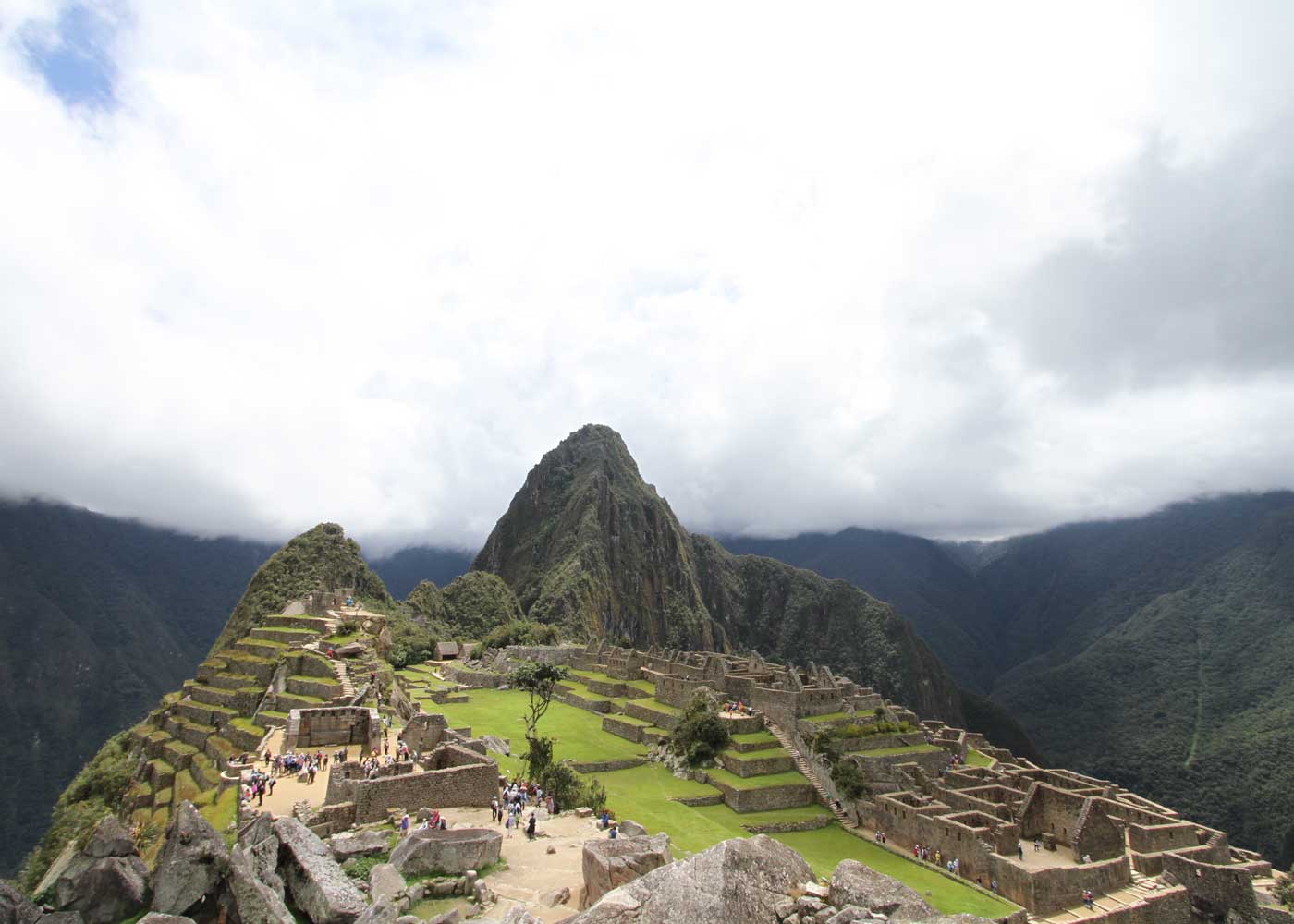
Machu Picchu guide: circuits, treks and how to visit
Machu Picchu stands as the crown jewel of South American travel. This 15th-century Inca citadel, perched 2,430 meters above sea level in the Peruvian Andes, draws over 1.5 million visitors annually (Peru Ministry of Culture, 2024 figures). Most leave forever changed.
This guide distills 15+ years of operational experience guiding travelers to Machu Picchu. We cover everything from securing permits to choosing between the Inca Trail and train options, from understanding the new circuit system to timing your visit for smaller crowds. By the end, you will have a clear plan for experiencing one of humanity’s greatest architectural achievements.
From multi-day treks to scenic train journeys, the moment Machu Picchu emerges from the morning mist will stay with you forever. Here is how to make that moment happen.
What Makes Machu Picchu a World Wonder
A Brief History of the Lost City
Inca Emperor Pachacuti commissioned Machu Picchu around 1450 CE. His architects chose a saddle between two peaks in the Eastern Andes, creating a royal estate that integrated seamlessly with its dramatic natural setting. The site served as both an astronomical observatory and a sacred religious center.
When the Spanish conquered Peru in 1532, they never discovered Machu Picchu. The citadel remained known only to local farming families for nearly 400 years. American historian Hiram Bingham III arrived on July 24, 1911, led by a local farmer named Melchor Arteaga. Bingham’s subsequent excavations and publications brought Machu Picchu to international attention.
UNESCO designated Machu Picchu a World Heritage Site in 1983. In 2007, it was voted one of the New Seven Wonders of the World. The site’s preservation reflects both its remote location and the quality of Inca construction. Massive stone blocks, cut without metal tools and fitted without mortar, have withstood five centuries of earthquakes and tropical weather.
Why 1.5 Million Visitors Come Each Year
According to Peru’s Ministry of Culture, Machu Picchu received over 1.5 million visitors in 2024, making it the most visited archaeological site in South America. The numbers tell only part of the story. Machu Picchu’s appeal runs deeper than its Instagram presence.
Engineering mastery defines the site. Builders carved terraces into a 60-degree mountainside, then constructed an elaborate drainage system that continues to function today. More than 60% of the construction lies underground (according to engineering studies by Kenneth Wright, Wright Water Engineers), providing the foundation for structures above.
Astronomical precision appears throughout. The Intihuatana stone, a carved rock pillar, served as a solar clock. Twice annually, the sun sits directly above the pillar, casting no shadow. The Temple of the Sun contains windows aligned with solstice sunrises.
Natural integration sets Machu Picchu apart from other archaeological sites. The citadel follows the contours of its ridge. Mountain peaks visible from the site correspond to important astronomical events. The Urubamba River, 450 meters below, mirrors the Milky Way as the Incas perceived it.
Spiritual significance persists. The site functioned as a sacred space for astronomical observation, religious ceremonies, and agricultural ritual. Modern visitors often report experiencing a sense of connection they struggle to articulate.
What makes Machu Picchu exceptional is how completely the Incas treated the mountain itself as part of the architecture. Every wall, every terrace, and every drainage channel responds to the landscape rather than imposing on it.
How to Get to Machu Picchu
No road leads to Machu Picchu. You arrive by train or on foot, and unless you hike in on the Inca Trail, the last stretch from Aguas Calientes is a 25-minute bus ride or a steep climb up stone stairs.
- By train: PeruRail and Inca Rail run from Ollantaytambo, in the Cusco region’s Sacred Valley, to Aguas Calientes in 1 hour 20 minutes to 1 hour 45 minutes. One-way fares start at about US$62. From May to December PeruRail also runs a direct train from Poroy, near Cusco.
- On foot: the Classic Inca Trail (4 days, 42 km, permit required, limited to 500 people a day including guides and porters), the Short Inca Trail (2 days from Km 104, also with a permit) or the Salkantay Trek (5 days over the 4,650 m Salkantay Pass, no permit). The Lares Trek visits weaving villages and finishes by train.
- On a budget: a van from Cusco to Hidroeléctrica (6 to 7 hours), then about 2½ hours on foot beside the railway.
- Not by air: helicopter flights to Machu Picchu have been banned since 2010 to protect wildlife in the sanctuary.
Our guide to getting to Machu Picchu covers every route step by step, with the train classes and fares we checked, journey times, luggage limits and the bus up to the entrance.
Skip the logistics and let experts handle your transport, tickets, and guides.
Machu Picchu Tickets and Permits: What You Need
Peru’s Ministry of Culture manages Machu Picchu access through a circuit system introduced to protect the site while improving visitor experience. Understanding the Machu Picchu entrance fee structure and booking timeline saves time and prevents surprises.
Understanding the Circuit System
Since 1 June 2024, Machu Picchu has run three circuits with ten routes between them. Your ticket names one circuit and one route, and you walk only that route. Our Machu Picchu circuits guide covers every route and its time limit.
Circuit 1 (Panoramic) stays on the high terraces by the Guardian’s House, where the classic photo is taken, and never enters the city. Its other routes add Machu Picchu Mountain, the Sun Gate or the Inca Bridge; the terraces-only route (1-B) allows 2 hours 30 minutes.
Circuit 2 (Classic) is the fullest walk through the city: the quarries, the Temple of the Sun viewpoint, the Sacred Plaza with the Temple of the Three Windows, the Sacred Rock and the storehouses. Route 2-B starts from the lower terrace, a lower version of the classic view. Both routes allow 2 hours 30 minutes.
Circuit 3 (Royalty) covers the lower city, including the Temple of the Condor, and is the only way onto Huayna Picchu (Route 3-A). Route 3-B is the flattest walk, and a limited daily 3-B quota is set aside for Inca Trail hikers.
Four of the ten routes open only in high season: the Sun Gate and the Inca Bridge on Circuit 1, and the Great Cavern and Huchuy Picchu on Circuit 3.
Re-entry is not permitted. Once you exit through the turnstiles, your visit ends. Plan accordingly, including bathroom breaks (facilities exist only at the entrance, outside the site).
Ticket Categories and Prices 2026
Current foreigner adult pricing for the Machu Picchu entrance fee (prices change annually). For the latest details, see our guide to Machu Picchu tickets.
| Ticket Type | Price (S/ soles) | Route |
|---|---|---|
| Machu Picchu Only (Circuits 1-3) | S/152 | 1-B, 2-A, 2-B, 3-B |
| Machu Picchu + Huayna Picchu | S/200 | 3-A |
| Machu Picchu + Machu Picchu Mountain | S/200 | 1-A |
| Machu Picchu + Huchuy Picchu | S/152 | 3-D (high season) |
Conservation fee since 1 May 2026: SERNANP, Peru’s protected-areas service, adds S/11 (about $3) for foreign visitors and S/5 for Peruvians to every standard ticket above, collected with the ticket (Resolución Directoral 000006-2026-SERNANP/DUSRN). Entry through the Inca Trail network is exempt.
Reduced rates apply for students with valid ISIC cards, children under 18, and Andean Community residents. Peruvian nationals pay lower fees.
Avoid ticket headaches and last-minute sellouts.
How Far in Advance to Book
Peak season (June-August): Book 2-3 months ahead for standard tickets. Huayna Picchu permits sell out 3-4 months in advance. Inca Trail permits require 6+ months advance booking.
Shoulder season (April-May, September-November): 2-4 weeks advance booking typically sufficient for standard tickets. Mountain permits still require 1-2 months notice.
Low season (December-March): Often available with days or same-week booking. February closures affect Inca Trail (maintenance) but not the site itself.
Where to Buy Official Tickets
Official government portal: tuboleto.cultura.pe – The only authorized online source. Interface requires patience. Payment via Visa credit card.
Licensed tour operators: We and other authorized operators can secure tickets on your behalf, often bundled with tours. This option provides convenience and assistance if issues arise.
Avoid: Third-party websites charging “booking fees” on top of official prices. Unauthorized sellers cannot guarantee legitimate tickets.
Machu Picchu Rules and Regulations 2026
Peru’s Ministry of Culture enforces strict Machu Picchu rules 2026 to protect this World Heritage Site. Knowing these regulations before arrival prevents unpleasant surprises at the gate.
- Maximum visit time: 2 hours 30 minutes on the standard routes, and 3 to 7 hours on routes with a mountain or trail, counted from entry. Guards enforce exit times.
- No re-entry: Once you pass through the exit turnstiles, you cannot return. Plan bathroom breaks before entering (facilities are outside only).
- Backpack size limit: Bags must not exceed 40x35x20 cm (roughly 20 liters). Larger bags require storage at the entrance (paid service).
- Professional cameras and drones: Tripods, monopods, and drones are prohibited without special Ministry permits. Phone and handheld cameras are fine.
- Guides: The visitor regulation recommends a licensed guide rather than requiring one, on every circuit.
- No food inside the citadel: Water bottles are permitted. Snacks consumed discreetly in designated rest areas are generally tolerated, but visible eating is prohibited.
- No touching structures: Leaning on walls, sitting on stonework, or climbing ruins results in removal from the site.
- No umbrellas: Rain ponchos or jackets only. Umbrellas risk damaging stonework in crowded passages.
What to See at Machu Picchu: Must-Visit Highlights
Machu Picchu divides into two main sectors: agricultural (terraces and warehouses) and urban (temples, residences, and plazas). Most visitors have 3-4 hours; here is how to spend them.
The Agricultural Sector
The Terraces (Andenes) cascade down the mountainside in green steps. Beyond their visual impact, these structures served key functions: creating microclimates for crop experimentation, preventing erosion, and storing rainwater. The engineering behind their construction explains why they remain intact after 500+ years.
The Guardhouse (Caretaker’s Hut) sits at the upper terraces’ edge. This thatched-roof structure provides the classic panoramic view you recognize from every Machu Picchu photograph. Arrive early morning for the best light and smallest crowds at this spot.
The Funeral Rock near the Guardhouse may have served for preparing mummies or as an altar for ceremonies. Its flat, carved surface supports various archaeological theories.
The Urban Sector
The Temple of the Sun features the finest stonework at Machu Picchu. This curved tower contains windows aligned with solstice sunrises. Below it lies the Royal Tomb, accessed through a cave-like opening. The precision of stone fitting here rivals anything at Cusco’s Qorikancha.
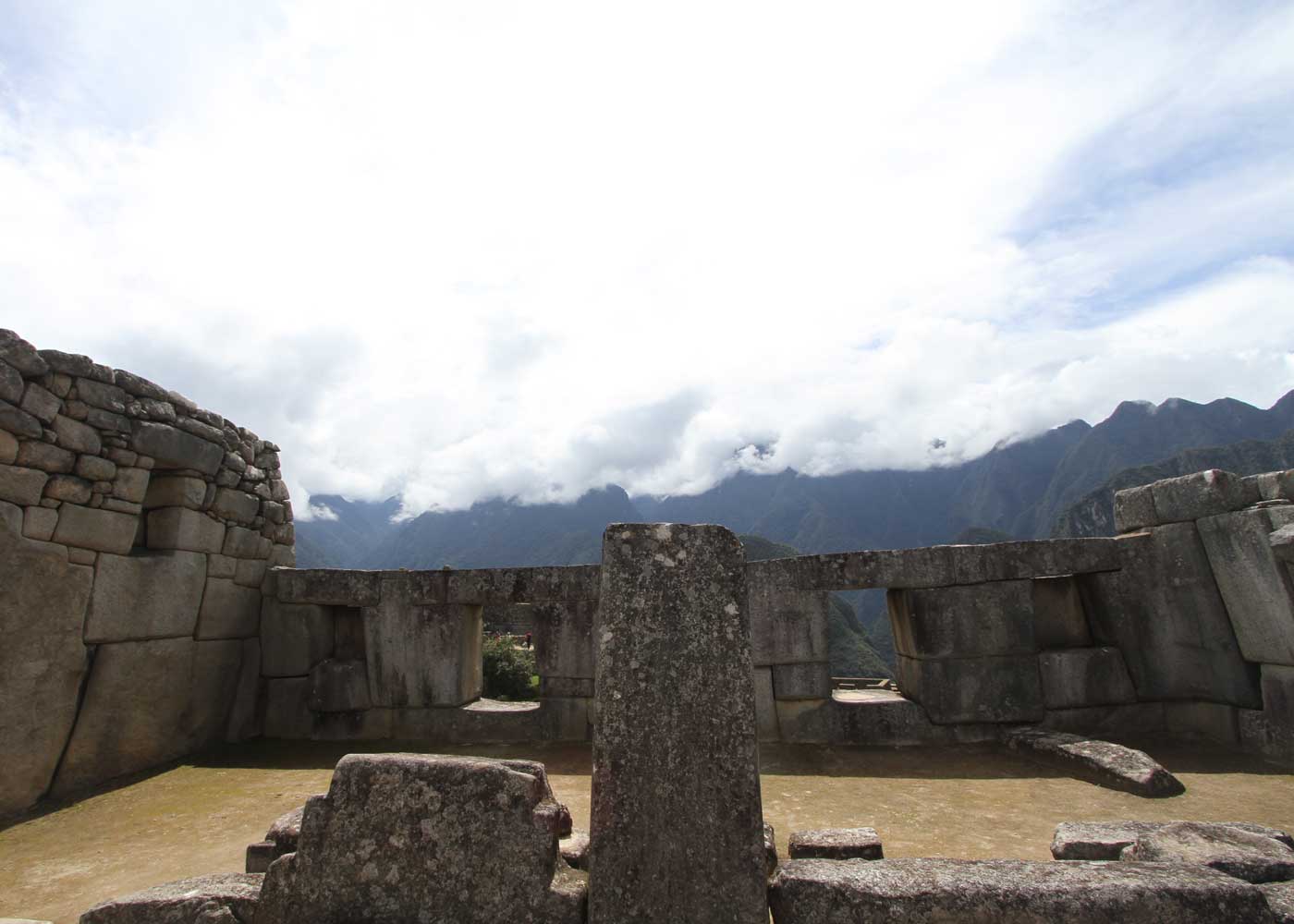
The Room of Three Windows faces east toward the rising sun. According to Inca mythology, these windows represent the caves from which the original Inca ancestors emerged. The trapezoidal openings frame mountain views that change with passing clouds.
The Intihuatana Stone served as an astronomical clock and ritual site. The name translates roughly as “hitching post of the sun.” During equinoxes, the sun stands directly above this pillar, casting no shadow. Spanish conquistadors destroyed similar stones at other Inca sites; this one survived because they never found Machu Picchu.
The Principal Temple suffered earthquake damage visible today. Its massive wall stones show both the scale of Inca ambition and the seismic challenges of building in the Andes. Adjacent lies the Sacristy, a small room with exceptional stonework.
The Sacred Plaza
The Temple of the Condor uses natural rock formations to create a bird shape. A flat stone represents the head and beak; rock outcrops behind form spread wings. Some archaeologists believe this space served for sacrifices; others suggest it functioned as a prison.
The Sacred Rock mirrors the shape of the mountain behind it (Pumasillo). This massive flat stone likely served for ceremonies. Its size and placement indicate spiritual rather than practical purpose.
Photography Spots (Insider Tips)
For a deeper dive into capturing the site, see our Machu Picchu photography guide.
Classic viewpoint timing: The iconic panorama photographs best between 6:00-7:00 AM and 4:00-5:00 PM. Midday sun creates harsh shadows, and tour groups crowd the spot 10:00 AM-2:00 PM.
Sun Gate alternative: If you enter from the Inca Trail, linger at Intipunku (Sun Gate) for dawn views. The citadel emerges from mist below, a perspective few day visitors ever see.
Lower terraces: Descend to the agricultural sector’s lower edge for upward-looking shots that emphasize the mountainside location. Fewer visitors venture here.
Temple of the Sun: Photograph from the adjacent plaza in morning light when sunbeams enter the curved windows.
Huayna Picchu and Machu Picchu Mountain Hikes
The peaks flanking Machu Picchu offer optional hikes with spectacular views. Both require advance booking and add 2-4 hours to your visit. Our Huayna Picchu vs Machu Picchu Mountain guide has current prices, entry hours and closures.
Huayna Picchu: The Iconic Peak
Huayna Picchu is the dramatic peak rising behind Machu Picchu in every panoramic photo. At 2,720 meters, it stands 290 meters above the main citadel.
The climb takes 45-90 minutes ascending via steep stone stairs, some nearly vertical. Steel cables provide handholds at the most exposed sections. The path narrows in places to barely shoulder width with drops on both sides.
At the summit you find Temple of the Moon ruins and 360-degree views of the citadel, surrounding valleys, and Urubamba River far below. Clear mornings reveal snowcapped peaks on the horizon.
Daily limits restrict access to 400 people in two groups: 7:00 AM (200 people) and 10:00 AM (200 people). The morning group offers cooler climbing temperatures and better photography light.
Who should attempt it: Fit travelers comfortable with heights and exposure. The trail presents genuine risk for those with vertigo or mobility limitations. We advise against bringing children under 12.
Machu Picchu Mountain: The Alternative
Machu Picchu Mountain (Montaña) rises on the opposite side from Huayna Picchu, reaching 3,082 meters. The higher elevation delivers even more expansive views.
The climb takes 90-120 minutes on a longer but less steep trail than Huayna Picchu. Stone steps and dirt paths alternate. No cables or extreme exposure, though the altitude makes this more physically demanding.
At the summit you gain bird’s-eye perspective of the entire citadel layout. The geometric precision of Inca urban planning becomes clear from this vantage point. Photography potential exceeds Huayna Picchu for site overviews.
Daily limits allow 800 people in two groups: 7:00 AM and 9:00 AM. Permits sell out less quickly than Huayna Picchu, making this the better choice for travelers booking closer to their visit date.
Who should attempt it: Anyone with reasonable fitness who prefers a gentler grade over a shorter, steeper climb. Better choice for travelers over 50 or those uncomfortable with heights.
Which Hike Should You Choose?
| Factor | Huayna Picchu | Machu Picchu Mountain |
|---|---|---|
| Height | 2,720m | 3,082m |
| Climb Time | 45-90 min | 90-120 min |
| Difficulty | Steep, exposed | Longer, more gradual |
| Views | Dramatic, intimate | Expansive, overview |
| Permits | Harder to get | Easier to get |
| Best For | Adventure seekers | Photography, less confident hikers |
Best Time to Visit Machu Picchu
Machu Picchu operates year-round, but Machu Picchu weather, crowds, and costs shift with the seasons.
Dry Season (May-October)
Weather: Expect sunny mornings and clear skies. Temperatures range 12-24 degrees Celsius during the day. Nights drop near freezing, relevant if you are camping on the Inca Trail. Rainfall is minimal but not impossible.
Crowds: Peak season means maximum visitors. June through August sees the highest numbers, coinciding with North American and European summer holidays. Tour groups dominate midday hours.
Prices: Flights, hotels, and tours cost 20-40% more than low season. Availability constraints require earlier booking.
Best months within the season: May and September offer dry weather with fewer crowds than July-August peak. September provides particularly photogenic conditions with wildflowers blooming after the dry months.
Wet Season (November-April)
Weather: Afternoon rains occur frequently, sometimes heavily. Mornings often start clear before clouds build. The Inca Trail becomes muddy and occasionally treacherous. Temperatures remain similar to dry season.
Crowds: Visitor numbers drop 30-40%. You may have sections of the site nearly to yourself, especially during January-February. Tour groups become smaller.
Prices: Accommodation and tour costs decrease. Flight prices fluctuate less predictably. Value-seekers find the best deals November and March-April.
Important note: The Inca Trail closes entirely during February for maintenance. Machu Picchu itself remains open; only the trekking route closes.
Best months within the season: April brings transition weather with diminishing rain and emerging vegetation. November offers shoulder-season value before heavier December rains.
Month-by-Month Quick Reference
| Month | Weather | Crowds | Prices | Notes |
|---|---|---|---|---|
| January | Wet | Low | Low | Heavy rain possible |
| February | Wet | Low | Low | Inca Trail closed |
| March | Wet/Transition | Medium | Medium | Rain decreasing |
| April | Transition | Medium | Medium | Good value month |
| May | Dry | High | High | Dry season begins |
| June | Dry | Peak | Peak | Winter solstice (Inti Raymi) |
| July | Dry | Peak | Peak | Highest prices |
| August | Dry | Peak | Peak | Crowded throughout |
| September | Dry | High | High | Wildflower season |
| October | Transition | Medium | Medium | Rain returning |
| November | Wet | Medium | Medium | Good value month |
| December | Wet | Medium | Medium | Holiday travelers |
Where to Stay Near Machu Picchu
Three base options exist, each serving different travel styles and itineraries.
Aguas Calientes (Machu Picchu Pueblo)
The town at Machu Picchu’s base provides the most convenient access. The Machu Picchu bus service (operated by Consettur) departs every few minutes for the 25-minute ride up the switchback road to the site entrance. Staying here allows early-morning visits and afternoon returns. For detailed hotel reviews and booking tips, see our dedicated guide.
Budget options ($30-60): Hostels and basic hotels line the railway tracks. Expect simple rooms, shared or private bathrooms, and functional service. Waman Hotel and Supertramp Hostel offer clean rooms at fair prices.
Mid-range hotels ($80-150): Properties like Taypikala and El MaPi deliver comfortable rooms, reliable hot water, and included breakfasts. Many feature views of surrounding peaks. Service quality matches international standards.
Luxury properties ($200+): Inkaterra Machu Picchu Pueblo Hotel and Sumaq offer refined experiences with excellent restaurants, spa services, and attentive staff. Gardens and architecture create sanctuary atmospheres after busy site visits.
At the entrance: Belmond Sanctuary Lodge stands alone at Machu Picchu’s gates. Guests walk directly to the site entrance. Rates exceed $1,000 nightly but eliminate all logistics and enable multiple same-day visits.
Ollantaytambo Alternative
This Sacred Valley town, 90 minutes from Cusco, serves as the primary train departure point. Staying here makes sense if you have early morning train departures or want to explore Ollantaytambo’s impressive ruins.
Advantages: Authentic Andean town atmosphere, excellent restaurants, lower prices than Aguas Calientes, and fascinating Inca ruins to explore. You acclimatize at lower altitude (2,792m) than Cusco.
Disadvantages: Requires train travel morning of your Machu Picchu visit. No option for afternoon returns to the site.
Recommendations: El Albergue sits directly at the train station with beautiful gardens and farm-to-table restaurant. Pakaritampu offers mountain views and comfortable rooms at moderate prices.
Cusco as Base
Day trips from Cusco require early departures (4:30-5:00 AM for first trains from Ollantaytambo) and late returns (9:00-10:00 PM arrivals). Fourteen to sixteen hours of travel surrounds your site visit.
Who this suits: Travelers with extremely limited time who have already booked Cusco accommodation or those who strongly prefer sleeping at higher altitude only briefly.
Who should avoid this: Anyone wanting a relaxed Machu Picchu experience. First-time visitors. Travelers sensitive to long transport days.
Dining in Aguas Calientes
Aguas Calientes offers surprisingly diverse dining for a remote mountain town. The main strip along Avenida Pachacutec holds most restaurants.
Budget ($5-15): The municipal market on the second floor of the Mercado Central serves set lunches (menu del dia) for S/.10-15. Street stalls near the train tracks sell empanadas and tamales. Arrive early for the freshest options.
Mid-range ($15-35): Restaurants along the main street serve Peruvian staples including lomo saltado (stir-fried beef), ceviche, and aji de gallina. Indio Feliz (French-Peruvian fusion) and Toto’s House draw consistent praise from travelers.
Adventurous eats: Try cuy (roasted guinea pig), a traditional Andean delicacy served whole at several restaurants. Alpaca steaks appear on most menus. Both offer genuinely local flavors you will not find elsewhere.
Breakfast timing: If catching the 5:30 AM Machu Picchu bus, eat at your hotel the evening before or grab a quick bite at the 4:30 AM bakeries near the bus queue. Most sit-down restaurants do not open before 6:00 AM.
Machu Picchu Budget: What a Trip Really Costs
Total spending varies widely depending on transport choice, accommodation tier, and dining style, but the building blocks stay the same for every visitor.
Entrance and permits. The Machu Picchu entrance fee runs S/152 soles (approximately $40-48 USD) for foreign adults (plus an S/11 SERNANP conservation fee since 1 May 2026), the one fixed cost every visitor pays regardless of budget. Check the official ticket portal before booking, since availability and pricing can shift by season.
Getting there. As covered above, the hydroelectric route keeps transport to $30-50 each way, versus $70+ for train tickets alone. Bus-and-train travelers pay the higher figure for speed and comfort; hydroelectric travelers trade a few hours of walking for meaningful savings.
Where you sleep and eat. A frugal trip runs on $30-60 a night for a hostel or basic hotel in Aguas Calientes, plus $5-15 per meal at the municipal market or street stalls. Mid-range travelers pay $80-150 a night and $15-35 per meal at sit-down restaurants, as detailed in the accommodation and dining sections above.
Putting it together. A no-frills day trip covering entrance, hydroelectric transport, and budget meals can land near $100-150 per person, excluding international airfare. Layering in a hotel night, the classic train, and mid-range dining pushes the total well past $300. Neither figure includes a guided tour, which most visitors add for site context and logistics support.
Planning Your Machu Picchu Day: Hour-by-Hour
How you structure your visit determines your experience quality. Crowds, light, and energy levels shift throughout the day. Machu Picchu opens at 6:00 AM, sells entry slots hourly until 3:00 PM and closes at 5:30 PM.
Early Entry (6:00 AM)
The site opens at 6:00 AM. First Machu Picchu buses depart Aguas Calientes at 5:30 AM. Queues begin forming at 5:00 AM for the earliest buses.
What you gain: Softest light for photography. Smallest crowds of the day. Cool temperatures for climbing. The possibility of mist-draped views as clouds lift.
What to expect: Brief wait at entrance as first circuit groups enter. Dew-dampened stones. Wildlife activity including vizcachas (Andean rabbits) before crowds arrive.
Strategy: Head immediately to the upper terraces for classic viewpoint photos with minimal people. Complete mountain hikes (if booked) while temperatures remain cool.
Mid-Morning (8:00-11:00 AM)
Tour groups arrive in waves. The site transitions from tranquil to bustling.
What you gain: Warmer temperatures. Full daylight for exploring details. Guided tour options if you want context.
What to expect: Growing crowds especially at photo spots. Lines forming at narrow passages. Tour guides’ explanations audible throughout.
Strategy: If you arrived early, this is time to explore the urban sector while most groups occupy the viewpoint areas. Or join a guided tour for historical context. Take lunch break in Aguas Calientes and return for afternoon entry (second ticket required).
Afternoon (12:00-4:00 PM)
Crowds thin slightly as morning visitors depart. Different light creates new perspectives across the site.
What you gain: Warmer stone colors as sun angles lower. Departing tour groups create quieter moments. Afternoon entry tickets cost the same as morning.
What to expect: Weather changes more likely. Some sectors in shadow. Closing time awareness as 5:30 PM approaches.
Strategy: Afternoon-only visits work well for travelers arriving on midday trains. Soft evening light rewards patient photographers. The site empties progressively after 4:00 PM.
Preparing for Your Visit: Health and Safety
Altitude, sun, and physical demands require preparation. A few adjustments prevent most problems. Read our detailed altitude sickness prevention guide before traveling to high-altitude Peru.
Altitude Acclimatization
Machu Picchu sits at 2,430 meters (7,972 feet). This elevation rarely causes serious altitude sickness. However, most visitors arrive via Cusco, which sits at 3,400 meters (11,152 feet). Cusco is where altitude symptoms typically occur.
Recommended acclimatization schedule:
- Arrive in Cusco 2-3 days before your Machu Picchu visit
- Rest on arrival day; avoid alcohol and heavy meals
- Stay hydrated; coca tea helps some travelers
- Light walking on day two; no strenuous activity
- Day three onwards: normal activities
Symptoms to monitor: Headache, nausea, fatigue, and shortness of breath indicate mild altitude sickness. Rest and hydration usually resolve symptoms within 24-48 hours. Severe symptoms (confusion, inability to walk straight, persistent vomiting) require immediate descent and medical attention.
Medication options: Acetazolamide (Diamox) helps some travelers acclimatize. Consult your physician before departure. The medication has side effects including frequent urination and tingling extremities.
What to Bring
Essential items:
- Passport (required for entry)
- Printed or digital ticket
- Rain jacket or poncho (weather changes rapidly)
- Sunscreen and hat (equatorial sun is intense)
- Water bottle (at least one liter)
- Comfortable hiking shoes or sturdy walking shoes
- Layers for temperature changes
- Small backpack for gear (max 20 liters)
- Cash for bus tickets if not pre-purchased
Prohibited items:
- Tripods and monopods (professional equipment requires permits)
- Drones (strictly prohibited)
- Large backpacks (over 20 liters)
- Food (snacks consumed discreetly are generally tolerated)
- Walking sticks without rubber tips
- Umbrellas (use rain jackets instead)
Health Precautions
Sun protection matters more than most visitors expect. Altitude intensifies UV exposure. Cloud cover provides little protection. Apply SPF 30+ sunscreen before entry and reapply during your visit. Sunglasses prevent eye strain from bright stone surfaces.
Hydration requires attention at altitude. Bring water and drink regularly even if you do not feel thirsty. Dehydration compounds altitude symptoms and reduces enjoyment.
Physical fitness demands depend on your chosen circuit and optional mountain hikes. Base site visits require moderate walking on uneven stone surfaces with some steep stair climbing. Mountain hikes demand good cardiovascular condition and stable joints.
Currency, Payments, and Tipping
Peru’s currency is the sol (PEN). While some tourist-facing businesses in Cusco and Aguas Calientes accept US dollars, you will get better exchange rates paying in soles.
ATMs: Available in both Cusco (widespread) and Aguas Calientes (limited, sometimes out of cash on busy weekends). Withdraw soles before leaving Cusco as a precaution. Most ATMs dispense both soles and dollars.
Cards vs cash: Mid-range and upscale hotels and restaurants accept Visa and Mastercard. Market stalls, bus tickets, small restaurants, and tips require cash. Carry at least S/.200 in small bills for a Machu Picchu day trip.
Tipping norms: Tip guides S/.20-50 per person for half-day tours, S/.50-100 for full-day. On a 4-day Inca Trail, plan on about US$40-80 per trekker (about S/140-280) for the whole crew; our porter etiquette guide explains how to tip. Restaurant tips of 10% are appreciated but not always expected. Round up taxi fares.
Travel Insurance
Travel insurance is strongly recommended for any Peru trip involving altitude. Standard policies should cover medical treatment at altitude, trip cancellation (permits are non-refundable), and emergency evacuation. Helicopter evacuation from remote trekking routes can cost $10,000+ without coverage.
Look for policies that specifically list high-altitude trekking (above 2,500m) as a covered activity. Some basic travel insurance excludes altitude-related claims. World Nomads and IMG Global are popular choices among Peru trekkers.
Accessibility Information
Machu Picchu presents real challenges for visitors with mobility limitations. The site has no wheelchair-accessible paths, no elevators, and consists almost entirely of uneven stone surfaces with steep staircases.
Limited mobility options: Circuit 1 (upper terraces) involves the least climbing and provides the classic viewpoint. Visitors who can manage uneven ground slowly may find it manageable with a supportive companion. Walking poles with rubber tips are allowed.
Alternatives for those who cannot do stairs: The Machu Picchu full-day tour from Cusco includes guided viewing from accessible vantage points. Virtual reality experiences in Cusco museums provide immersive alternatives. The Aguas Calientes viewpoint offers distant site views without climbing.
Combining Machu Picchu with Other Attractions
Machu Picchu anchors most Peru itineraries, but surrounding attractions reward additional time.
Sacred Valley Extension
The Sacred Valley between Cusco and Machu Picchu contains significant Inca sites often overlooked by visitors rushing between endpoints.
Pisac offers both impressive terraces and a famous market. The archaeological site above town features some of the most extensive agricultural terracing in Peru. The town market (especially Sundays) provides textiles, ceramics, and local products.
Ollantaytambo preserves living Inca urban planning. The town layout and water channels date to the 15th century. The fortress above town features massive carved stones that workers were still positioning when the Spanish arrived.
Moray presents circular terraces that functioned as an agricultural laboratory. Temperature varies by as much as 15 degrees Celsius between upper and lower rings, allowing crop experimentation. The geometry photographs remarkably from above.
Recommended itinerary: Two days exploring the Sacred Valley, overnight in Ollantaytambo, then morning train to Machu Picchu.
Rainbow Mountain Side Trip
Vinicunca (Rainbow Mountain) has become Peru’s second-most-visited attraction. The striated mineral deposits create multicolored slopes at 5,036 meters.
Logistics: Day trips depart Cusco at 3:00-4:00 AM, return by 6:00-7:00 PM. The hike covers 5 kilometers each way at extreme altitude.
When to add it: Schedule Rainbow Mountain after Machu Picchu, not before. Acclimatizing in Cusco for several days before attempting this altitude makes the experience safer and more enjoyable.
Considerations: Weather determines visibility. Crowds have surged. The altitude challenges many visitors. We recommend this trip for fit travelers with 5+ days in the Cusco region.
Multi-Day Trek + Machu Picchu
Trekking to Machu Picchu provides the most immersive experience. Arriving on foot through the Sun Gate after days in the mountains changes how you perceive the site.
Best combinations:
- Classic Inca Trail (4D) + 1 night Aguas Calientes
- 5-day Salkantay Trek tour + 1 night Aguas Calientes
- Lares Trek (4D) + Sacred Valley (1D) + Machu Picchu
Tour packages that bundle trekking with site visits provide logistical simplicity and ensure permit coordination.
Sustainable Tourism at Machu Picchu
Machu Picchu faces preservation challenges from visitor volume, climate change, and infrastructure demands. Responsible visitors help protect what they come to see.
Current Conservation Efforts
Visitor limits cap daily entries at 5,600 in the 2026 high season (19 June to 2 November) and 4,600 outside it, across all three circuits. These numbers represent a compromise between access and preservation. Authorities regularly assess impacts and adjust limits.
The circuit system distributes visitors across the site, preventing overcrowding at key structures. One-way flow reduces congestion and protects fragile areas from repeated foot traffic.
Ongoing restoration addresses earthquake damage and natural erosion. Trained specialists repair stonework using traditional techniques. Some areas close temporarily for preservation work.
Research continues into site history, construction methods, and sustainable tourism management. Archaeologists still make discoveries; in 2021, a team from the French Institute of Andean Studies (IFEA) and Peru’s Ministry of Culture identified previously unknown ceremonial areas using LIDAR technology, as published in the Journal of Archaeological Science.
The circuit system is designed to spread footfall across the site and reduce wear at the most heavily used points. Peru’s Ministry of Culture has revised the routes more than once since the circuits were introduced, adjusting them as monitoring data comes in and balancing access against preservation.
How to Be a Responsible Visitor
Stay on marked paths. Stone surfaces damage easily. Shortcuts erode terrain and risk personal injury.
Do not touch structures. Oils from human skin degrade stone surfaces over time. Centuries of touches have visibly worn some carvings.
Leave no trace. Pack out any trash including tissue and food wrappers. Use facilities outside the site before entering.
Respect photography rules. No jumping photos on walls or poses that require touching structures. Such photos require standing on fragile surfaces.
Support local communities. Purchase from local vendors and family businesses rather than chain operations. Hire local guides for deeper cultural context.
Consider your footprint. Train travel produces fewer emissions than private road transfers. Multi-day treks support porter employment. Longer stays in the region distribute economic benefits beyond the site itself.
Still have questions about planning your Machu Picchu trip?
Book Your Machu Picchu Trip: Next Steps
You now understand how to reach Machu Picchu, what tickets you need, when to go, and what to see. The practical knowledge in this guide equips you to plan with confidence.
The next step is yours. From the comfort of a scenic train journey to the challenge of trekking ancient Inca pathways, Machu Picchu rewards those who make the journey.
Inca Trail Reservations has guided travelers to Machu Picchu since 2006. We hold all required operator licenses, employ experienced local guides, and maintain the flexibility to accommodate your specific interests and constraints.
Ready to plan your visit? Explore our Machu Picchu tours and treks. Our team responds to inquiries within 24 hours with customized recommendations and current availability.
The Lost City of the Incas awaits.
About This Guide
This guide is produced and maintained by Inca Trail Reservations, a licensed Peru tour operator that has guided travelers to Machu Picchu since 2006. Our team draws on years of on-the-ground operational experience with permits, transport logistics, and site regulations to keep this information accurate and current.