
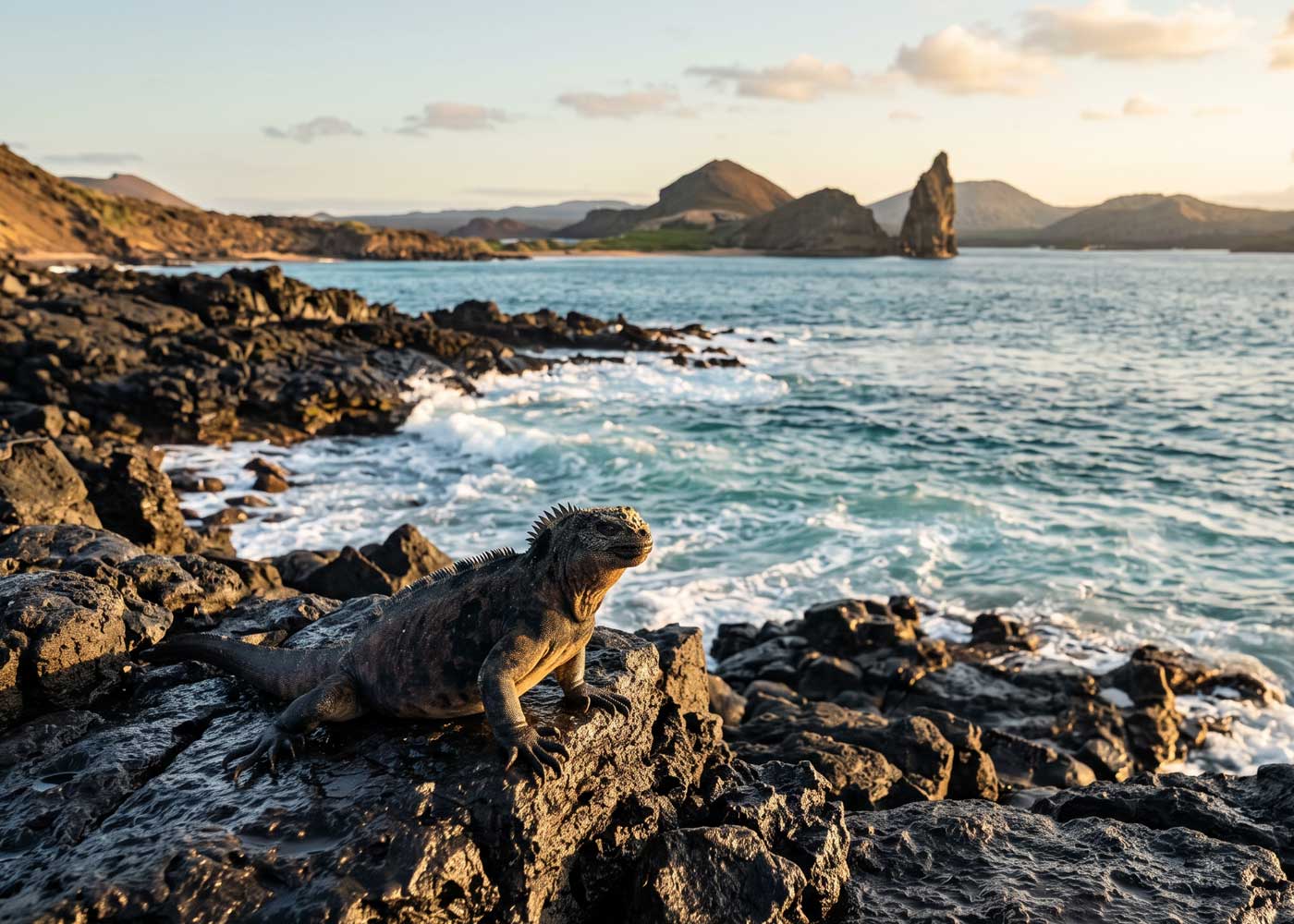
Galápagos Islands guide: wildlife, tours and costs
The Galapagos Islands sit 600 miles off Ecuador’s coast, a volcanic archipelago where wildlife has no fear of humans and evolution unfolds in real time. This is where Charles Darwin developed his theory of natural selection. Where giant tortoises roam freely and blue-footed boobies perform mating dances at your feet. Where you can snorkel alongside sea lions and penguins in the same afternoon.
This guide distills everything you need to plan a Galapagos trip that matches your travel style and budget. You will learn which islands to prioritize, when wildlife activity peaks, how to choose between cruise and land-based itineraries, what permits and fees to expect, and how to experience this UNESCO World Heritage site responsibly.
Whether you have five days or two weeks, a backpacker budget or luxury expectations, the information here comes from years of operating Ecuador adventures and guiding travelers through these islands.
What Are the Galapagos Islands?
The Galapagos Islands are a volcanic archipelago of 13 major islands and over 100 smaller islets located 600 miles (966 km) west of Ecuador in the Pacific Ocean. Straddling the equator, the islands form a UNESCO World Heritage Site and one of the world’s foremost wildlife destinations. The archipelago belongs to Ecuador and operates as a national park covering 97% of its total land area. Around 30,000 permanent residents live on four inhabited islands (Santa Cruz, San Cristobal, Isabela, and Floreana), while the remaining islands are accessible only through guided visits. The Galapagos are best known as the place where Charles Darwin developed his theory of natural selection after visiting in 1835.
Why the Galapagos Islands Transform Every Visitor
The Galapagos experience differs from any other wildlife destination on Earth. Animals here evolved without land predators, which means they have no instinctive fear of humans. Sea lions nap on park benches. Marine iguanas sun themselves on walking paths. Boobies nest inches from hiking trails and barely glance up as you pass.
Darwin’s Living Laboratory
In 1835, Charles Darwin spent five weeks exploring these islands aboard HMS Beagle. The unique finches he observed here, each species adapted to different food sources, became central evidence for his theory of natural selection published in On the Origin of Species.
Today, those same evolutionary processes continue. Scientists study the islands year-round, documenting how species adapt to changing conditions. Visitors witness living science, not museum exhibits.
Endemic Species Found Nowhere Else
The isolation that makes the Galapagos scientifically valuable also makes it visually spectacular. 97% of reptiles and land mammals here exist nowhere else on the planet (Galapagos Conservancy). The marine iguana is the world’s only ocean-going lizard. The Galapagos penguin is the only penguin species living north of the equator. The waved albatross breeds exclusively on Espanola Island.
This concentration of unique species in a relatively small area creates wildlife encounters that feel almost surreal in their intimacy.
One of the most memorable moments for visitors is the eye contact: a sea lion pup will often swim right up to a snorkeler’s mask and simply look at them, with no fear or aggression, just curiosity. That kind of close, trusting wildlife encounter is rare anywhere else on Earth.
A Conservation Success Story
Strict national park regulations limit visitors, require certified naturalist guides, and fund ongoing conservation efforts. Invasive species eradication programs have restored several islands to near-pristine conditions. The Galapagos demonstrates that tourism and conservation can support each other when managed properly.
Every dollar from the park entry fee goes back into the islands: invasive-species eradication programs have eliminated goats from Santiago and rats from Pinzon, and conservationists are seeing species recovery that would have seemed unlikely 15 years ago. Visitor fees make that possible.
The Four Main Islands You Can Visit
The Galapagos archipelago includes 13 major islands, but most visitors focus on four that offer accommodations and regular tour access. Each island has distinct landscapes, wildlife, and character.
Santa Cruz: The Gateway Island
Santa Cruz serves as the tourism hub of the Galapagos. Most visitors pass through Puerto Ayora, the largest town in the archipelago with hotels ranging from budget hostels to boutique resorts. The Charles Darwin Research Station operates here, where you can see giant tortoise breeding programs up close.
Key experiences: Tortuga Bay beach walk, Los Gemelos volcanic sinkholes, highland tortoise reserves, Darwin Station, Las Grietas swimming crevice.
Best for: First-time visitors, budget travelers, those who prefer land-based itineraries with day trips.
Isabela: Volcanic Wilderness
Isabela is the largest Galapagos island, shaped by six shield volcanoes including Sierra Negra, one of the world’s most active. The landscape here feels rawer and less developed than Santa Cruz. Puerto Villamil remains a small fishing village with sandy streets and a relaxed pace.
Key experiences: Sierra Negra volcano hike (6-hour round trip), Los Tuneles lava formations snorkeling, Concha de Perla lagoon, flamingo lagoons, Wall of Tears historical site.
Best for: Hikers, adventure seekers, travelers wanting a quieter alternative to Santa Cruz.
San Cristobal: Where Darwin First Landed
San Cristobal was Darwin’s first Galapagos stop and remains less touristy than Santa Cruz despite having the provincial capital. The island offers excellent sea lion encounters right at the waterfront and accessible snorkeling at Tijeretas Bay.
Key experiences: Interpretation Center, Tijeretas snorkeling with sea lions, Kicker Rock day trip (Leon Dormido), Punta Pitt (only place to see all three booby species), Galapaguera tortoise reserve.
Best for: Sea lion photography, diving, travelers seeking a less crowded base.
Fernandina: Pristine and Protected
Fernandina remains the most volcanically active island and has no introduced species, making it the most pristine ecosystem in the archipelago. No accommodations exist here. Access is only by cruise ship for day visits.
Key experiences: Punta Espinoza marine iguana colonies (largest concentration anywhere), flightless cormorants, recent lava fields, Galapagos penguins.
Best for: Serious wildlife photographers, those willing to pay for cruise access to witness wild, undisturbed conditions.
Wildlife Encounters That Define the Galapagos
The wildlife here does not scatter when you approach. This fearlessness creates encounters impossible anywhere else, but it also demands responsible behavior from visitors.
Giant Tortoises: Meeting Ancient Giants
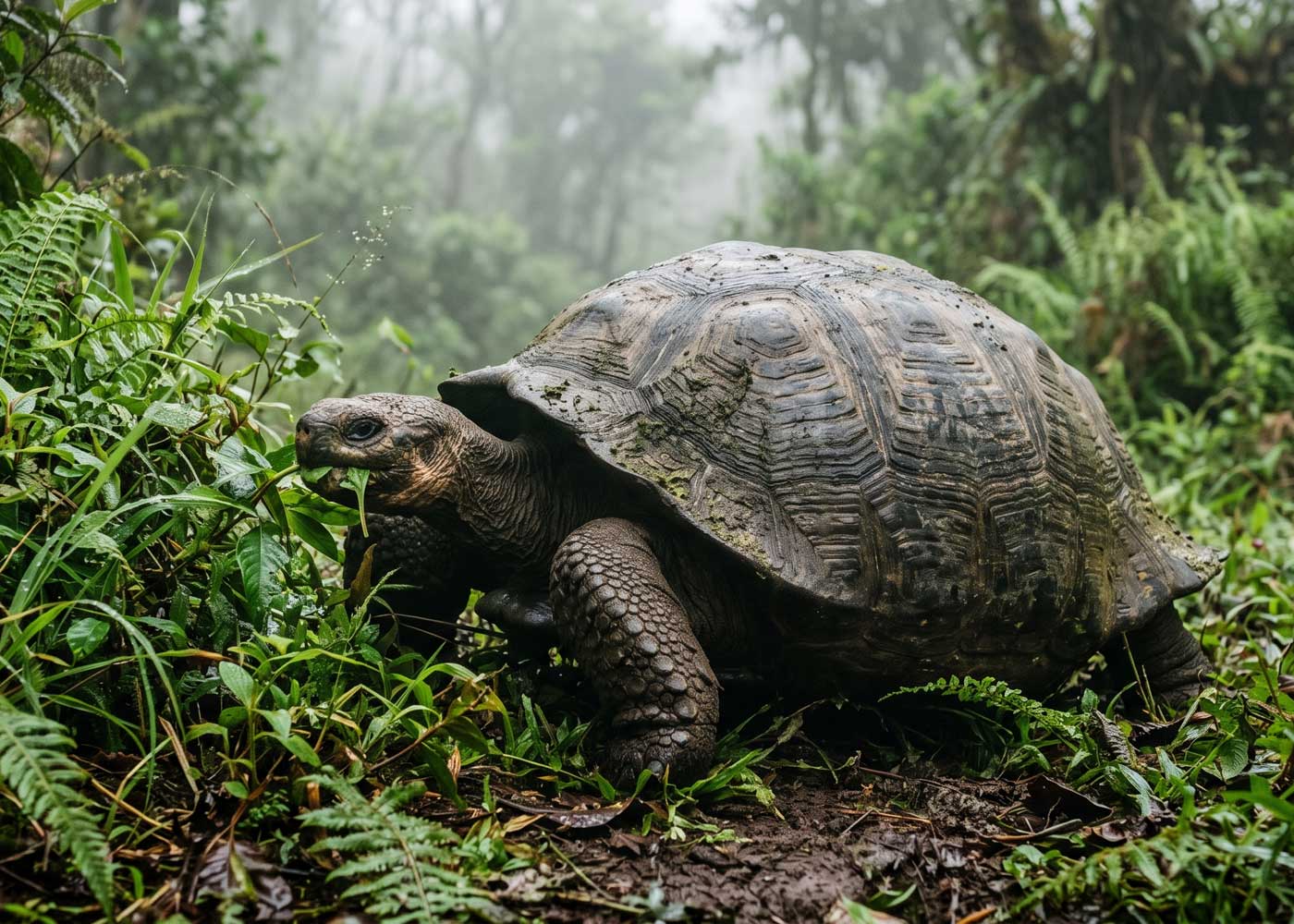
Galapagos giant tortoises can weigh over 400 pounds and live beyond 100 years. Some individuals alive today may have been born before Darwin’s visit. The highland areas of Santa Cruz offer the best wild encounters, where tortoises graze in misty pastures.
The Charles Darwin Research Station and breeding centers on multiple islands allow close observation of juveniles and adults. Seeing a tortoise lumber past at arm’s length connects you to geological time in a visceral way.
Marine Iguanas: The World’s Only Ocean-Going Lizards
Marine iguanas evolved to dive up to 30 feet and graze on underwater algae. They huddle in massive colonies to warm up after ocean forays, their dark bodies absorbing equatorial sun. On Fernandina and Isabela, colonies number in the thousands.
During breeding season (December-March), males develop red and green coloration and display aggressive territorial behavior. Year-round, you will see them sneeze salt crystals expelled from specialized glands.
Blue-Footed Boobies and Their Famous Dance
Blue-footed boobies perform one of nature’s most entertaining courtship rituals. Males lift their bright blue feet in an exaggerated high-step dance while presenting nesting materials and sky-pointing. The bluer the feet (from carotenoid pigments in their fish diet), the more attractive the male.
North Seymour Island offers the most reliable booby encounters, with nesting pairs often performing just feet from walking paths. Breeding occurs year-round, though peak activity varies by island.
Sea Lions, Penguins, and Underwater Encounters
Galapagos sea lions treat humans as curious neighbors rather than threats. Pups will swim circles around snorkelers. Adults lounge on beaches, docks, and park benches throughout the inhabited islands. San Cristobal’s waterfront offers the most accessible encounters.
Galapagos penguins, the world’s most northerly penguin species, can be spotted on Isabela, Fernandina, and Bartolome. Snorkeling with penguins darting past you is surreal given their association with Antarctic ice.
Underwater, expect to encounter sea turtles, reef sharks, rays, and schools of colorful tropical fish at most snorkeling sites. Serious divers can arrange trips to Wolf and Darwin islands for hammerhead shark encounters.
Hiking Trails and Nature Walks Worth Your Time
While cruises dominate Galapagos tourism, the islands offer exceptional hiking for those who prefer to explore on foot. Trails range from flat beach walks to challenging volcanic climbs.
Sierra Negra Volcano: Walking the Rim
Sierra Negra on Isabela Island features the second-largest volcanic caldera in the world, stretching six miles across. The hike to the rim takes approximately 2.5 hours each way through otherworldly volcanic terrain. Standing at the edge looking into the steaming caldera justifies the effort.
Difficulty: Moderate to strenuous. Distance: 16 km round trip. Time: 5-7 hours total. Requirements: Good fitness, sturdy shoes, rain gear, minimum two liters of water.
Tortuga Bay Trail, Santa Cruz
This 2.5-kilometer paved path leads from Puerto Ayora to one of the most beautiful beaches in the Galapagos. Marine iguanas sun along the trail. The beach itself stretches white sand for over a kilometer, with a protected lagoon area ideal for swimming and kayaking.
Difficulty: Easy. Distance: 5 km round trip. Time: 2-4 hours depending on beach time. Requirements: None, but bring sun protection.
Bartolome Island Summit
The Bartolome viewpoint provides the iconic Galapagos photograph: Pinnacle Rock rising from turquoise waters with volcanic landscape stretching behind. The climb involves 372 wooden steps with viewing platforms along the way.
Difficulty: Moderate (stairs). Distance: 600 meters. Time: 45 minutes to 1 hour. Access: Day trip from Santa Cruz or included on most cruises.
Los Gemelos Sinkholes and Darwin Station Walks
Los Gemelos (The Twins) are two massive volcanic sinkholes in the Santa Cruz highlands, surrounded by Scalesia forest. Short walking paths circle each pit, offering chances to spot Darwin’s finches and vermillion flycatchers.
The Charles Darwin Research Station in Puerto Ayora combines a 45-minute educational walk with giant tortoise viewing. Free to enter, it provides excellent context for understanding Galapagos conservation efforts.
Cruise vs. Land-Based Tours: How to Decide
This decision shapes your entire Galapagos experience. Both approaches offer authentic wildlife encounters, but they differ in pace, access, and cost.
Choose a Cruise If…
You want maximum wildlife diversity. Cruises navigate to outer islands like Fernandina, Espanola, and Genovesa that land-based visitors cannot reach. These sites offer the most pristine ecosystems and concentrated wildlife populations.
Your time is limited. Cruises travel overnight, so you wake up at new islands rather than spending hours on inter-island boats. A 5-day cruise covers more ground than a 7-day land-based trip.
You prefer structured itineraries. Meals, guides, and activities are arranged. You focus entirely on the experience rather than logistics.
Budget range: $3,500-$8,000+ for 5-8 days depending on vessel class.
Choose Land-Based If…
You prefer flexibility. Land-based stays allow you to adjust activities day by day, spend extra time at sites you love, or take rest days without missing scheduled stops.
Budget matters. Island-hopping between Santa Cruz, Isabela, and San Cristobal with day tours costs 40-60% less than equivalent cruise time. Budget travelers can visit the Galapagos for $150-200/day including accommodation.
You get seasick. Overnight ocean travel between islands can be rough, especially June through November. Staying on land eliminates this concern entirely.
Budget range: $1,500-$4,000 for 7-10 days with day tours.
The Hybrid Approach
Many travelers combine approaches: start with a few land-based days on Santa Cruz to acclimatize and explore highlands, then join a shorter 4-5 day cruise to reach outer islands. This balances flexibility with access while managing costs.
Cruise vs. Land-Based at a Glance
| Factor | Cruise | Land-Based |
|---|---|---|
| Cost (7-10 days) | $3,500-$8,000+ | $1,500-$4,000 |
| Islands accessed | 8-12 including remote sites | 3-4 inhabited islands |
| Pace | Fixed itinerary, travel overnight | Flexible, self-directed |
| Wildlife diversity | Highest (outer islands) | Good (day-trip range) |
| Seasickness risk | Moderate to high (Jun-Nov) | None |
| Spontaneity | Low | High |
| Best for | Limited time, max wildlife | Budget control, independence |
Where to Stay: Choosing Your Base Island
Land-based travelers split their nights across the inhabited islands rather than sleeping aboard a vessel. Each island offers a different style of base, and many itineraries combine two or three.
Santa Cruz: The Widest Range
Puerto Ayora has the largest concentration of accommodation in the archipelago, spanning budget hostels near the fish market to boutique hotels within walking distance of the Charles Darwin Research Station. It also has the most restaurants, tour operators, and dive shops, making it the easiest island to arrange last-minute excursions. Most multi-island land-based trips use Santa Cruz as their first and last stop.
San Cristobal: Quieter, Still Well-Served
Puerto Baquerizo Moreno, the provincial capital, has a smaller but reliable range of guesthouses and mid-range hotels, several within a short walk of the sea lion-lined waterfront and Tijeretas Bay. Fewer cruise ships and day-trippers pass through than Santa Cruz, which appeals to travelers who want the same infrastructure with a slower pace.
Isabela: Fewer Options, More Character
Puerto Villamil keeps its sandy streets and small-town feel, with a growing but still limited number of guesthouses and eco-lodges. ATM access is unreliable, so bring more cash than you think you need. Isabela suits travelers prioritizing the Sierra Negra hike and Los Tuneles over restaurant variety or nightlife.
Floreana: A Day Trip, Not a Base
Floreana has only a handful of small guesthouses and is rarely used as a home base. Most visitors see it as a day trip from Santa Cruz rather than an overnight stop.
Booking tip: Santa Cruz and San Cristobal hotels fill up during June-September and December-January; reserve those nights as far ahead as your cruise or flights. Isabela and Floreana guesthouses typically have more last-minute availability.
Best Time to Visit the Galapagos Islands
The Galapagos sits on the equator, so temperatures remain relatively stable year-round (70-85F). However, two distinct seasons affect wildlife behavior and sea conditions.
Warm Season (December-May): Calmer Seas, Nesting Birds
Warmer air and water temperatures make this ideal for snorkeling and swimming. Seas are calmer, benefiting those prone to seasickness on cruises. Brief afternoon rain showers are common but rarely disruptive.
Wildlife highlights: Marine iguanas show breeding colors (December-March), green sea turtles nest (January-March), land birds breed and are most active, giant tortoises mate in the highlands.
Cool Season (June-November): Marine Life Peak
The Humboldt Current brings cooler, nutrient-rich waters that support abundant marine life. This is peak season for diving and observing marine mammals. Seas can be rougher, and the garua (misty drizzle) keeps highlands perpetually damp.
Wildlife highlights: Whale shark sightings peak (June-November), humpback whales pass through (June-September), sea lions are most active, Galapagos penguins thrive in cooler water, waved albatross on Espanola (April-December).
Month-by-Month Wildlife Calendar
| Month | Key Wildlife Events | Conditions |
|---|---|---|
| January-February | Sea turtle nesting, marine iguana colors, land bird breeding | Warm, calm seas |
| March-April | Sea turtle hatching begins, iguana eggs hatch | Warmest water temps |
| May-June | Transition season, albatross egg-laying begins | Cooling, seas roughen |
| July-August | Peak marine life, whale watching, sea lion pups | Cool, misty garua |
| September-October | Sea lion activity peak, penguin breeding | Cool, nutrient-rich waters |
| November-December | Albatross depart, baby sea lions, warming begins | Transitioning warmer |
Getting to the Galapagos from Quito or Guayaquil
All visitors must fly from mainland Ecuador. No international flights land in the Galapagos directly.
Flight Options and Airlines
LATAM, Avianca, and TAME operate daily flights from both Quito (UIO) and Guayaquil (GYE). Guayaquil flights are shorter (1.5 hours vs. 2.5 hours) and generally cheaper. Round-trip fares range from $350-$500 depending on season and booking timing.
Book flights early. Galapagos routes have limited capacity, and prices rise sharply as departure approaches. Book 2-3 months ahead for best rates.
Transit Control Card and Park Entry
Before checking in at Quito or Guayaquil airport, you must register at the Galapagos Government Council desk and purchase a Transit Control Card (TCT) for $20. This card tracks visitor movements and must be presented on arrival and departure.
Upon landing in the Galapagos, you pay the $200 Galapagos National Park entrance fee in cash (USD only). Keep receipts for both payments throughout your trip.
Arrival on Baltra vs. San Cristobal
Most flights land at Baltra (GPS), a small island north of Santa Cruz. From Baltra, take the free shuttle bus to the ferry dock, then a 10-minute ferry ($1) to Santa Cruz, followed by a 45-minute bus or taxi to Puerto Ayora.
Some flights serve San Cristobal (SCY), which lands directly in Puerto Baquerizo Moreno town. If starting your trip on San Cristobal or joining a cruise departing from there, this routing saves transfer time.
Permits, Park Fees, and Regulations You Must Know
The Galapagos National Park maintains strict regulations to protect ecosystems. Understanding requirements in advance prevents delays and ensures you contribute positively to conservation.
The $200 Galapagos National Park Fee
All foreign visitors over age 12 pay $200 USD upon arrival (children under 12 pay $100; children under 2 enter free). Ecuadorian citizens pay a substantially reduced $30, and nationals of Andean Community (CAN) countries, namely Bolivia, Colombia, Ecuador, and Peru, qualify for a discounted rate below the standard $200. This fee funds park operations, conservation programs, and invasive species control. Cash only, US dollars only. No cards accepted. ATMs in Puerto Ayora have limits, so bring sufficient cash from the mainland. The fee doubled from $100 in August 2024, the first major increase in more than two decades, with the additional revenue earmarked for conservation, waste management, and community infrastructure on the inhabited islands.
Transit Control Card ($20)
Purchased before departure from Quito/Guayaquil, the TCT registers your visit and helps authorities monitor tourist flows. You must present this card when leaving the Galapagos. Loss requires replacement fees and delays.
What You Cannot Bring or Do
To protect the fragile ecosystem, the following rules are strictly enforced:
- No fresh food (fruits, vegetables, seeds, plants) may enter the islands
- Stay on marked trails at all times – leaving paths disturbs nesting areas
- Maintain 2-meter distance from all wildlife (even if they approach you)
- No flash photography – it disturbs animals, especially nesting birds
- No touching or feeding any wildlife under any circumstances
- No collecting rocks, shells, sand, or any natural materials
- Certified guides required at all national park visitor sites (guides included with tours)
Violations result in substantial fines and potential trip termination. Rangers actively patrol visitor sites.
Biosecurity: Why Your Shoes Get Checked
Before you even board your flight, biosecurity protects the islands from invasive species arriving with visitors. At the Quito or Guayaquil airport, luggage passes through an agricultural inspection point (run by Ecuador’s biosecurity agency) that screens for fresh produce, seeds, soil, plants, and other organic material: the same items barred once you land, listed in the rules above.
The checks continue on the ground. Moving between islands, guides and park staff routinely ask visitors to brush off or inspect hiking boots before a landing, since seeds, insect eggs, and soil from one island’s ecosystem can take hold on another that evolved without them. Cruise itineraries build a few minutes into each landing for this. If a guide asks you to clean your shoes or check a daypack before a site visit, it is a normal part of every itinerary, not a delay.
Snorkeling and Diving in the Galapagos
The underwater Galapagos rivals the terrestrial experience. The convergence of multiple ocean currents creates exceptional marine biodiversity.
Top Snorkeling Sites
Kicker Rock (Leon Dormido), San Cristobal: A dramatic volcanic tuff cone rising 500 feet from the ocean. Snorkelers swim through the channel between rock formations alongside sea turtles, reef sharks, and rays.
Los Tuneles, Isabela: Collapsed lava tubes create natural bridges and channels teeming with seahorses, sea turtles, reef sharks, and rays. Calm, shallow water makes this ideal for beginners.
Concha de Perla, Isabela: A protected lagoon within walking distance of Puerto Villamil where sea lions play with snorkelers daily. Free access, no tour required.
Tijeretas Bay, San Cristobal: Walk from town to this bay where sea lions and sea turtles congregate. Excellent for independent snorkeling without booking a tour.
Diving for Certified Divers
The Galapagos offers world-class diving, but conditions require experience. Strong currents, cold thermoclines, and limited visibility at depth demand PADI Advanced certification for most sites.
Wolf and Darwin Islands (accessible only by liveaboard) deliver bucket-list diving: schooling hammerhead sharks, whale sharks (June-November), manta rays, and dolphins. These remote northern islands require 14+ hour boat journeys and 7-8 day dive expeditions costing $4,000-$7,000.
Gordon Rocks near Santa Cruz is nicknamed the “washing machine” for its currents but rewards divers with hammerheads, Galapagos sharks, and mola mola sightings.
Photography Tips for the Galapagos
The Galapagos rewards photographers willing to work within its rules rather than around them. A few habits make the difference between frustrating shoots and images worth keeping.
- Bring a zoom, not just a wide-angle. The mandatory 2-meter wildlife distance means a longer lens compensates for what your feet cannot: a 70-200mm or superzoom covers most land encounters.
- A wide-angle still earns its place for marine iguana colonies, lava fields, and landscape shots where scale is the story.
- No flash, ever, near nesting birds. It is a park rule, and it also produces flatter images: natural light does the animals more justice.
- Shoot early and late. Wildlife is most active in the cooler morning and late-afternoon hours, and the equatorial light is softer then too.
- Protect gear on pangas. Salt spray during dinghy transfers between the ship and shore is constant; a simple dry bag or rain cover prevents corrosion.
- Underwater housing pays off. Sea lions and turtles approach snorkelers closely enough that even an entry-level waterproof camera captures usable images.
Sustainable Tourism: Protecting What You Came to See
Your Galapagos visit directly funds conservation. The $200 park fee supports ranger salaries, invasive species removal, habitat restoration, and, since the 2024 fee increase, upgrades to sewage systems, waste management, and medical infrastructure on the inhabited islands. Choosing responsible operators amplifies your positive impact.
Visitor limits matter. The park restricts daily visitors to sensitive sites, spreads cruise arrivals across time slots, and requires guides to enforce regulations. These “inconveniences” preserve the experience for future visitors.
Choose certified operators. Look for companies with Galapagos National Park authorization and Smart Voyager certification, which indicates adherence to environmental and social responsibility standards.
Minimize plastic. Bring reusable water bottles (refilling stations exist in towns), reef-safe sunscreen, and avoid single-use plastics. Many hotels and boats now refuse to provide disposable containers.
Offset your flight. Air travel represents the largest carbon footprint of any Galapagos trip. Consider carbon offset programs for your Ecuador flights.
What to Pack for the Galapagos Islands
Pack light. Inter-island boats have weight limits, and you will be in and out of small boats frequently. Prioritize quick-dry, versatile items.
Sun Protection (Essential):
- Reef-safe sunscreen (SPF 50+) – regular sunscreen damages marine ecosystems
- Wide-brimmed hat that secures in wind
- UV-protective sunglasses with strap
- Lightweight long-sleeve shirts (sun protection while hiking)
Snorkeling Gear:
- Mask and snorkel (tours provide them, but own gear fits better)
- Rash guard or thin wetsuit top (water can be cool June-November)
- Water shoes for rocky shoreline entries
Hiking Essentials:
- Sturdy closed-toe shoes with grip (volcanic rock is sharp and uneven)
- Lightweight rain jacket (garua season or highland visits)
- Daypack for water and camera
- Reusable water bottle (1-2 liter capacity)
Documents and Money:
- Passport (required for park entry)
- $220+ USD cash for TCT card and park fee
- Credit card for major expenses (limited ATM availability)
- Waterproof bag for documents during boat transfers
Practical Logistics: Money, Connectivity, and Health
Money
Ecuador uses the US dollar as its official currency, so there is no exchange rate to track. That convenience does not extend to card payments: small restaurants, local day-tour operators, and water taxis on all three inhabited islands typically take cash only. Larger hotels, established cruise operators, and dive shops generally accept credit cards, sometimes with a surcharge. ATMs exist in Puerto Ayora, Puerto Baquerizo Moreno, and Puerto Villamil, but withdrawal limits are low and machines occasionally run out of cash during high season: bring more USD than you expect to need rather than relying on them.
Connectivity
Wi-Fi is available at most hotels and many restaurants in the three port towns but can be slow and drops frequently on outer-island cruise days. Ecuadorian mobile carriers have coverage in and around the towns; a local SIM card, sold in Puerto Ayora, is the most reliable way to stay connected on land. Expect no signal at remote visitor sites and on most of the open ocean between islands.
Health and Travel Insurance
Medical facilities on the islands are basic, concentrated in Puerto Ayora and Puerto Baquerizo Moreno, and equipped for routine issues rather than major emergencies. A serious injury or illness typically means evacuation to Guayaquil on the mainland. Travel insurance that explicitly covers medical evacuation is strongly recommended, and cruise operators often require proof of it before boarding. No vaccinations are mandatory for the Galapagos itself, though your doctor may recommend routine and Ecuador-specific vaccines for the mainland portion of the trip. Motion sickness medication is worth packing regardless of season if you are considering a cruise.
Language and Tipping
Spanish is the official language, and naturalist guides on nearly every cruise and organized day tour speak fluent English as part of their certification. Independent exploration in the port towns is easier with basic Spanish phrases, though tourism-facing businesses generally manage in English. Tipping is customary rather than mandatory: cruise crews and naturalist guides typically receive $10-25 per day from each passenger, split according to the vessel’s own guidelines, while day-tour guides and drivers are usually tipped $5-10 for a half or full day. Restaurants in the port towns do not automatically add a service charge, so a modest cash tip for good service is appreciated but not expected everywhere.
Galapagos Trip Costs: Realistic Budget Breakdown
Galapagos trips cost more than typical Ecuador travel due to mandatory fees, flight costs, and limited infrastructure. However, options exist across budget levels.
Budget Traveler ($2,000-$3,000 for 7-10 days)
Land-based travel, staying in hostels or budget hotels ($25-50/night), eating at local restaurants ($10-15/meal), booking day tours locally ($80-180 each). Skip expensive cruise excursions and focus on free activities like Tortuga Bay, Concha de Perla, and independent town exploration.
Breakdown: Flights $400 + Fees $220 + Accommodation $300 + Food $250 + Day Tours $500 + Inter-island boats $100 = ~$1,770 minimum. Add buffer for activities.
Mid-Range Comfort ($4,000-$6,000 for 7-10 days)
Comfortable hotels ($80-150/night), mix of land-based exploration and 3-4 day cruise segment, guided tours with experienced naturalists, dining at quality restaurants. This level provides excellent wildlife access with reasonable comfort.
Breakdown: Flights $450 + Fees $220 + 4-day cruise $2,500 + 3 nights hotel $350 + Food $300 + Tours $400 = ~$4,220.
Luxury Experience ($8,000+)
First-class or luxury cruise vessels with naturalist guides, private cabins with en-suite bathrooms, gourmet cuisine, premium itineraries to remote sites. Boutique hotel stays between cruise segments. Private guided day excursions.
Breakdown: Flights $500 + Fees $220 + 8-day luxury cruise $6,500-12,000 + Pre/post hotel $300-500 = $7,520-13,220.
Hidden Costs to Plan For
- Tips: Crew and guides expect tips ($10-25/day on cruises, $5-10 for day tour guides)
- Wet suits: Rental $15-25/day if you want full coverage for cooler waters
- Camera gear protection: Underwater housings, dry bags
- Last-minute tours: Booking on-island often costs 20-30% more than advance booking
- Isabela entry fee: Additional $10 fee to visit Isabela Island
Sample 7-Day Land-Based Itinerary
This route strings together the sites already covered in this guide across three inhabited islands, using public inter-island ferries and day tours rather than a cruise. Adjust pacing to your energy level: it is easy to stretch this into 9-10 days.
- Day 1: Arrive Santa Cruz. Fly into Baltra, transfer to Puerto Ayora, afternoon visit to the Charles Darwin Research Station.
- Day 2: Santa Cruz highlands and coast. Morning at the highland tortoise reserves and Los Gemelos sinkholes; afternoon at Tortuga Bay.
- Day 3: Ferry to Isabela. Inter-island boat to Puerto Villamil, afternoon snorkeling and relaxing at Concha de Perla.
- Day 4: Sierra Negra. Full-day hike to the caldera rim; recovery evening in Puerto Villamil.
- Day 5: Los Tuneles, then on to San Cristobal. Morning snorkeling trip to Los Tuneles, then ferry back through Santa Cruz to San Cristobal (or fly out of Baltra if time is short).
- Day 6: San Cristobal. Tijeretas Bay snorkeling with sea lions and sea turtles in the morning, Kicker Rock day trip in the afternoon.
- Day 7: Depart. Interpretation Center and waterfront sea lion colony before your flight back to the mainland.
Prefer more remote wildlife (Fernandina, Espanola, Genovesa)? Add a short 4-5 day cruise onto either end, per the hybrid approach described above.
How to Plan a Galapagos Trip: Step by Step
- Decide cruise vs. land-based (or hybrid). This determines your budget, timeline, and which islands you can visit. Review the comparison table above to match your priorities.
- Choose your dates based on wildlife goals. December-May for calmer seas and nesting birds. June-November for peak marine life and whale sharks. Book 3-6 months ahead for cruise availability.
- Book flights from Quito or Guayaquil. Fly from Guayaquil for shorter, cheaper flights (1.5 hours). Book 2-3 months early for best fares ($350-$500 round trip).
- Reserve accommodations or cruise berths. Cruises sell out months ahead during June-September and December-January. Land-based hotels on Santa Cruz and San Cristobal have more last-minute availability.
- Prepare mandatory documents and cash. Bring $220+ USD in cash for the Transit Control Card ($20, purchased at mainland airport) and the Galapagos National Park fee ($200, paid on arrival). No cards accepted for either.
- Pack for equatorial sun and variable water. Reef-safe sunscreen, sturdy shoes, snorkel gear, rain layer, and quick-dry clothing. Keep bags light for inter-island boat weight limits.
- Arrange day tours for land-based trips. Book popular excursions (Kicker Rock, Los Tuneles, Sierra Negra) a few days ahead. Leave room for free activities like Tortuga Bay and Concha de Perla.
Combining the Galapagos with Peru: Machu Picchu and the Inca Trail
Many travelers pair a Galapagos trip with mainland South America rather than treating the islands as a stand-alone destination. Ecuador and Peru sit on the same regional flight network, connecting Quito or Guayaquil with Lima, the gateway to Cusco, the Sacred Valley, and Machu Picchu. Travelers building a longer South America itinerary can read our Peru trekking guide for route options across the Andes and our Machu Picchu guide for permits, train options, and visiting the citadel itself.
The connection runs deeper than logistics. Peru is one of the four Andean Community (CAN) nations described above, alongside Bolivia, Colombia, and Ecuador, so Peruvian nationals qualify for the same discounted Galapagos National Park entry rate. Travelers hiking the classic four-day Inca Trail to Machu Picchu often bookend that trek with a week in the Galapagos, since both experiences reward advance planning: Inca Trail permits sell out months ahead of peak season, and Galapagos cruise cabins fill early too. A common sequence is Peru first, to acclimatize at Andean elevation before a demanding trek, then the Galapagos for a lower-exertion, wildlife-focused close to the trip.
Plan Your Galapagos Adventure
The Galapagos Islands deliver on their reputation as one of Earth’s most extraordinary destinations. Cruise travelers and independent island-hoppers alike encounter wildlife that exists nowhere else and ecosystems that inspired our understanding of evolution itself.
The key is matching your travel style to the right approach. Budget travelers find the Galapagos accessible through land-based stays and day tours. Wildlife enthusiasts maximize encounters through well-routed cruises. Divers arrange specialized liveaboards to remote sites.
Start planning early. Book flights and cruises months ahead. Prepare for mandatory fees. Pack appropriately for equatorial sun and variable water temperatures. And arrive ready to be transformed by a place where nature remains wonderfully, unapologetically wild.
About Inca Trail Reservations: This guide is maintained by Inca Trail Reservations, a licensed South America tour operator that has organized trekking and adventure travel across Peru, Ecuador, and neighboring countries since 2006. Our team draws on direct operational experience with permits, park regulations, and on-the-ground logistics across the region to keep this guide accurate and current.