
Lake Titicaca travel guide: islands and tours
Lake Titicaca sits at 3,812 meters above sea level, making it the highest navigable lake on Earth. Straddling the border between Peru and Bolivia, this inland sea covers 8,372 square kilometers and holds more fresh water than any other lake in South America.
This guide covers both sides of the lake, from Peru’s Uros floating islands to Bolivia’s sacred Isla del Sol. We address what most guides skip: practical altitude advice, border crossing logistics, and honest assessments of which experiences deliver on their promise. After reading this guide, you will know exactly how to plan a Lake Titicaca visit that matches your time, budget, and travel style.
The short version: Lake Titicaca rewards travelers who give it at least two days. Rush through on a day trip and you will see the surface. Stay overnight on an island and you will understand why Andean civilizations considered these waters sacred.
What Is Lake Titicaca?
Lake Titicaca is a large freshwater lake in the Andes mountains on the border of Peru and Bolivia, sitting at 3,812 meters (12,507 feet) above sea level, which makes it the highest navigable lake in the world. It covers 8,372 square kilometers, holds 893 cubic kilometers of water, and has served as the spiritual and cultural center of Andean civilizations for thousands of years. Indigenous communities including the Uros, Aymara, and Quechua peoples still live on and around the lake today.
What Makes Lake Titicaca Extraordinary
The Numbers That Define Titicaca
Elevation: 3,812 meters (12,507 feet) above sea level. This is 400 meters higher than Cusco. The thin air affects visitors whether they realize it or not.
Surface Area: 8,372 square kilometers. This is not a lake you can see across. From Puno’s shore, Bolivia remains invisible beyond the horizon.
Maximum Depth: 281 meters. The lake contains an estimated 893 cubic kilometers of water.
Shared Territory: Peru controls approximately 60% of the lake’s surface; Bolivia holds the remaining 40%. The international border runs through the water itself.
Sources: Elevation, surface area, and depth measurements from the Global Lake Database maintained by the International Lake Environment Committee (ILEC). Water volume estimates from the United Nations Environment Programme (UNEP) Titicaca Basin Assessment. Population figures from Peru’s Instituto Nacional de Estadistica e Informatica (INEI) and Bolivia’s Instituto Nacional de Estadistica (INE).
Sacred Waters of Two Civilizations
Inca mythology places Lake Titicaca at the center of creation. According to legend, the sun god Inti sent his children Manco Capac and Mama Ocllo from the waters of the lake to found the Inca civilization. They emerged near Isla del Sol and traveled north, eventually establishing Cusco.
The Incas did not invent this sacred geography. The Tiwanaku civilization, which preceded the Incas by centuries, built their capital near the lake’s southern shores. Their monuments still stand in Bolivia, and their influence shaped Andean religion long before Cusco existed.
Today, Aymara and Quechua communities continue living around the lake. The Uros people maintain their floating island traditions. On Taquile, men still knit according to customs predating Spanish contact. These are not museum exhibits but functioning communities navigating the 21st century while preserving ancestral practices.
Peru Side vs Bolivia Side: Which Should You Choose?
Most travelers visiting Lake Titicaca must decide between basing themselves in Peru (Puno) or Bolivia (Copacabana). Each offers distinct advantages.
The Peru Experience (Puno)
Advantages: Puno provides the easiest access to the lake’s most famous attraction: the Uros floating islands. Tourist infrastructure is well-developed. Booking tours, finding accommodation at various price points, and accessing ATMs and services requires minimal effort. For travelers on tight schedules, Puno offers efficient logistics.
Disadvantages: Puno itself is an industrial city with limited aesthetic appeal. The tourism industry around Uros has become highly commercialized. Some travelers find the Peru side feels more like checking boxes than genuine discovery.
The Bolivia Experience (Copacabana)
Advantages: Copacabana is a charming lakeside town with a relaxed backpacker atmosphere. Isla del Sol, accessible only from the Bolivian side, offers better hiking and more dramatic scenery than the Peruvian islands. Prices run 30-50% lower than Peru for comparable services. The town’s beach promenade and famous basilica create a more pleasant base.
Disadvantages: Getting to Copacabana requires either a border crossing or starting your trip in La Paz. The journey from Cusco adds 2-3 hours compared to reaching Puno. Tourism infrastructure is less developed, meaning fewer luxury options.
Direct Comparison
| Factor | Peru (Puno) | Bolivia (Copacabana) |
|---|---|---|
| Main Islands | Uros, Taquile, Amantani | Isla del Sol, Isla de la Luna |
| Base Town Character | Industrial city | Relaxed beach town |
| Tourism Feel | Organized, efficient | Independent, adventurous |
| Budget Daily Cost | $40-80 | $25-50 |
| Travel from Cusco | 6-7 hours direct | 8-10 hours with border |
| Best For | Short trips, families, tours | Longer stays, backpackers, hikers |
Our recommendation: If you have only 2 days and want a streamlined experience, stay in Puno. If you have 3+ days and prefer adventure over efficiency, cross to Bolivia. If possible, do both: take a tour that crosses the border, experiencing Uros in Peru and Isla del Sol in Bolivia.
Puno: Peru’s Gateway to Titicaca
Puno serves as Peru’s primary access point to Lake Titicaca. The city of 150,000 people sits directly on the lakeshore at 3,830 meters elevation.
Getting Oriented in Puno
The central Plaza de Armas lies several blocks from the port. Most hotels cluster between these two points. The pedestrianized Jiron Lima provides the main commercial corridor with restaurants, tour agencies, and shops.
Altitude note: Puno sits at about 3,830m, roughly 400 meters higher than Cusco (3,400m). Travelers arriving from Cusco are already partly acclimatized, but the additional height is noticeable and worth taking gently on the first day. Those arriving from Lima or other lowland cities need proper acclimatization time.
Where to Stay in Puno
Budget ($15-30/night): Hostels concentrate around the plaza and along Jiron Lima. Shared dorms and basic private rooms. Hot water reliability varies.
Mid-Range ($40-80/night): Hotel Hacienda Puno, Casa Andina Standard, and similar properties offer reliable amenities, heating, and lake views in some rooms. Best value category for most travelers.
Luxury ($100-250/night): Titilaka Lodge (remote, all-inclusive), GHL Hotel Lago Titicaca, and Sonesta Posada del Inca offer top-tier comfort. Titilaka, located outside Puno on a private peninsula, provides the lake’s most exclusive experience.
Sillustani: The Pre-Inca Funeral Towers
Most Cusco-Puno tourist buses already stop here, but Sillustani also works as a half-day trip from Puno on its own. Set on a peninsula jutting into Lake Umayo, 34 kilometers from the city, the site holds chullpas: cylindrical funeral towers built by the pre-Inca Qolla people and later refined under Inca influence. The tallest tower reaches roughly 12 meters, its stonework tapering outward toward the top, a technique that still puzzles engineers. Sunset visits catch the towers silhouetted against the altiplano, when tour buses have usually already left.
Eating in Puno
Lake trout (trucha) dominates menus across Puno. This freshwater fish, introduced to Titicaca in the 1940s, now sustains both local diet and tourism. Order it grilled (a la plancha), fried (frita), or in ceviche.
Local specialties: Chairo (hearty soup with freeze-dried potatoes), chupe de quinoa (quinoa chowder), and cancacho (roasted lamb) represent traditional Puneno cuisine. The market near the railway station offers the most authentic (and cheapest) meals.
Copacabana: Bolivia’s Lakeside Gem
Copacabana occupies a sheltered bay on Lake Titicaca’s Bolivian shore. The town of 6,000 permanent residents swells with tourists accessing Isla del Sol.
Copacabana Town Overview
A waterfront promenade curves along the beach where paddle boats wait for afternoon renters. The massive Basilica of Our Lady of Copacabana, completed in 1640, dominates the hillside above. Pilgrims have traveled here for centuries; modern visitors often witness the car blessing ceremonies where newly purchased vehicles receive holy water and floral decorations.
The main street, Avenida 6 de Agosto, runs uphill from the lakefront toward the highway. Restaurants, tour agencies, and shops line both sides. Everything a traveler needs fits within a ten-minute walk.
Where to Stay in Copacabana
Budget ($10-25/night): Numerous hostels offer dorm beds and basic private rooms. La Cupula, built into the hillside above town, combines hostel prices with boutique touches.
Mid-Range ($30-60/night): Hotel Rosario Lago Titicaca, part of a respected Bolivian chain, provides the town’s most reliable mid-range option with lake views and on-site restaurant.
Waterfront: Several hotels along the beach road offer direct lake access. Quality varies; inspect rooms before committing.
Eating in Copacabana
Fresh trout from the lake costs half what it does in Puno. The waterfront restaurants serve nearly identical menus; competition keeps prices low. For variety, the market one block inland offers saltenyas (Bolivian empanadas) and quick local lunches.
Sunset views from waterfront restaurants justify slightly higher prices compared to inland options.
The Uros Floating Islands: Totora Reed Wonders
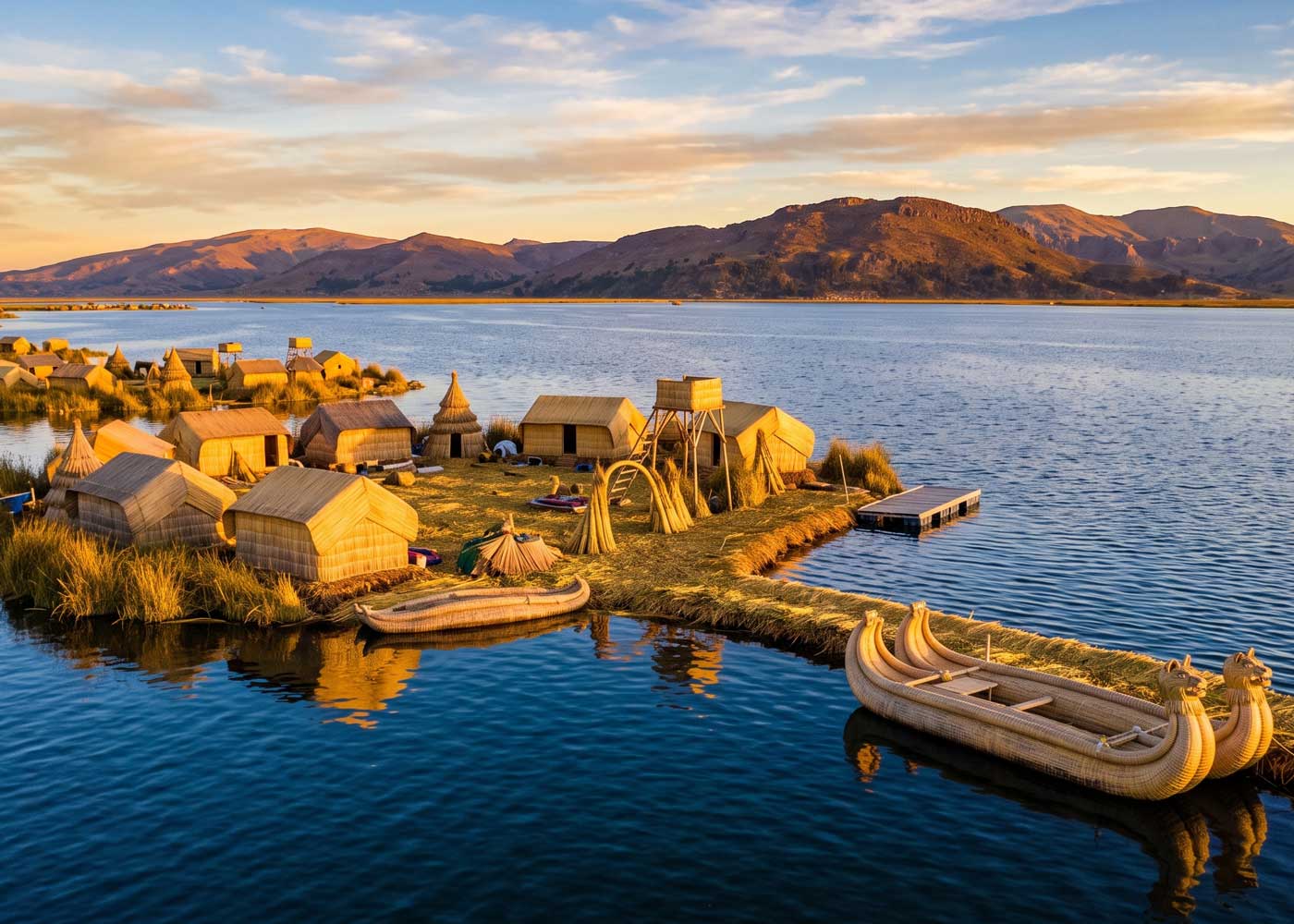
The Uros floating islands represent Lake Titicaca’s most famous attraction. These artificial islands, constructed entirely from totora reeds, have housed the Uros people for centuries.
How the Floating Islands Work
Each island begins with blocks of reed roots cut from the shallows and bound together. Totora reeds, which grow abundantly around the lake, pile on top in thick layers. The constant decomposition from below and addition from above creates a spongy, floating surface roughly one meter thick.
Lifespan: Islands last approximately 20-30 years before requiring complete reconstruction. Residents add fresh reeds every two weeks or so to maintain the surface.
Anchoring: Long poles driven through the reed mass into the lake bottom prevent islands from drifting. Despite this, islands shift position over time.
Size: Islands range from small family platforms to larger community islands housing multiple families, schools, and even watchtowers.
The Uros People Today
The Uros originally built floating homes to escape mainland conflicts. Their unique lifestyle predates the Inca empire. Today, roughly 1,200 people live on approximately 70 floating islands.
Modern Uros life blends tradition with contemporary needs. Solar panels power televisions and lights. Children attend school on dedicated education islands. Many families rely heavily on tourism income while maintaining traditional fishing and reed crafts.
The tourism relationship creates genuine tension. Some islands have become performance spaces where visitors rotate through in 30-minute intervals. Others maintain more authentic daily rhythms. The difference depends largely on which islands tours visit.
The Uros have adapted their reed-building techniques over at least five centuries, but the underlying engineering principles remain unchanged: buoyancy control through layered decomposition, and anchoring against wind shear. What can look like a cultural curiosity is in practice one of the longest-running experiments in sustainable architecture in the Americas.
Visiting the Uros Islands
Standard tours depart Puno’s port between 7:00-8:00 AM. Boats reach the closest inhabited islands in 20-30 minutes.
Typical tour structure: The boat docks at one or two islands. A community member explains island construction and traditional lifestyle (often rehearsed but informative). Visitors walk the spongy surface, enter reed homes, and have opportunity to purchase handicrafts. Some tours include reed boat rides between islands (sometimes included, sometimes extra charge).
Duration: Half-day tours (Uros only) return by noon. Full-day tours combine Uros with Taquile Island.
Costs: Budget group tours start around $15-20. Private tours run $50-80 depending on boat size and customization.
Tips for a Meaningful Visit
Choose your tour carefully. Ask operators which specific islands they visit. Some islands see dozens of tour groups daily; others receive only a few. The less-visited islands often provide more genuine interactions.
Bring small gifts. School supplies, fruit, or basic necessities mean more than trinket purchases. Ask your guide about appropriate gifts.
Buy directly from artisans. The reed handicrafts made on the islands represent genuine skill. Prices are reasonable for the labor involved.
Manage expectations. The Uros experience has become heavily touristed. That does not make it worthless, but expecting an untouched indigenous encounter will lead to disappointment. View it as cultural performance with authentic roots rather than ethnographic discovery.
Taquile Island: Master Weavers of Titicaca
Taquile rises from Lake Titicaca as a natural island, 35 kilometers from Puno. Its 2,200 residents have preserved textile traditions that UNESCO recognized as Intangible Cultural Heritage in 2008.
UNESCO-Recognized Textile Traditions
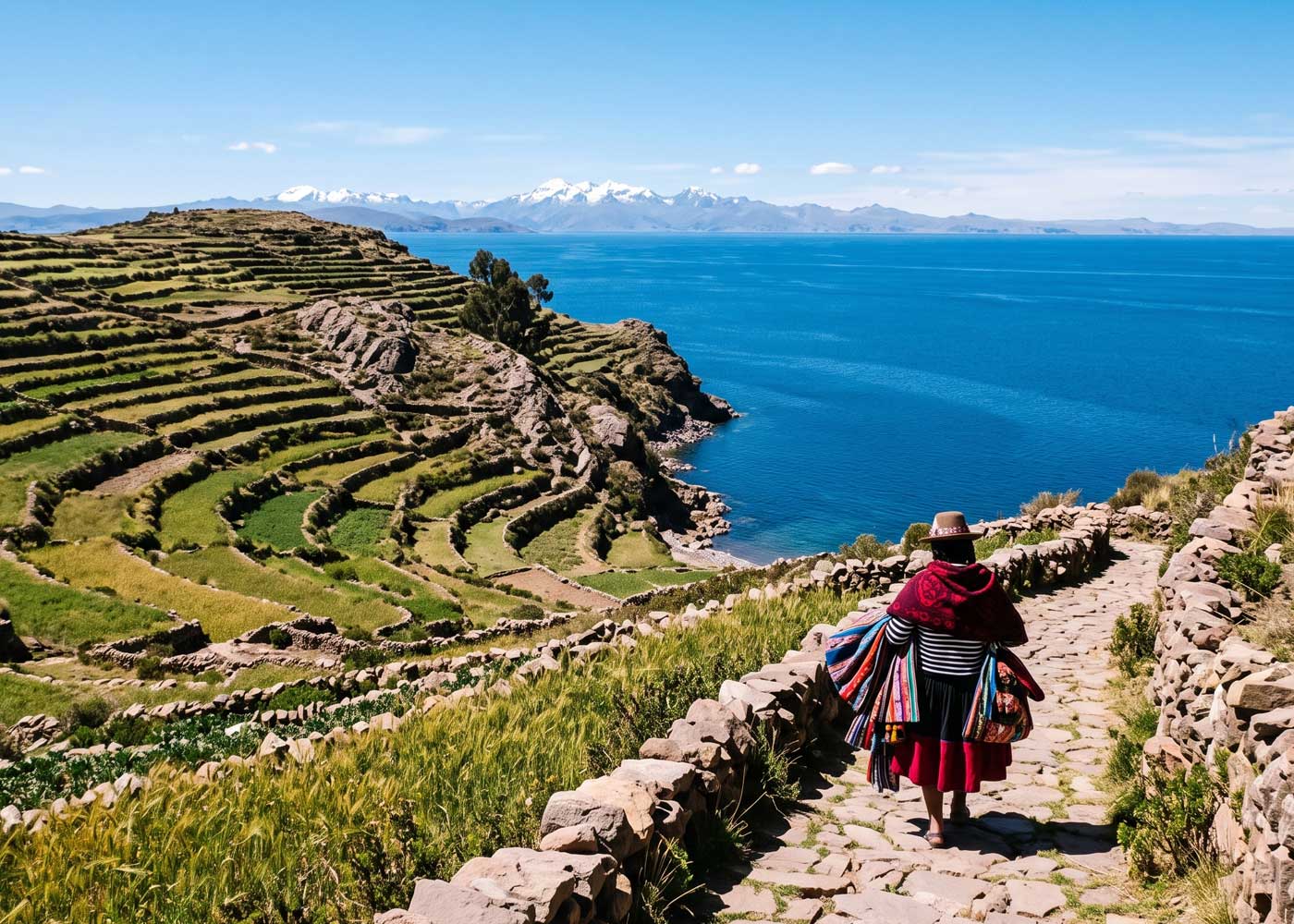
On Taquile, men knit. This reverses the gender division of textile labor found in most of the world. Boys learn to knit around age five, and men continue throughout their lives, producing the distinctive chullo hats and belts that mark Taquile identity.
Color codes: Hat colors indicate marital status. Red hats with white tips signify married men. Red and white mixed patterns indicate bachelors seeking marriage. Entirely white hats mark community leaders.
Quality standards: The finest Taquile textiles require months to complete. Fiber density determines quality: the best pieces feel almost like cloth rather than knitting.
Women weave on traditional backstrap looms, producing the wide belts (fajas) and carrying cloths that complete Taquile dress.
On Taquile, a man’s knitting tells his whole story: married or single, his community role, even his emotional state. The hat is not decoration; it is identity. UNESCO has recognized Taquile’s textile art as Intangible Cultural Heritage of Humanity for precisely this reason, because the knowledge cannot be separated from the people who carry it.
The Taquile Day Trip
Boats depart Puno between 7:00-8:00 AM. The journey takes approximately 3 hours, passing the Uros islands en route.
The hike: Boats dock at the main port, where 533 stone steps lead up to the village center. The climb takes 20-30 minutes at this altitude. Alternative docking points with gentler paths exist; ask if stairs concern you.
On the island: Visitors explore the main plaza, where cooperatives sell textiles at fixed prices. A community restaurant serves a set lunch of trout or quinoa soup. The return walk descends the opposite side of the island to a second port.
Return timing: Boats typically depart Taquile between 2:30-3:30 PM, arriving Puno by 5:30-6:00 PM.
What to Buy on Taquile
The cooperative system ensures fair prices and authentic products. Items include chullos (knitted caps) at $20-50 depending on complexity, calendar belts at $30-80 depicting agricultural and festival calendars, woven bags and pouches at $10-30, and larger weavings at $100+.
Bargaining is not customary. Prices support the artisan community directly.
Amantani Island: Overnight Homestay Experience
Amantani offers what the other Peruvian islands cannot: overnight immersion in island life. This is Lake Titicaca’s community tourism at its most developed.
Community-Based Tourism Model
Amantani’s 4,000 residents have organized tourism to distribute benefits fairly. Upon arrival, a community coordinator assigns visitors to families on a rotating basis. No family hosts multiple nights in a row; no family gets skipped repeatedly.
What homestays include: A private room (basic but clean), dinner, breakfast, and guidance to the island’s ceremonial sites. Most hosts speak limited English; Spanish helps but is not required.
Costs: Homestay fees (typically $15-25 per person) go directly to families. Tour operators charge separately for boat transport.
The Amantani Experience
Boats from Puno arrive mid-afternoon after stopping at Uros and sometimes Taquile. Families meet guests at the dock.
Afternoon: Settle into your room, rest, explore the village, or hike toward the peaks. Your host family prepares dinner (usually quinoa soup, rice, vegetables, sometimes trout).
Evening: The famous Amantani ceremony occurs after dinner. Families dress guests in traditional clothing and walk to either Pachatata (Father Earth) temple or Pachamama (Mother Earth) temple, twin peaks overlooking the lake. After brief ceremonies, the community gathers for traditional music and dancing. Participation is enthusiastic rather than skilled.
Morning: Wake for sunrise over the lake. Breakfast with the family. Boats depart mid-morning, typically stopping at Taquile before returning to Puno.
Practical Considerations
Facilities: Expect basic conditions. Toilets are usually outhouses. Running water may be limited. Electricity exists but do not expect reliable charging for multiple devices.
What to bring: Flashlight/headlamp (essential for nighttime ceremonies), warm layers (nights drop near freezing), toilet paper, gifts for the family (school supplies, snacks, fruit), and cash (no ATMs on the island).
Cultural sensitivity: Your hosts welcome you into their home. Show respect through politeness, attempting a few Spanish or Quechua phrases, and participating in activities with good humor.
Isla del Sol: Birthplace of the Sun (Bolivia)
Isla del Sol represents Lake Titicaca’s spiritual apex. According to Inca mythology, the sun itself was born here. Archaeological evidence confirms the island’s importance to pre-Columbian civilizations for over a millennium.
Inca Mythology and History
The Incas believed their creator god Viracocha emerged from Lake Titicaca at Isla del Sol. From here, he created the sun, moon, and stars, bringing light to a dark world. The first Inca rulers, Manco Capac and Mama Ocllo, also emerged from the island’s sacred rock before journeying to found Cusco.
This mythology made Isla del Sol a pilgrimage destination. The Incas constructed temples, ritual platforms, and the Inca Steps that visitors still climb today.
North vs South: Understanding the Island
Challapampa (North): The northern community houses the Sacred Rock (believed to be where Viracocha emerged), the Chincana ruins (labyrinth-like structures), and a small museum. The north was historically the ceremonial center.
Yumani (South): The southern community offers better tourist infrastructure, including the famous Escalera del Inca (Inca Steps), more accommodation options, and restaurants. Most visitors stay in Yumani.
Access Note: Community conflicts have periodically closed the northern section to visitors. Before planning a north-south traverse, confirm current access with Copacabana tour operators.
Hiking Isla del Sol
When both sections are open, the classic Isla del Sol experience involves hiking from north to south (or vice versa).
The route: 8-10 kilometers depending on detours, taking 3-4 hours. The trail follows the island’s spine with continuous lake views. Elevation changes are gradual but constant.
Difficulty: Moderate at sea level; challenging at 3,812 meters. The thin air makes even flat sections more tiring than expected. Start early, bring water and snacks, and take breaks.
When north is closed: The southern section alone offers sufficient hiking. The Inca Steps, Pilkokaina temple, and loops around Yumani provide a half-day of exploration.
Staying Overnight on Isla del Sol
Overnight stays transform the Isla del Sol experience. Day-trippers see the ruins and leave. Overnight visitors watch the sun set over the Cordillera Real, wake to mirror-still lake waters, and have the archaeological sites largely to themselves in early morning.
Accommodation in Yumani: Basic hostels ($10-20) and modest hotels ($25-50) line the path above the Inca Steps. Rooms are simple. Hot water is not guaranteed. Views compensate for minimal amenities.
What to expect: Electricity may cut out. Wi-Fi is unreliable or absent. Restaurants close early. Pack what you need and embrace the disconnect.
Isla de la Luna: The Quieter Sacred Island
Isla de la Luna (Island of the Moon) lies east of Isla del Sol, rarely visited despite its historical significance.
Temple of the Virgins
The Incas established a convent here housing the Virgins of the Sun (acllawasi): women chosen for religious service who wove sacred textiles and maintained ceremonial fires. The partially restored temple ruins remain the island’s primary attraction.
Archaeological work continues. Visitors can explore the temple complex and imagine its ritual function within the Inca religious system.
Visiting Isla de la Luna
Most visitors reach Isla de la Luna as part of an Isla del Sol tour. Boats stop briefly (1-2 hours) for exploring the ruins and village.
Independent visits require chartering a boat from Copacabana or Yumani. Few travelers do this unless combining with an Isla del Sol overnight.
Time needed: Two hours is sufficient for the ruins and village walk. Overnight options exist but are bare-bones.
Best Time to Visit Lake Titicaca
Lake Titicaca’s high-altitude climate creates distinct seasons that affect visitor experience.
Dry Season (May-October)
Clear blue skies dominate. Daytime temperatures reach 15-20C in sun; nighttime drops to 0-5C or below. This is peak season for good reason: reliable weather makes island visits pleasant.
May-June: Dry season begins. Crowds build gradually. Excellent conditions.
July-August: Peak season. Best weather but maximum tourist density. Book accommodations in advance.
September-October: Crowds thin as shoulder season begins. Weather remains excellent. Perhaps the optimal window.
Wet Season (November-April)
Afternoon storms arrive regularly, sometimes dramatically. Mornings often start clear before clouds build. The landscape greens; surrounding peaks receive fresh snow.
November-December: Rains begin. Some afternoon storms but mornings usually clear. Fewer tourists.
January-March: Heaviest rains. February can see daily downpours. Not ideal for boat trips and island exploration.
April: Transition month. Rains diminish. Good conditions return.
Festival of the Virgin of Candelaria
Puno’s biggest event falls squarely in the rainy season: the Festival of the Virgin of Candelaria runs for two weeks around February 2, drawing tens of thousands of costumed dancers and musicians in one of South America’s largest folk-religious celebrations. UNESCO added it to the Intangible Cultural Heritage list in 2014. Rain is near-certain during the festival, but travelers who prioritize culture over dry skies should plan around it deliberately: hotels sell out weeks in advance and prices rise sharply, so book early if this is the goal.
Month-by-Month Summary
| Month | Weather | Crowds | Recommendation |
|---|---|---|---|
| May | Dry, cool | Building | Excellent |
| June | Dry, cold | High | Very good |
| July-August | Dry, cold | Peak | Good (crowded) |
| September | Dry, warming | Moderate | Excellent |
| October | Dry | Moderate | Very good |
| November | Transition | Low | Good value |
| December | Rainy starts | Moderate | Variable |
| January-March | Wet | Low | Not ideal |
| April | Rain ending | Low | Good value |
How to Get to Lake Titicaca
From Cusco to Puno
Tourist Bus (Recommended): The 6-7 hour journey via the Altiplano has become a tourist attraction itself. Reputable companies (Cruz del Sur, Peru Hop, Inka Express) include stops at La Raya pass (4,335m), Pukara archaeological site, and Sillustani funeral towers.
- Departure: Morning (6:00-8:00 AM)
- Arrival: Afternoon (2:00-4:00 PM)
- Cost: $20-45 depending on company and service level
- Advantages: Scenic, comfortable, includes cultural stops
PeruRail Titicaca Train: South America’s first luxury train service runs between Cusco and Puno. The Belmond-operated service includes gourmet meals, live entertainment, and observation cars.
- Duration: 10 hours
- Cost: $275+ one-way
- Frequency: Limited schedule (check current operation)
- Advantages: Spectacular experience for those with time and budget
Colectivo/Shared Transport: Minivans depart Cusco’s bus terminal throughout the day. Faster than tourist buses (5-6 hours) but no stops and less comfort.
- Cost: $10-15
- Advantages: Cheap, flexible timing
Flying Direct to Juliaca Airport
For travelers short on time, Inca Manco Capac International Airport (JUL) in Juliaca sits roughly 45 minutes (50 kilometers) from Puno. LATAM, Sky Airline, and JetSmart operate flights from Lima (about 1 hour 45 minutes) and Cusco (about 30 minutes). Flying skips the scenic Altiplano stops of the tourist bus, and it removes the gradual acclimatization the overland route provides, so this option suits travelers who have already spent time at altitude in Cusco rather than those arriving straight from sea level.
From La Paz to Copacabana
Bus Services: Multiple companies operate the 3.5-4 hour route from La Paz’s main terminal. Buses cross the narrow Strait of Tiquina by ferry (passengers walk onto separate boats while the bus crosses on a barge).
- Departures: Throughout the day
- Cost: $3-6 (Bolivianos 25-50)
- The ferry crossing: 15-20 minutes, included in ticket but sometimes charged separately
Border Crossing Options
Via Copacabana Route (Recommended for Tourists): Buses from Puno to Copacabana (or La Paz) use the Kasani border crossing. The process is straightforward:
- Exit Peru at Kasani (passport stamp)
- Walk 100 meters to Bolivian immigration
- Enter Bolivia (passport stamp)
- Reboard bus
Via Desaguadero (Main Commercial Crossing): Larger buses and most commercial traffic use Desaguadero, directly on the Peru-Bolivia border south of the lake. Less scenic, more crowded, but sometimes faster.
Lake Titicaca Tour Options
Day Trips from Puno
Uros Only (Half-Day): 3-4 hours total. Morning or afternoon departures. Visit 1-2 floating islands. Cost: $15-25 group, $50-80 private. Best for limited time, Uros-focused interest.
Uros + Taquile (Full Day): 8-10 hours. Visit Uros islands then continue to Taquile for hiking, lunch, and textile viewing. Cost: $25-40 group, $80-150 private. Best for single-day complete experience.
Overnight Tours (2 Days/1 Night)
Uros + Amantani Homestay + Taquile: The classic Lake Titicaca overnight. Day 1: Uros and Amantani, including evening ceremony. Day 2: Sunrise, Taquile visit, return to Puno. Cost: $40-80 including homestay, meals, transport. Best for deeper cultural immersion.
Multi-Day Peru-Bolivia Tours
3 Days Puno to Copacabana/La Paz: Combines Peruvian islands with border crossing and Isla del Sol. Day 1: Uros, Amantani homestay. Day 2: Taquile, border crossing, Copacabana. Day 3: Isla del Sol, continue to La Paz. Cost: $150-300 depending on inclusions.
Titicaca to Salar de Uyuni (4-5 days): The natural combination route. Lake Titicaca islands, then overland through Bolivia to the salt flats. Numerous operators run this route. Cost: $300-600 for complete package.
Private vs Group Tours
Group Tours: Cost 40-60% cheaper. Trade-offs include fixed schedules, limited flexibility, and larger crowds at sites. Best for budget travelers and social atmosphere.
Private Tours: Cost 2-3x group rates. Advantages include customized timing, choice of specific islands, and personal guide attention. Best for families, special interests, and tight schedules.
Where to Stay at Lake Titicaca
Puno Accommodation
Budget ($15-30): Pirwa Hostel Puno offers reliable chain hostel experience with social atmosphere. Uros Titicaca Khantati Lodge provides basic but clean rooms near the port.
Mid-Range ($40-80): Casa Andina Standard Puno delivers chain reliability with good breakfast. Hotel Hacienda Puno features colonial style in central location. Hotel Intiqa offers modern rooms with lake views.
Luxury ($100-250): GHL Lago Titicaca represents the best in-town luxury option. Sonesta Posada del Inca provides lakefront location with full amenities. Titilaka Lodge offers remote private peninsula with all-inclusive packages ($500+).
Copacabana Accommodation
Budget ($10-25): La Cupula features hillside domes with memorable setting. Hostal Sonia provides basic rooms in good location. Numerous basic hostels line the main street.
Mid-Range ($30-60): Hotel Rosario Lago Titicaca stands as the best reliable mid-range option. Hotel La Coupole offers lake views and decent restaurant.
Island Stays
Amantani Homestays: $15-25 per person including meals. Assigned by community rotation; quality varies but all meet basic standards.
Isla del Sol (Yumani): $10-50 range. Palla Khasa, Las Cabanas del Inca, and various unnamed guesthouses line the path above the Inca Steps.
Suasi Island (Peru): Private island luxury. The only accommodation on this protected island offers all-inclusive packages from $350+.
Peru-Bolivia Border Crossing at Titicaca
Crossing the Peru-Bolivia border ranks among the easiest international crossings in South America. Two main options exist.
Crossing via Copacabana Route (Recommended)
Most tourist buses use the Kasani/Yunguyo crossing near Copacabana.
Step-by-step process:
- Approach Peru exit: Bus stops at Peruvian immigration building in Yunguyo
- Exit Peru: Present passport, receive exit stamp, return to bus
- Drive to border: Short distance to Kasani border point
- Cross to Bolivia: Walk across border (the actual line)
- Enter Bolivia: Present passport at Bolivian immigration, receive entry stamp
- Continue: Return to bus, continue to Copacabana or La Paz
Timing: Allow 30-60 minutes for the complete process. Longer during busy periods.
Hours: Open daily, typically 8:00 AM – 8:00 PM (confirm current hours)
Documents Required
Peru Entry/Exit: Passport valid 6+ months. Tourist card (given on arrival, must return on exit).
Bolivia Entry: Passport valid 6+ months. Most nationalities receive free 30-90 day tourist entry. US citizens require a visa, obtainable at border ($160) or in advance at embassy.
Yellow Fever: Officially required if arriving from endemic areas. Enforcement varies. Having the certificate avoids potential issues.
Common Mistakes to Avoid
Forgetting the Peru exit stamp: In the confusion of bus crossings, some travelers fail to get stamped out of Peru. This creates problems when leaving Bolivia. Always verify you have the exit stamp.
Currency exchange: Change Peruvian soles to Bolivian bolivianos at the border. Rates are fair. Waiting until Copacabana is also fine. Do not carry large amounts of Peruvian currency into Bolivia.
Bus coordination: When crossing with a tour, your bus waits. On public buses, make sure you understand the system before departing. Some buses have passengers walk across and meet a different bus; others wait for everyone.
What to Pack for Lake Titicaca
Essential Items
Sun Protection: UV intensity at 3,800 meters is extreme. Bring SPF 50+ sunscreen, quality sunglasses, and a wide-brimmed hat. Reapply sunscreen frequently, especially on boats.
Warm Layers: Temperatures drop dramatically after sunset. Pack fleece or down jacket, warm hat, and gloves. Nights on Amantani or Isla del Sol approach freezing.
Rain Gear: Even in dry season, afternoon showers occur. Lightweight waterproof jacket doubles as wind protection on boats.
Cash: ATMs exist in Puno and Copacabana but not on islands. Bring sufficient cash for tour costs, island purchases, and tips.
For Homestays
Flashlight/Headlamp: Essential for nighttime trips to outhouses and evening ceremonies at Amantani.
Gifts: Small items for host families show appreciation. School supplies, snacks, or fruit work well. Ask your guide for suggestions.
Toilet Paper: Carry your own supply. Also useful: hand sanitizer.
Modest Clothing: For evening ceremonies, hosts provide traditional clothes over your own. Avoid shorts and revealing tops during village visits.
Altitude at Lake Titicaca: Higher Than You Think
Lake Titicaca sits at 3,812 meters, making it higher than many travelers realize. This creates genuine health considerations.
Understanding 3,812 Meters
For context:
- Lake Titicaca: 3,812m
- La Paz (center): 3,640m
- Cusco: 3,400m
- Highest point in continental Europe (Mont Blanc): 4,808m
At this elevation, air contains only 63% of the oxygen available at sea level. Your body works harder for every breath.
Acclimatization Strategy
Arriving from Cusco: If you have spent 2-3 days in Cusco (3,400m), you are already mostly acclimatized. The additional 400 meters at Titicaca rarely causes problems for Cusco-adjusted travelers.
Arriving from sea level: Do not fly directly to Puno. The altitude will hit hard. Either spend 2 days in Cusco first (recommended), take the scenic bus from Lima with gradual ascent, or plan a gentle first day at the lake.
Arriving from La Paz: La Paz’s center sits slightly lower than Titicaca. The difference is negligible for acclimatization purposes.
Altitude Sickness Signs
Mild symptoms (common, manageable): Headache, fatigue, mild nausea, shortness of breath with exertion, difficulty sleeping.
Moderate symptoms (warning signs): Severe persistent headache, vomiting, extreme fatigue, rapid heartbeat at rest.
Severe symptoms (medical emergency): Confusion, loss of coordination, fluid sounds in lungs, inability to walk straight.
Prevention and Treatment
Hydration: Drink 3-4 liters of water daily. Dehydration worsens altitude symptoms.
Coca tea: Mate de coca helps many travelers. Available everywhere around the lake.
Medication: Acetazolamide (Diamox) aids acclimatization if started 24-48 hours before reaching altitude. Consult a doctor before travel.
Pace yourself: Walk slowly. Rest frequently. Do not attempt strenuous island hikes on your first day.
Descent: If symptoms worsen despite rest and hydration, descend. Even 500 meters of elevation drop can provide relief.
Responsible Tourism at Lake Titicaca
Supporting Local Communities
The best Lake Titicaca experiences directly benefit the people who live here.
Community tourism: Amantani and Taquile operate community-managed tourism systems. Booking through these channels ensures money reaches families rather than intermediaries.
Fair payment: On the Uros islands, purchase crafts directly from makers. On Taquile, buy from the cooperative. On Isla del Sol, eat at local restaurants rather than bringing outside food.
Ethical tour operators: Choose operators that employ local guides, use local boats, and demonstrate commitment to community relationships beyond profit extraction.
Environmental Considerations
Lake Titicaca faces serious environmental pressures. Sewage from Puno, mining runoff, and agricultural chemicals threaten water quality. Invasive species disrupt the ecosystem.
Water quality around Puno Bay has deteriorated over recent decades, and the lake’s high altitude means it processes pollutants more slowly than lowland water bodies. The binational Peru and Bolivia authority for Lake Titicaca (ALT) runs an ongoing water-quality monitoring programme covering both shores.
What visitors can do: Avoid single-use plastics (the lake’s shores already accumulate too much waste). Use reef-safe sunscreen (chemical sunscreens harm aquatic life). Stay on marked paths to prevent erosion. Do not disturb wildlife, including the lake’s unique giant frogs.
Cultural Respect
Ask before photographing: Many community members dislike being photographed without permission. Always ask, especially for close-up portraits.
Dress appropriately: Cover shoulders and knees when visiting community events or ceremonies.
Learn basic phrases: Even “buenos dias” and “gracias” in Spanish show respect. “Kamisaki” (hello in Aymara) and “Allianchu” (hello in Quechua) delight locals.
Your Lake Titicaca Journey
You now understand the geography, the island options, the altitude realities, and the border logistics. Whether you spend two days on the Peru side or a week exploring both countries, Lake Titicaca delivers something no other destination can: the convergence of ancient civilizations, living traditions, and otherworldly landscapes at the roof of the Americas.
The planning decisions come down to time and priorities. Short on time? Focus on Uros and Taquile from Puno. Seeking cultural depth? Add the Amantani homestay. Want adventure and scenery? Cross to Bolivia for Isla del Sol. Have a week? Do it all, then continue to the Salar de Uyuni for one of Earth’s great overland journeys.
Inca Trail Reservations operates Lake Titicaca tours from our Cusco base, including multi-day packages combining the lake with our trekking programs. Whether you want a straightforward Puno experience or a full Peru-Bolivia crossing, we can build an itinerary matching your interests and schedule.
Ready to explore the sacred waters? Our team responds to inquiries within 24 hours with current availability and personalized recommendations.
This guide is maintained by Inca Trail Reservations, a licensed South America tour operator that has organized treks and Lake Titicaca tours out of Cusco since 2006. Our team draws on direct, on-the-ground operational experience running itineraries on both the Peru and Bolivia sides of the lake to keep the practical details in this guide current.