
Rainbow Mountain Peru: the Vinicunca hike guide
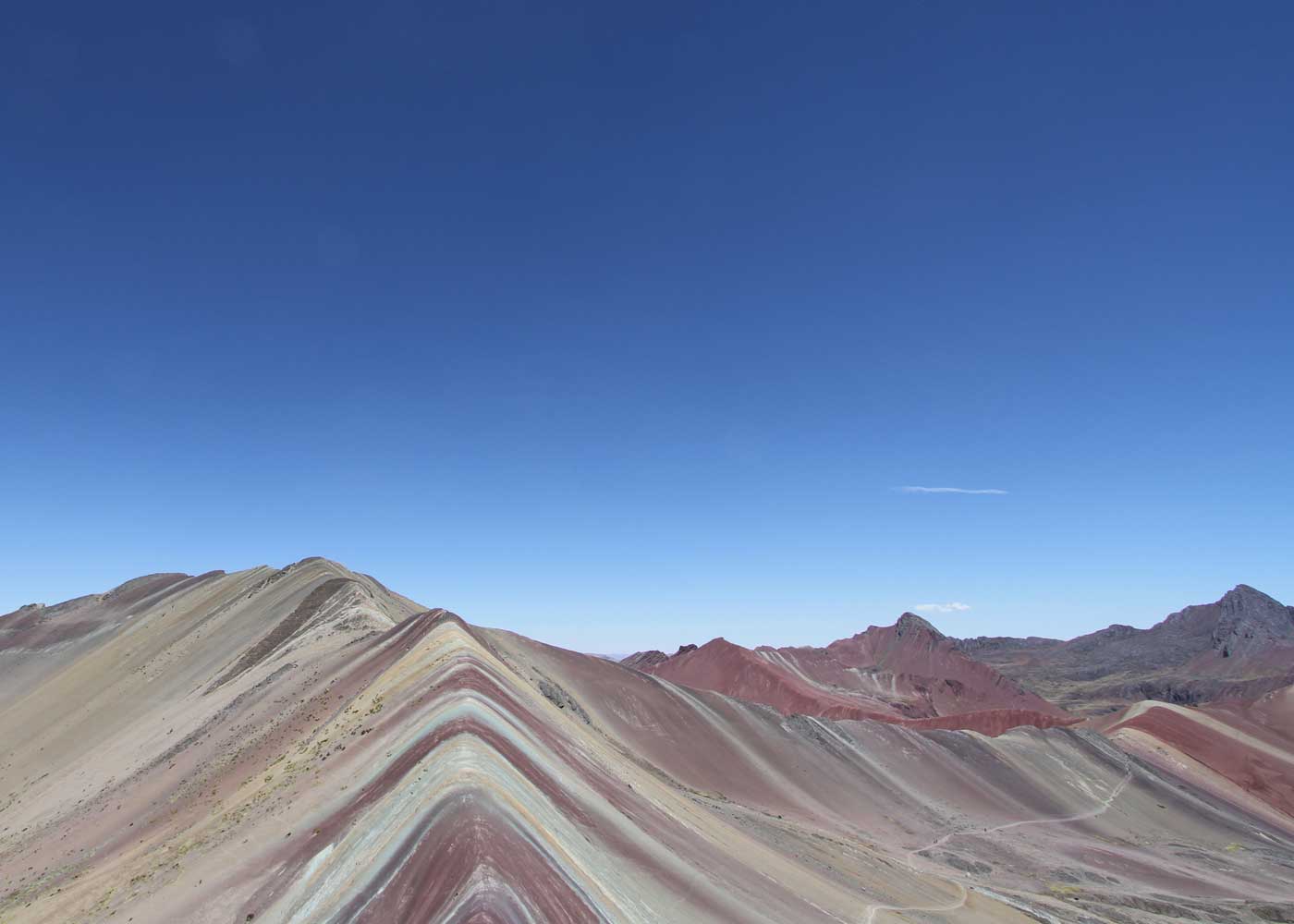
Rainbow Mountain did not exist in travel guides until 2016. Climate change melted the glacier that had hidden it for centuries. What emerged was one of Earth’s most photogenic landscapes: a mountainside striped in red, yellow, green, and turquoise, sitting at 5,036 meters in the Peruvian Andes.
This guide draws on years of guiding travelers to Vinicunca. See also our Rainbow Mountain trail page for the quick-reference stats. We cover the reality of hiking at extreme altitude, the geology behind those famous colors, optimal timing to see them clearly, and the Palccoyo alternative for those who cannot or prefer not to attempt the main mountain. What follows is everything you need to decide whether Rainbow Mountain belongs on your Peru itinerary.
The short version: Rainbow Mountain rewards prepared visitors with genuinely extraordinary scenery. It punishes those who underestimate 5,036 meters of altitude. Proper acclimatization is non-negotiable.
What Is Rainbow Mountain (Vinicunca)?
The Mountain of Seven Colors
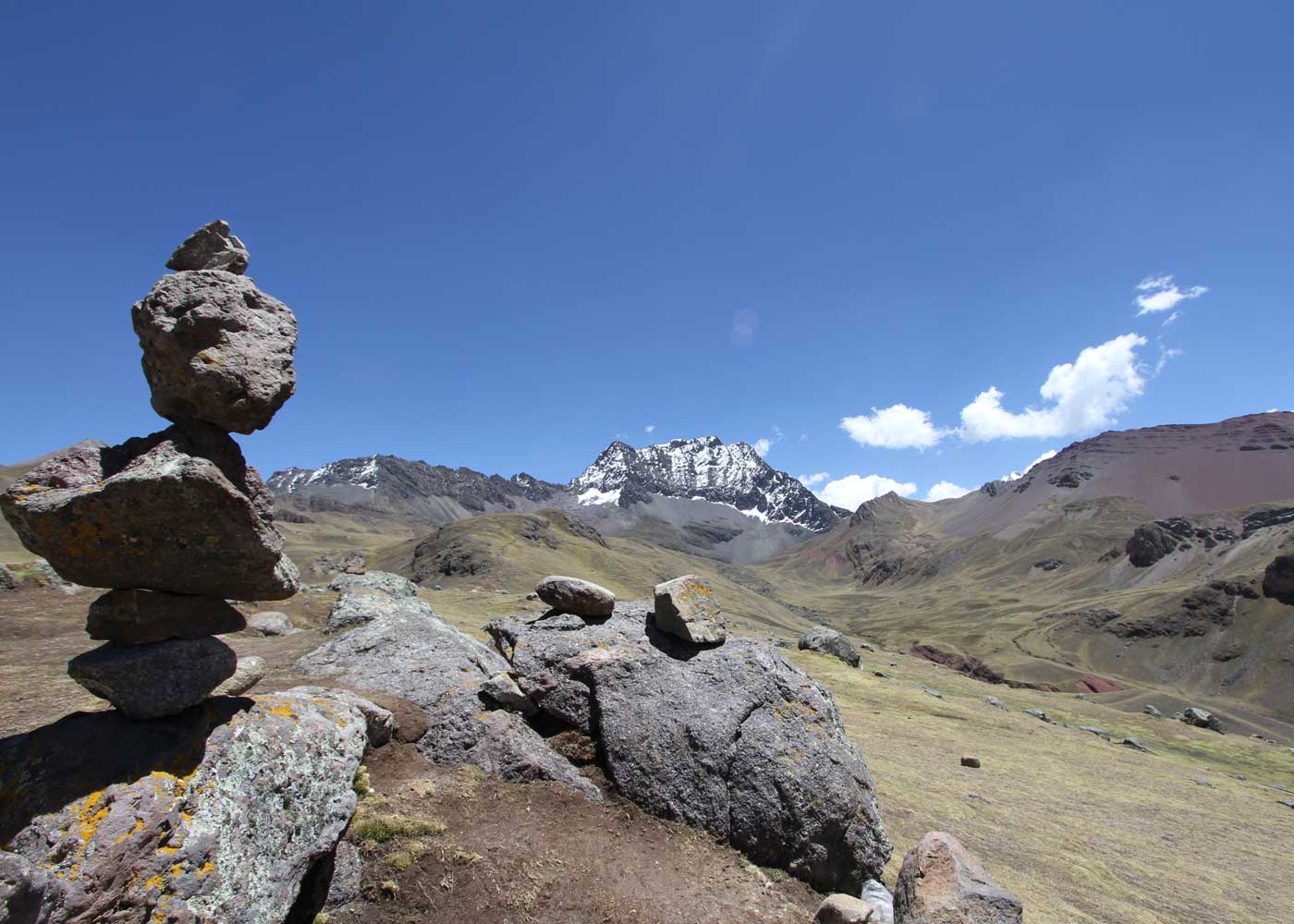
Rainbow Mountain sits 100 kilometers southeast of Cusco in Peru’s Cusipata district. The summit viewpoint reaches 5,036 meters (16,522 feet) above sea level. To put that in perspective: this is higher than any mountain in the contiguous United States. Higher than Mont Blanc’s base camp. This is likely the highest altitude most travelers will ever experience.
Locals know it by several names. Vinicunca comes from the Quechua “Winicunca,” meaning “colored mountain.” Montana de Siete Colores translates to “Mountain of Seven Colors” in Spanish. Some call it Cerro Colorado. All describe the same geological phenomenon: a mountainside painted in bands of color by millions of years of sediment accumulation.
The mountain belongs to the larger Ausangate range, home to the Ausangate peak (6,384m) that Andean communities consider sacred. Rainbow Mountain sits on Ausangate’s lower flanks, making it accessible as a day trip while the higher peaks require multi-day expeditions.
For Andean communities, Ausangate is an apu, a mountain spirit believed to protect the surrounding valleys and herds. Rainbow Mountain, as part of that same massif, carries some of that cultural weight even though most visitors experience it purely as scenery.
Why the Colors Exist (Geology Explained)
Those famous stripes result from sedimentary rock layers containing different mineral compositions. Each mineral oxidizes differently when exposed to air and moisture, producing distinct colors.
Iron oxide creates the red and maroon bands. This is rust, formed when iron-rich sediments meet oxygen over millions of years. The deeper reds indicate higher iron concentrations.
Sulfur compounds produce the yellow stripes. These layers formed from volcanic activity that deposited sulfur-rich materials into the sedimentary sequence.
Chlorite generates the green and turquoise hues. This mineral group forms through the metamorphosis of iron-magnesium silicates under specific temperature and pressure conditions.
Copper sulfate contributes blue-green tones in certain areas. Copper deposits oxidizing over geological time scales create these distinctive patches.
The layered effect results from the Andes’ complex geological history. Tectonic forces lifted, tilted, and folded these sedimentary layers, then erosion carved the current mountain shape, exposing the colorful cross-section we photograph today.
What makes Vinicunca remarkable is the sheer number of mineral layers exposed in one place. The sedimentary strata date back roughly 63 to 75 million years, tilted on their side by later tectonic uplift. Most mountains of this type exist, but they remain hidden under ice or vegetation. Vinicunca lost its ice at the right moment for us to see it.
From Hidden Glacier to Instagram Sensation
Until approximately 2015-2016, none of this was visible. A permanent glacier and snowfield covered the colored layers, part of a broader pattern of Andean ice loss documented by Peru’s National Institute of Glaciology (INAIGEM). Local shepherds knew the mountain existed, but tourists had no reason to visit an ordinary snowfield among thousands of others in the Andes.
Climate change changed everything. As global temperatures rose, the protective ice melted, revealing the mineral layers beneath. Local communities noticed first. Word spread to Cusco tour operators. Within two years, Rainbow Mountain transformed from unknown grazing land to Peru’s second most-visited attraction after Machu Picchu.
The speed of this transformation created challenges. Infrastructure has struggled to keep pace with demand. On peak days, over 1,500 visitors make the trek. The site had no facilities until recently, and even now, amenities remain basic. The sudden tourism boom provides income to remote communities while straining the environment those communities depend upon.
The Rainbow Mountain Hike: What to Expect
Trail Statistics
The numbers sound manageable. They deceive.
A 3-kilometer hike with 436 meters of elevation gain would be unremarkable on a Sunday walk at sea level. At 5,000+ meters it is a different exercise entirely, and the trail statistics alone don’t communicate that.
- Distance: 6.2 kilometers round trip (3.1 km each way)
- Elevation gain: 436 meters (from 4,600m trailhead to 5,036m viewpoint)
- Typical hiking time: 2-3 hours total (1-1.5 hours each direction)
- Trail type: Clearly marked dirt path, moderate to steep grade
On paper, a 3-kilometer hike with 436 meters of elevation gain would be easy at sea level. Perhaps an hour of moderate effort. At 5,000+ meters, everything changes. The air contains roughly 43% less oxygen than at sea level, according to altitude physiology research published by the Institute for Altitude Medicine. Every step demands more from your cardiovascular system.
Hour-by-Hour Breakdown
First 30 minutes: The trail begins gently, ascending through high-altitude grasslands where alpacas and llamas graze. You feel fine. The landscape stretches endlessly in all directions. Optimism runs high.
30-60 minutes: The grade steepens. Your breathing becomes noticeably labored. Conversations grow shorter as speaking requires effort you’d rather save for walking. The thin air starts asserting itself.
60-90 minutes: The final section presents the steepest gradient. Each step forward requires conscious effort. Stops become frequent. The colored mountain appears in the distance, providing motivation.
At the viewpoint: You arrive at a flat viewing area overlooking the striped mountainside. Give yourself 15-30 minutes to photograph, appreciate, and recover. The colors are real and remarkable.
Descent: 45-60 minutes. Easier on lungs, harder on knees. The steep sections require careful footing.
Difficulty Assessment (Honest)
Rainbow Mountain’s difficulty stems almost entirely from altitude. The trail itself presents nothing technical. No scrambling, no exposure, no route-finding challenges. A moderately fit person could complete this hike at sea level in 30-45 minutes without breaking a sweat.
At 5,036 meters, most visitors rate the experience 7/10 difficulty.
Physical fitness helps but cannot replace acclimatization. We regularly see marathon runners struggle because they arrived in Cusco yesterday. We also see sedentary retirees succeed because they spent a week adjusting to altitude. Your body’s adaptation matters more than your baseline fitness.
Common experiences include:
- Shortness of breath even when standing still
- Heart pounding during moderate exertion
- Mild headache
- Fatigue disproportionate to effort
- Needing rest stops every 5-10 minutes during the final push
Red flags requiring immediate descent:
- Severe headache not relieved by rest and hydration
- Nausea or vomiting
- Confusion or disorientation
- Inability to walk in a straight line
- Persistent dizziness
Listen to your body. No photograph is worth a medical emergency at 5,000 meters, hours from proper healthcare.
Horse/Mule Option
At the trailhead, local handlers offer horse rides for 70-100 PEN (approximately $20-25 USD). The horse carries you for roughly 80% of the trail distance. The final, steepest section must be walked regardless.
Who should consider this:
- Travelers with mobility limitations
- Those experiencing altitude symptoms but determined to continue
- People who simply want an easier experience
Who should NOT rely on this:
- Everyone planning to “see how it goes” and get a horse if needed: they may be unavailable when you need one
- Anyone thinking the horse eliminates altitude effects should know: it doesn’t; you’re still breathing thin air
Our recommendation: if you’re genuinely concerned about completing the hike, consider Palccoyo instead. If you’re capable but want backup, pre-arrange a horse at the trailhead before starting.
The Altitude Challenge: 5,036 Meters Explained
Understanding Extreme Altitude
At 5,036 meters, you breathe air containing only 57% of the oxygen available at sea level. Your body responds with emergency measures: faster breathing, elevated heart rate, increased red blood cell production. These adaptations take time. Without that time, you experience altitude sickness; see our altitude sickness in Peru guide for the full picture.
To contextualize the elevation:
- Rainbow Mountain viewpoint: 5,036m
- Mont Blanc summit: 4,808m
- Highest point in contiguous USA (Mt. Whitney): 4,421m
- Cusco city center: 3,400m
- Denver (“Mile High City”): 1,609m
Many visitors to Rainbow Mountain have never been above 3,000 meters before. Their first experience at extreme altitude occurs at 5,036 meters, with no gradual progression. This is not ideal but can be managed with proper preparation.
The biggest mistake is flying into Cusco and attempting 5,000-meter hikes within 48 hours. Your lungs and heart need a minimum of three days to begin adapting. Fitness does not protect you: even trained athletes can be overcome by altitude if they skip acclimatization.
Why Acclimatization Matters
Your body requires time to adjust to reduced oxygen. During acclimatization, you produce more red blood cells to carry available oxygen more efficiently, breathe more deeply, and undergo metabolic changes that improve oxygen utilization.
Minimum requirement: 2-3 full days in Cusco (3,400m) before attempting Rainbow Mountain. This is the absolute minimum, not the recommendation.
Better approach: 4-5 days in the Cusco region. Spend day 3 or 4 in the Sacred Valley (lower altitude of 2,800-3,000m) for active recovery, then attempt Rainbow Mountain on day 5 when your body has had meaningful adjustment time.
Optimal approach: A week-long acclimatization with progressive altitude exposure, arrive Cusco, rest, a Sacred Valley day trip, light Cusco exploration, then Rainbow Mountain.
Rushing this process leads to:
- Failed summit attempts (turning back due to sickness)
- Miserable experiences even if you complete the hike
- Medical emergencies requiring evacuation
- Ruining subsequent days of your trip while you recover
Altitude Sickness Symptoms to Monitor
Mild symptoms (common, manageable): Headache, fatigue, shortness of breath with exertion, difficulty sleeping, mild nausea, decreased appetite.
Moderate symptoms (warning signs): Severe headache not relieved by rest and medication, vomiting, extreme fatigue, coordination problems, shortness of breath at rest.
Severe symptoms (medical emergency): Confusion or altered mental state, inability to walk straight, gurgling breath sounds (fluid in lungs), persistent worsening symptoms despite descent.
The cardinal rule: If symptoms worsen while ascending, stop ascending. If they continue worsening at rest, descend. Altitude sickness only improves with lower elevation.
Prevention Strategies
Before your trip:
- Discuss Acetazolamide (Diamox) with your doctor; many travelers find it helpful for acclimatization
- Maintain good hydration in the weeks before arrival
- Understand that no amount of fitness substitutes for acclimatization
In Cusco:
- Rest on your arrival day; no strenuous activity
- Stay hydrated, but don’t over-hydrate; 3-4 liters daily is sufficient
- Avoid alcohol for at least 48 hours before Rainbow Mountain
- Eat light, easily digestible meals
- Try coca tea or chew coca leaves (legal and traditional in Peru)
On the trail:
- Ascend slowly; there’s no prize for speed
- Take rest breaks before you desperately need them
- Stay hydrated with small, frequent sips
- Eat snacks even if not hungry; your body needs fuel
- Communicate honestly with your guide about how you feel
Getting to Rainbow Mountain from Cusco
The Journey
Rainbow Mountain sits 100 kilometers from Cusco, but mountain roads mean a 2.5-3 hour drive. The route passes through Checacupe and Pitumarca before ascending to the trailhead. New to the region? Start with our Cusco travel guide.
The road remains paved until Pitumarca. The final 30-45 minutes involves rough, unpaved mountain roads that can challenge vehicles without proper clearance. During wet season, sections may be muddy or temporarily impassable.
Tours depart Cusco between 3:00-4:00 AM. This is not negotiable. The early departure ensures arrival at the trailhead by 6:00-7:00 AM, allowing summit attempts before clouds typically roll in around 10:00-11:00 AM.
Organized Tour (Recommended)
Tours range from $25-80 USD depending on operator quality and group size.
Budget tours ($25-45) include round-trip transportation, English/Spanish-speaking guide, breakfast and lunch, with group sizes of 15-30+ people.
Premium tours ($50-80) include everything above plus supplemental oxygen, smaller groups (8-12 people), more time at the summit, better meals and vehicles, and weather rebooking policies.
The value of organized tours extends beyond convenience. At 5,036 meters, having a guide trained in altitude sickness recognition provides meaningful safety benefit. Oxygen availability (on premium tours) can rescue a struggling hiker. Included meals ensure proper nutrition when your appetite disappears.
Independent Visit (Challenging)
Independent visits are possible but not recommended for most travelers.
Requirements:
- 4WD rental vehicle (roads require clearance)
- Early morning departure (3:00-4:00 AM)
- Navigation ability (limited signage)
- Entry fee payment at trailhead (10-20 PEN)
- All your own supplies (food, water, first aid)
- A plan for altitude emergencies without guide support
When independent makes sense:
- You have Peru travel experience
- You speak Spanish
- You’ve successfully managed high-altitude hikes before
- You are comfortable with self-rescue scenarios
For everyone else, the $30-80 tour cost provides substantial value relative to the risks and hassles of going alone.
Why Early Departure Matters
Clouds typically develop by mid-morning in this region. The mountain’s colors depend entirely on direct sunlight hitting the mineral surfaces. Cloud cover means:
- Muted or invisible colors
- Poor photographs
- A disappointing experience
Arriving early also means:
- Cooler hiking temperatures
- Smaller crowds at the viewpoint
- Better light for photography
- A time buffer if you hike slowly
Tours leaving after 5:00 AM risk arriving in poor conditions.
Morning light between 7:00-10:00 AM produces the best color saturation for photographs.
Best Time to Visit Rainbow Mountain
Dry Season (May-October)
Peru’s dry season offers the most reliable conditions. Clear morning skies occur most days. Temperatures typically run from around -5 degrees Celsius at dawn to 7-12 degrees Celsius by midday, depending on sun exposure and time of day.
- May: dry season begins, weather stabilizes, crowds building but not yet peak, an excellent choice overall
- June-August: peak season, best weather probability, maximum crowds. Cusco’s Inti Raymi festival (late June) adds a cultural dimension but also more tourists; book tours in advance
- September: crowds decrease slightly from the August peak while weather remains excellent, perhaps the best single month for the experience
- October: transition month, still mostly dry but afternoon clouds becoming more common, good weather, moderate crowds, good value
Wet Season (November-April)
The wet season brings afternoon rain or snow almost daily. However, mornings often start clear. Rainbow Mountain remains visitable, just with greater uncertainty.
- November: transition into wet season, morning visits still frequently successful, lower prices and crowds
- December: wet season established; holiday travelers increase crowds despite the weather, mixed conditions
- January-February: heaviest rainfall, not recommended unless you’re flexible about rebooking if conditions turn poor
- March-April: rains diminishing; April offers improving conditions with low-season prices, a good value period
Month-by-Month Quick Reference
| Month | Weather | Crowds | Recommendation |
|---|---|---|---|
| January-February | Wet | Low | Not recommended |
| March-April | Transition | Medium | Good value |
| May | Dry | High | Recommended |
| June-August | Dry | Peak | Book ahead |
| September | Dry | High | Best overall |
| October-November | Transition | Medium | Good value |
| December | Wet | Medium | Variable |
Weather Contingency
Even in dry season, individual days may have cloud cover. Reputable tour operators offer rebooking policies for poor visibility days. Confirm this policy before booking, especially if your schedule has limited flexibility.
The colors require direct sunlight. Overcast conditions wash out the contrast. If clouds cover the mountain when you arrive, the experience disappoints regardless of season.
Palccoyo: The Rainbow Mountain Alternative
Why Palccoyo Exists as an Option
Palccoyo emerged as an alternative for travelers who cannot or prefer not to attempt Vinicunca’s demanding altitude. The site features three distinct rainbow-striped mountains at a maximum elevation of 4,900 meters, 300 meters lower than Vinicunca’s viewpoint.
The differences extend beyond elevation: terrain is nearly flat (gentle walking, not hiking), total distance is approximately 3 kilometers round trip, daily visitors number 100-200 versus 1,000+ at Vinicunca, the drive from Cusco takes 3+ hours (longer than Vinicunca), and the color patterns differ (more red/orange dominant, less striped).
Palccoyo is not “better” or “worse” than Vinicunca. It’s different. The choice depends entirely on your priorities and physical situation.
Who Should Choose Palccoyo
- Travelers with altitude concerns: the 136-meter difference matters; symptoms that would be debilitating at 5,036m may be manageable at 4,900m
- Limited fitness or mobility: the flat terrain makes Palccoyo accessible to people who cannot handle steep hiking
- Visitors seeking solitude: with 90% fewer visitors, Palccoyo offers a dramatically different, quieter atmosphere
- Return visitors: if you’ve done Vinicunca and want a different rainbow mountain experience, Palccoyo delivers variety
- Families with older children or seniors: the easier terrain makes Palccoyo feasible for a wider age range
Who Should Choose Vinicunca
- Those wanting the famous Rainbow Mountain: Vinicunca is what appears in search results, travel shows, and social media
- Fit travelers who’ve properly acclimatized: spend 4+ days adapting to Cusco altitude and the challenge becomes achievable and rewarding
- Photographers seeking the classic shot: the layered stripe pattern produces more dramatic single-mountain compositions than Palccoyo’s three-mountain landscape
Comparison Table
| Factor | Vinicunca | Palccoyo |
|---|---|---|
| Max Altitude | 5,036m | 4,900m |
| Difficulty | Moderate-Hard | Easy |
| Distance | 6.2 km | 3 km |
| Daily Visitors | 1,000+ | 100-200 |
| Tour Price | $25-80 | $30-70 |
| "Fame" Factor | High (the iconic one) | Low (the alternative) |
| Best For | Fit, acclimatized hikers | Those prioritizing ease |
Red Valley Extension
What Is Red Valley?
Red Valley (Valle Rojo) sits 20-30 minutes walk beyond the main Rainbow Mountain viewpoint. The landscape features intensely red-colored terrain, dominated by iron oxide deposits that create an almost Martian appearance.
Far fewer visitors continue to Red Valley after reaching Rainbow Mountain. The additional hiking at extreme altitude deters most, leaving this area comparatively empty even on busy days.
Should You Add Red Valley?
Consider adding Red Valley if:
- You reached Rainbow Mountain feeling strong
- Your breathing has stabilized at the viewpoint
- You have extra time in your tour schedule
- You want photographs without crowds
- The red landscape appeals more than the striped colors
Skip Red Valley if:
- You struggled reaching Rainbow Mountain
- You’re experiencing any altitude symptoms
- Your tour has strict time constraints
- You’re concerned about energy for the descent
Important: The walk to Red Valley adds 1-1.5 hours to your total trip. This is significant additional time at extreme altitude. The energy you spend going there is energy unavailable for the descent.
Our Recommendation
If you reach Rainbow Mountain easily with energy to spare, Red Valley delivers arguably more dramatic landscapes than the main attraction. The red terrain creates photographs unlike anything else on the trip.
If you’re tired, short of breath, or uncertain, skip it. The descent requires attention and energy. Pushing to Red Valley and exhausting yourself creates safety risk on the return.
Always inform your guide if you plan to continue to Red Valley. They need to know where you are.
Photography Tips for Rainbow Mountain
Timing Is Everything
Morning light between 7:00-10:00 AM produces the strongest color saturation, before clouds typically roll in around 10:00-11:00 AM. Arriving with the earliest tour departures is a photography strategy as much as a comfort one; it puts you at the viewpoint during the window when the stripes actually read as vivid color rather than a flat, hazy hillside.
Gear Notes
A wide-angle lens helps capture the full striped mountainside in one frame; a polarizing filter cuts glare and deepens the color contrast in direct sun. Cold drains batteries fast at 5,000 meters; carry spares in an inside pocket near your body, and expect your phone to lose charge faster than usual too.
Composition
Include a person in the frame for scale. The mountain’s true size is easy to underestimate in photos without a human reference point. Getting low and shooting toward the striped face tends to align the color bands more horizontally than shots taken from directly above the viewpoint.
Be efficient with your time at the summit; 15-30 minutes is typical before the group needs to move. Decide your shots before you arrive rather than experimenting once you are short of breath at extreme altitude.
What to Bring to Rainbow Mountain
Essential Items
Layering system: Temperatures range from around -5 degrees Celsius at dawn to 7-12 degrees Celsius by midday in the dry season, and up to about 15 degrees Celsius in the wet season, depending on time, sun, and wind. You need a moisture-wicking base layer, an insulating mid-layer (fleece or light down), and a waterproof/windproof outer shell.
Warm accessories: A warm hat covering your ears and gloves rated for below-freezing temperatures. Cold wind at 5,000 meters penetrates inadequate clothing immediately.
Sun protection: The equatorial high-altitude sun burns faster than anywhere you’ve likely been. Bring SPF 50+ sunscreen, quality UV400 sunglasses, and SPF lip balm.
Footwear: Sturdy hiking boots with ankle support and good traction. The trail includes loose rock and steep sections; running shoes or fashion boots are insufficient.
Hydration: Minimum 2 liters of water. Altitude increases fluid loss through breathing, and you’ll drink more than you expect.
Snacks: Energy bars, chocolate, nuts, coca candies. Your appetite decreases at altitude, but your body still needs fuel; eat even when not hungry.
Daypack: A small pack (15-20L) to carry layers, water, snacks, and a camera. Larger packs add unnecessary weight.
Recommended Additions
Trekking poles: Helpful for stability on uneven terrain and for reducing knee stress on the descent, especially valuable if altitude affects your balance.
Camera with extra batteries: Cold temperatures drain batteries rapidly. Keep spares in an inside pocket near your body.
Cash: 100-200 PEN for horse rental (if needed), souvenirs from local vendors, and tips for guides and handlers.
Toilet paper and hand sanitizer: Facilities at the trailhead are basic, and there is no running water; bring your own.
Headlamp: Tours depart in darkness. A small headlamp helps navigate early morning logistics.
What Tours Typically Provide
- Round-trip transportation
- Breakfast (usually bread, tea, hot chocolate) and lunch (often soup and a main dish)
- Guide services
- Oxygen (premium tours only)
- Basic first aid supplies
Confirm exactly what’s included when booking. Budget tours may skip items premium tours consider standard.
What NOT to Bring
Heavy backpacks: everything you carry consumes energy you need for hiking; bring only essentials.
Jeans: heavy, don’t wick moisture, and uncomfortable when wet. Athletic or hiking pants work far better.
Cotton clothing: cotton absorbs moisture and loses insulation properties when wet. Synthetic or wool layers keep you warmer.
New hiking boots: the worst place to discover your new boots cause blisters is at 5,000 meters, kilometers from the trailhead. Break in boots beforehand.
Tour Options and Booking
Standard Day Tour ($25-45)
Budget-friendly tours meet basic needs for travelers comfortable with large groups and minimal support.
Typically includes:
- Round-trip transportation from Cusco
- English/Spanish-speaking guide
- Breakfast and lunch
- Group sizes of 15-30+ people
What you might sacrifice:
- Oxygen availability
- Individual attention
- Schedule flexibility
- Quality of vehicles and meals
- Weather rebooking options
Budget tours work fine for fit, acclimatized travelers who want the experience at lowest cost. They are less suitable for anyone with altitude concerns or a desire for a premium experience.
Premium Day Tour ($50-80)
Higher-priced tours add meaningful safety and comfort upgrades.
Typically includes:
- Everything in budget tours
- Supplemental oxygen for emergencies
- Smaller groups (8-12 people)
- More time at the viewpoint
- Better quality meals
- Newer, more comfortable vehicles
- Weather-based rebooking policies
The oxygen availability alone justifies the price difference for many travelers. Having medical-grade oxygen on-site when someone struggles can rescue an otherwise failed experience or, in serious cases, prevent a medical emergency.
2-Day Trek with Camping
For travelers seeking deeper immersion, 2-day options exist that approach Rainbow Mountain via the Ausangate trek route, camping overnight before the summit day.
Benefits:
- Better acclimatization (sleeping at 4,400-4,600m before summit)
- More dramatic landscapes
- Fewer tourists on trail
- Authentic camping experience
Drawbacks:
- Requires two days instead of one
- Higher cost ($180-300)
- Camping at extreme altitude
- More physical demands
This option suits adventure travelers with camping experience and two days to dedicate. Consider it alongside a multi-day Salkantay Trek tour if you want extended time at altitude before summit day.
Total Cost Breakdown (Per Person)
A day tour is rarely the only expense. Budgeting realistically means adding the pieces most visitors forget until they’re standing at the trailhead.
- Tour cost: $25-80 for a standard or premium day tour, or $180-300 for the 2-day camping option
- Entry fee: 10-20 PEN, sometimes bundled into the tour price; confirm with your operator
- Horse rental (optional): 70-100 PEN (~$20-25 USD) if you want assistance for most of the trail
- Tips: 10-20 PEN per person for guides and horse handlers
- Extras: cash for snacks or souvenirs from trailhead vendors (100-200 PEN covers most visitors comfortably)
None of these numbers are fixed by law; they vary by operator and season. Ask your tour operator to confirm what is and is not included before paying.
What to Look for in a Tour Operator
- Oxygen availability: Essential. Ask specifically.
- Maximum group size: 12 or fewer is ideal.
- Guide-to-guest ratio: One guide per 8-10 guests.
- Weather rebooking policy: Will they rebook if clouds prevent visibility?
- Reviews mentioning safety: How did they handle altitude problems?
Booking Recommendations
Peak season (June-August): Book 2-3 days in advance. Popular operators fill up.
Shoulder season: Same-day or next-day booking usually possible.
Critical: Do not book Rainbow Mountain for your first or second day in Cusco. Acclimatization takes minimum 2-3 days.
Weather consideration: Check the short-range forecast before confirming. If conditions look poor, wait or adjust.
Responsible Tourism at Rainbow Mountain
Environmental Considerations
Rainbow Mountain’s rapid tourism growth has strained the site. What was remote grazing land a decade ago now sees over a thousand daily visitors during peak season. The fragile high-altitude ecosystem suffers from this pressure.
Stay on marked trails. The alpine vegetation that survives at this altitude grows slowly and recovers poorly from trampling. Walking off-trail causes erosion and vegetation damage that may take decades to heal.
Pack out all trash. Facilities are extremely limited. Whatever you bring, you must carry out. This includes food wrappers, tissues, and any other waste.
No drones. Drone flights disturb wildlife and other visitors. They are prohibited, though enforcement is inconsistent.
Supporting Local Communities
Tourism transformed economic prospects for communities near Rainbow Mountain. Families who previously survived on subsistence herding now earn income as guides, horse handlers, and vendors.
Purchase from local vendors when possible. The women selling snacks and handicrafts at the trailhead depend on tourism income.
Tip appropriately. Guides and horse handlers earn modest base wages. Tips of 10-20 PEN per person acknowledge their service.
Choose operators that employ locals. Some Cusco-based companies bring all staff from the city. Others hire from surrounding communities. The latter approach keeps more tourism revenue local.
Before 2016, the Pampachiri community’s only income came from alpaca wool and potatoes; tourism now supports many local families. Community leaders want visitors to keep coming, but they also need them to respect the mountain. When people walk off the trail or leave trash, they damage the land the animals graze on.
Managing Crowds Respectfully
The viewpoint area has limited space. On busy days, everyone wants photographs from similar angles. This creates friction without courtesy.
Be patient. Everyone traveled far and hiked hard to reach this spot. Rushing others diminishes their experience.
Share popular spots. Take your photos and move on. Don’t monopolize viewpoint locations.
Arrive early. The first groups to reach the summit enjoy smaller crowds and better light. Later arrivals face peak congestion.
Consider Palccoyo if crowds genuinely concern you. The 90% reduction in visitors creates a markedly different atmosphere.
Before You Go: Travel Insurance and Soroche
Peruvians call altitude sickness “soroche.” Whatever you call it, travel insurance that covers high-altitude evacuation is worth arranging before you fly, not after symptoms start. Most travel policies sold for South America include this, but check the fine print for an altitude or elevation clause rather than assuming it’s covered.
Combining Rainbow Mountain with Other Attractions
Suggested Itinerary Integration
Rainbow Mountain works best as one component of a Cusco-region visit, not an isolated day trip from Lima or elsewhere.
- Day 1: Arrive Cusco, rest and acclimatize
- Day 2: Light Cusco exploration
- Day 3: Sacred Valley day trip (lower altitude recovery)
- Day 4: Rainbow Mountain (properly acclimatized)
- Day 5: Machu Picchu day trip or departure
This sequence allows meaningful acclimatization before the high-altitude challenge. The Sacred Valley day (at 2,800-3,000m) provides active recovery at lower elevation, preparing your body for the summit push.
Similar Day Trips from Cusco
Humantay Lake: A turquoise glacial lake at 4,200m elevation, requiring a moderate hike. Lower altitude makes it more accessible than Rainbow Mountain. Consider this instead of Rainbow Mountain if altitude concerns you, or as an additional day trip if time permits.
Waqrapukara: A little-known Inca archaeological site perched on a dramatic mountain at approximately 4,300m. Fewer tourists, more solitude, impressive ruins. For travelers interested in history over geology.
Palccoyo Rainbow Mountain: As discussed, the lower-altitude alternative offering similar (though different) rainbow-colored landscapes with far fewer visitors.
Multi-Day Options
Ausangate Trek (4-5 days): A circuit around the sacred Ausangate peak, passing through the Rainbow Mountain area as one highlight among many. Dramatic high-altitude landscapes, traditional communities, camping. For experienced trekkers wanting thorough exploration.
Machu Picchu treks + Rainbow Mountain: Many travelers combine multi-day treks to Machu Picchu (Inca Trail, Salkantay) with a Rainbow Mountain day trip before or after. Allow rest days between intense altitude experiences.
Your Rainbow Mountain Journey Starts Here
You now understand what Rainbow Mountain demands: proper acclimatization, early morning effort, and respect for extreme altitude. You know the differences between Vinicunca and Palccoyo, the best months for visibility, and what to bring for the trek.
None of this is complicated, but all of it matters. Most disappointing Rainbow Mountain experiences trace back to one of two causes: skipped acclimatization or a departure too late to beat the clouds. Both are entirely within your control before you ever leave Cusco.
The experience rewards preparation. Travelers who arrive acclimatized, choose appropriate tour operators, and time their visits for clear weather consistently describe Rainbow Mountain as a trip highlight.
Inca Trail Reservations has guided travelers to Rainbow Mountain since the site first opened to tourism. We operate daily Rainbow Mountain tours with supplemental oxygen, experienced guides, and groups small enough for personal attention. Combining with Machu Picchu? See our Machu Picchu guide.
Ready to plan your visit? Explore our Rainbow Mountain tour options. Our team responds to inquiries within 24 hours with current availability and personalized recommendations.
Whichever mountain you choose, the famous stripes of Vinicunca or the quieter three-peak spread of Palccoyo, the same rule decides whether the day goes well: give your body time to adjust before you ask it to work at extreme altitude.
The colorful slopes of Vinicunca await.
This guide is maintained by Inca Trail Reservations, a licensed Peru tour operator that has organized treks and day tours in the Cusco region since 2006. Our guides and logistics team run Rainbow Mountain departures year-round, and we update this page as trail conditions, pricing, and seasonal patterns change.