
Inca Trail guide: how to plan your trek to Machu Picchu
This Inca Trail guide comes from Inca Trail Reservations, which has guided trekkers to Machu Picchu since 2006, and shows you how the trek works and what to plan at each step. Each section gives the short answer, then links to a detailed guide when you need more.
What Is the Inca Trail?
The Inca Trail is a 26-mile (42 km) ancient hiking route through the Peruvian Andes that ends at Machu Picchu. Built by the Inca Empire as a pilgrimage path, it crosses three mountain passes, reaches 4,215 meters at its highest point, and requires government-issued permits limited to 500 people per day.
TL;DR: Inca Trail Key Facts
- Distance: 26 mi / 42 km over 4 days, 3 nights (classic route)
- Max elevation: 4,215 m (13,828 ft) at Dead Woman’s Pass on Day 2
- Annual closure: The trail closes every February for maintenance
- Daily permit cap: 500 permits total (~200 trekkers + ~300 staff)
What Makes the Inca Trail the World’s Most Iconic Trek
The moment stays with you forever: stepping through the Sun Gate at dawn, clouds parting below, and Machu Picchu emerging from the mist like a vision from another time.
This is why 200 trekkers line up at checkpoints each morning. This is why permits sell out months in advance. And this is why we’ve dedicated ourselves to guiding travelers along these ancient stones since 2006.
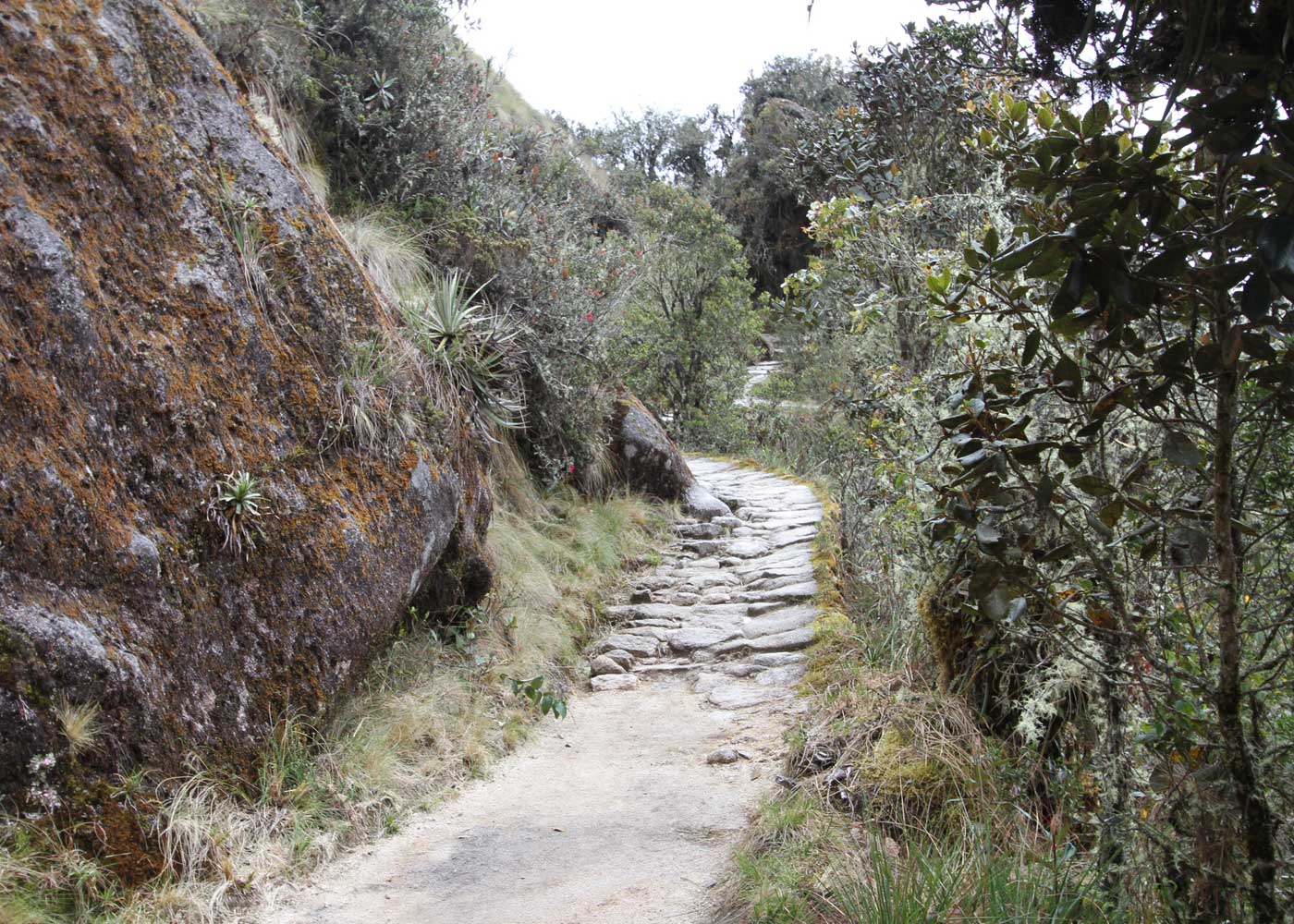
The Inca Trail isn’t just a hike. It’s a 26-mile pilgrimage through the sacred Andes, crossing three high mountain passes and winding past archaeological sites that most visitors to Peru never see. At its highest point, you’ll stand 13,828 feet above sea level at Dead Woman’s Pass. At its end, you’ll walk through the Sun Gate (Inti Punku) exactly as Inca royalty did 500 years ago.
Only 500 people receive trail permits each day. Of those, roughly 200 are trekkers; the rest are guides, porters, and cooks who make the journey possible. This strict limit protects one of the world’s most remarkable heritage sites while ensuring everyone who walks it experiences something extraordinary.
As licensed operators who guide this trail year-round, we’ve compiled everything you need to plan your trek. This guide covers permits and booking, training and preparation, a complete day-by-day breakdown, packing essentials, pricing, and answers to the most common questions we hear from trekkers.
Let’s get you ready for the hike of a lifetime.
Ready to book? Check 2026 Inca Trail availability for your preferred dates.
The Ancient Pilgrimage Route: History of the Inca Trail
Understanding where you’re walking transforms the experience from a hike into a journey through time.
A Sacred Pilgrimage, Not a Trade Route
Here’s what separates the Inca Trail from other Inca paths: it wasn’t built for commerce or communication.
Archaeological evidence suggests this trail served exclusively as a pilgrimage route for Inca royalty and priests. While merchants and chasquis (Inca messengers) used other, more direct paths to reach Machu Picchu, the trail we walk today wound deliberately through mountain passes and sacred sites.
The Inca believed mountains (Apus) held divine power. Walking this route meant ascending toward the gods, performing ceremonies at strategic viewpoints, and finally entering Machu Picchu through Inti Punku at the exact moment the sun illuminated the citadel.
The Sun Gate’s precise alignment with the winter solstice wasn’t accident. It was architecture as worship. Every Inca Trail trekker today walks the same stones that priests once climbed at dawn to greet the sun.
Rediscovery: From Hiram Bingham to Today
American explorer Hiram Bingham famously “discovered” Machu Picchu in 1911, though local farmers had known of its existence for generations. Between 1913 and 1915, Bingham’s expeditions cleared the overgrown trail, revealing the stone pathways and ruins that trekkers experience today.
The trail remained relatively obscure until the 1970s, when adventurous backpackers began walking it. By the 1990s, its popularity had grown to the point of causing environmental damage. The Peruvian government responded in 2001 with the permit system still in place today.
This conservation effort works. The trail remains remarkably preserved, and the limited daily permits ensure you’re walking sacred ground, not standing in queue.
Part of the Wider Qhapaq Ñan Network
The Inca Trail is one short branch of the Qhapaq Ñan, the vast Inca road network that once connected the empire across the Andes. For the full history of the network across 6 countries, see Top Hiking Trails in South America: The Qhapaq Ñan.
Want to walk this history yourself? Reserve a spot on our 4-Day Classic Inca Trail and arrive at Machu Picchu through the Sun Gate.
Inca Trail Routes: 2-Day, 4-Day, and Extended Options
Not every Inca Trail experience requires four days on the mountain. Here’s how to choose the right route for your goals, fitness level, and schedule.
The Classic 4-Day Inca Trail
This is the iconic experience. Four days, three nights, and every famous image you’ve seen of the Inca Trail.
For specific trail data and GPS coordinates, see our Inca Trail trail details or browse all Cusco trails.
The Numbers:
- Distance: 26 miles (42 km)
- Duration: 4 days, 3 nights
- Highest elevation: 4,215m (13,828 ft) at Dead Woman’s Pass
- Total ascent: 2,065m (6,774 ft)
- Total descent: 2,265m (7,431 ft)
What You’ll Experience:
The 4-day route takes you through six major archaeological sites that other Machu Picchu visitors never see: Llactapata, Runkurakay, Sayacmarca, Phuyupatamarca, Wiñay Wayna, and Inti Punku. You’ll cross three mountain passes, transition from high-altitude grassland to cloud forest, and arrive at Machu Picchu through the Sun Gate at sunrise.
Best For:
Trekkers who want the complete experience. History enthusiasts. Photographers. Anyone who can dedicate four days and possesses moderate fitness.
View our Classic 4-Day Inca Trail Tour for full itinerary details.
The Short 2-Day Inca Trail
Time constraints don’t mean missing the trail entirely. The 2-day option delivers the essential Inca Trail experience in a condensed format. Our Short Inca Trail vs Classic Inca Trail table puts the two side by side, including the separate daily caps (250 on the Km 104 route, 500 on the classic).
The Numbers:
- Distance: 7.5 miles (12 km)
- Duration: 2 days, 1 night (or single-day option)
- Starting point: Km 104 (accessible by train)
- Highest elevation: 2,700m (8,858 ft)
What You’ll Experience:
You’ll begin at the Wiñay Wayna trailhead, hike past these stunning terraced ruins, camp overnight (or continue to Aguas Calientes), and enter Machu Picchu through the Sun Gate the following morning. The sunrise experience is identical to the 4-day route.
Best For:
Travelers with limited time. Those concerned about fitness or altitude. Families with children. Anyone who missed 4-day permits but still wants the authentic trail experience.
The 2-Day Short Inca Trail Tour covers all the details.
4-Day vs. 2-Day Inca Trail: Pros and Cons
| Feature | Classic 4-Day | Short 2-Day |
|---|---|---|
| Distance | 26 mi (42 km) | 7.5 mi (12 km) |
| Duration | 4 days, 3 nights | 2 days, 1 night |
| Highest point | 4,215m (Dead Woman’s Pass) | 2,700m |
| Camping | Yes (3 nights) | No (hotel in Aguas Calientes) |
| Sun Gate arrival | Yes | Yes |
| Permit required | Yes | Yes |
| Difficulty | Moderate-Challenging | Moderate |
| Best for | Full experience seekers | Limited time / lower fitness |
4-Day Classic Inca Trail Pros:
- Full Sun Gate sunrise experience after building anticipation over four days
- Six archaeological sites not accessible any other way (Llactapata, Runkurakay, Sayacmarca, Phuyupatamarca, Winay Wayna, Inti Punku)
- Three mountain pass crossings including Dead Woman’s Pass
- Transition through multiple ecosystems: grassland, alpine, cloud forest
- The complete pilgrimage experience as the Inca intended
4-Day Cons:
- Requires 4 days away from other Peru activities
- Permits sell out months in advance for peak season
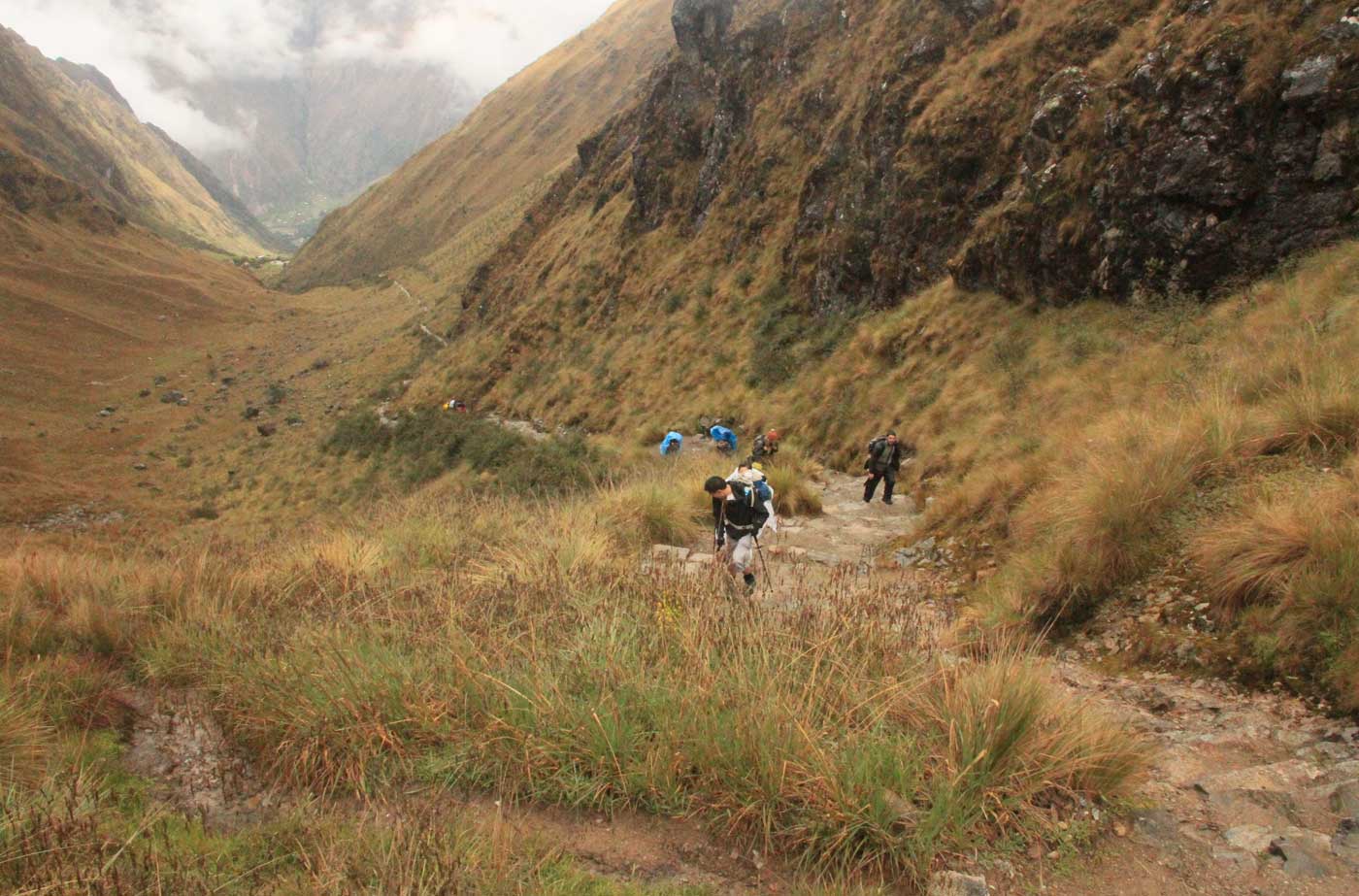
- Physically demanding, especially Day 2 at altitude
- Cold overnight temperatures at high-altitude camps
- More expensive than the 2-day option
2-Day Short Inca Trail Pros:
- Same Sun Gate sunrise arrival as the 4-day route
- Visits Winay Wayna, one of the trail’s most impressive sites
- Lower altitude (max 2,700m vs. 4,215m), reducing altitude sickness risk
- Easier to book with better permit availability
- Suitable for families, older travelers, and those with limited time
2-Day Cons:
- Misses five of six archaeological sites on the classic route
- No Dead Woman’s Pass crossing or high-altitude pass experience
- Shorter trail means less immersion in the mountain landscape
- Starts by train to Km 104 rather than hiking from Km 82
Extended 5-Day and 7-Day Options
More days mean more time to acclimatize, more sites to explore, and a more relaxed pace. Extended options add extra camping nights and archaeological detours, reducing daily hiking distances while increasing total trail coverage.
The 5-day option is particularly valuable for trekkers concerned about altitude adjustment. The additional day at higher elevation before tackling Dead Woman’s Pass makes a significant difference for many hikers.
Private vs. Group Treks
Peruvian regulations cap group sizes at 16 trekkers. Most budget and mid-range operators fill groups to capacity. Premium and private options reduce this number.
Group treks (12-16 people) offer affordability and the social experience of meeting fellow travelers. You’ll share campsites and dining tents with your group.
Private treks (2-8 people) provide flexibility in pace, more personalized guiding, and often upgraded camping equipment. Prices increase accordingly.
We offer both options. The right choice depends on your budget, social preferences, and how much control you want over your daily schedule.
Pick your route: 4-Day Classic or 2-Day Short Inca Trail, both end at the Sun Gate.
Best Time to Hike the Inca Trail
The dry season, April to October, brings clear skies and a firm trail; June to August have the best weather and sell out 5–6 months ahead. April–May and September–October balance good weather with easier permits, November to March is wet, and the trail closes every February for maintenance (see the Inca Trail rules and regulations). Our guide to the best time to hike the Inca Trail goes month by month.
Inca Trail Permits: How the System Works
The permit system confuses first-time planners. Here’s the short version, plus where to check live availability and the full regulations.
Understanding the Permit System
The Peruvian Ministry of Culture (through SERNANP) issues 500 daily permits during the trekking season, covering everyone on the trail: trekkers, guides, porters, and cooks. After staff, roughly 200 permits go to hikers each day.
Permits are passport-name bound, non-transferable, and non-refundable. The name and passport number on the permit must match the document you present at the Km 82 checkpoint. Typos void the permit. Independent hiking has been prohibited since 2001; only licensed Cusco-based operators can apply on your behalf. The February closure is covered on our Inca Trail regulations page, and porter load limits and tipping in our porter etiquette guide.
How Far in Advance to Book
Peak (June–August): 5–6 months ahead. Many trekkers book the moment permits release in late October for the following year.
Shoulder (April–May, September–October): 3–4 months ahead. Still some flexibility but not last-minute.
Low (November, December, March): 1–3 months ahead. Permits often remain, but nothing is guaranteed.
For a live date-by-date calendar, see our 2026 permit availability for your dates.
Ready to lock in a date? Check 2026 Inca Trail availability or contact our team and we’ll secure your permit before they sell out.
Training for the Inca Trail
The classic 4-day trek is moderate to challenging: four days above 2,700 m, thousands of stone steps and a high point of 4,215 m at Dead Woman’s Pass, with no technical climbing. Three months of stair climbing, hill hikes with a loaded daypack and back-to-back long walks prepare most first-time trekkers, together with at least 48 hours in Cusco to acclimatize. Follow our 12-week Inca Trail training plan, and see the Inca Trail difficulty guide for how hard each day is.
The Inca Trail Day by Day
Day 1 follows the Urubamba valley from Km 82 to Wayllabamba (11 km). Day 2 is the hardest, climbing to Dead Woman’s Pass at 4,215 m; Day 3 is the longest, 16 km past a string of Inca sites; and on Day 4 you walk through the Sun Gate at sunrise for a guided tour of Machu Picchu. The Inca Trail itinerary goes hour by hour, with separate guides to the campsites, the archaeological sites and the wildlife along the way.
What to Pack for the Inca Trail
Your operator provides the tents, meals and porters; a porter carries one duffel of up to 7 kg of your gear, which you only reach at camp. You bring your passport, broken-in waterproof boots, a 20–30 litre daypack, a headlamp, layers for 20 °C days and nights near freezing, and a sleeping bag rated to −5 °C (we rent them for $25, and trekking poles for $30 a pair). The full Inca Trail packing list covers every item.
Staying Safe and Healthy on the Inca Trail
The trail is well-managed and thousands complete it safely each year. Preparation reduces the small risks that exist. Read our health and safety guide for detailed protocols.
Altitude Sickness: Prevention and Recognition
At Dead Woman’s Pass (4,215m), you’re breathing air with 60% of sea-level oxygen. Your body notices. For clinical guidance, the CDC Yellow Book chapter on high-elevation travel is the authoritative reference.
Common symptoms:
- Headache
- Nausea or loss of appetite
- Fatigue beyond normal tiredness
- Shortness of breath during light activity
- Difficulty sleeping
Prevention strategies:
- Arrive in Cusco 2-3 days early to acclimatize
- Stay hydrated (3+ liters daily)
- Avoid alcohol before and during the trek
- Ascend slowly and rest frequently
- Eat light, carbohydrate-rich meals
- Consider Diamox (prescription, discuss with your doctor)
Natural remedies that help: Coca tea (widely available, effective), ginger for nausea, slow breathing techniques.
Warning signs requiring descent:
- Severe headache not responding to medication
- Persistent vomiting
- Loss of coordination or confusion
- Chest tightness or difficulty breathing at rest
Our guides carry supplemental oxygen and are trained to recognize altitude sickness progression. The trail has evacuation points for medical emergencies.
Acclimatization Protocol
We require trekkers to arrive in Cusco at least 48 hours before their trek start date. Here’s how to use that time wisely:
Day 1 in Cusco: Rest. Seriously. Walk gently around the plaza, drink coca tea, stay hydrated. No strenuous activity. Sleep will feel strange at 3,400m; this is normal.
Day 2: Light exploration. Consider a half-day Sacred Valley tour, which takes you to lower elevations (2,800m) while maintaining activity. This helps acclimatization more than sitting still.
Day 3: Trek begins. Your body has begun adapting.
Consider extending to 3-4 pre-trek days if you live at sea level, are over 50, or have any respiratory conditions.
Trail Safety
- Guides accompany all groups at all times
- First aid certified staff
- Satellite phone or radio for emergencies
- Daily weather monitoring and route adjustment if needed
- Porter welfare checks to maintain support team health
Is the Inca Trail dangerous? Not with proper preparation and a responsible operator. The main risks – altitude sickness and injury from falls – are manageable through acclimatization and appropriate pace.
Travel Insurance: What Coverage to Look For
Treat travel insurance as non-optional for the Inca Trail. Look for three things in your policy: emergency medical evacuation up to at least $100,000 (helicopter or ground transport from 4,000m+ terrain is expensive), altitude-related illness coverage: some standard policies exclude activities above 4,000m, so confirm Dead Woman’s Pass is included, and trip cancellation and interruption coverage since permits are non-refundable. Read the activity exclusion list carefully before you buy.
Got questions about altitude or insurance? Contact our team and we’ll talk through your situation.
What the Inca Trail Costs
Across licensed operators, a 4-day group trek costs $600–900 at the budget end, $900–1,300 mid-range and $1,900–4,000 for a luxury or private departure, with the permit and Machu Picchu entry included. Our classic 4-day Inca Trail is $749 per person ($699 for students) and ends at Machu Picchu, with the train and bus back to Cusco as an add-on from $51; the Cusco round trip with the return included is $819, and the 2-day Inca Trail starts at $595. For tips, rentals and the extras most quotes leave out, see our Inca Trail cost breakdown.
No Inca Trail Permits? Alternative Treks to Machu Picchu
Permits sold out? Dates don’t work? Several alternative treks deliver equally spectacular experiences. See our expert trekking tips before you decide.
Salkantay Trek (5 Days)
The Salkantay Trek has become the most popular Inca Trail alternative, and deservedly so.
Distance: 74 km (46 miles)
Duration: 5 days, 4 nights
Highest point: 4,630m (15,190 ft) – higher than Dead Woman’s Pass
Permits: Not required (book flexibility)
Daily trekkers: ~50 (much less crowded)
Highlights:
- Salkantay peak (6,271m) dominating views
- Humantay Lake (stunning glacial lake)
- Diverse ecosystems from alpine to jungle
- Hot springs at Santa Teresa
- Arrival at Machu Picchu via train from Hidroelectrica
Trade-offs: You won’t walk through the Sun Gate. The final approach to Machu Picchu is by train or via Hidroelectrica, not on foot.
Best for: Trekkers who prioritize natural scenery over archaeological sites, those with last-minute plans, budget-conscious travelers.
Read the full Salkantay Trek guide
Lares Trek (4 Days)
The Lares Trek emphasizes cultural immersion over ancient ruins.
What makes it different: The route passes through remote Quechua communities largely unchanged since before Spanish arrival. You’ll meet weavers, farmers, and families living traditional highland lifestyles. Hot springs along the route provide welcome relief.
Best for: Travelers interested in living Andean culture, photographers seeking authentic human connection, those who’ve done the Inca Trail previously.
Explore the Lares Valley Trek to Machu Picchu (7 days)
Deciding between the two? Read Lares Trek vs Inca Trail, compared side by side: altitude, permits, crowds and what each price includes.
Choquequirao Trek (4-5 Days)
For trekkers seeking challenge and solitude, Choquequirao delivers.
What makes it different: Choquequirao was Machu Picchu’s “sister city” – equally impressive but reached by only ~30 visitors daily. The trek is far more demanding, with steep descents and climbs into a remote canyon. Less than 30% of the site has been excavated.
Best for: Fit trekkers seeking adventure, those who’ve done other Peru treks, archaeology enthusiasts willing to work for undiscovered ruins.
Quick Comparison
| Factor | Inca Trail | Salkantay | Lares | Choquequirao |
|---|---|---|---|---|
| Duration | 4 days | 5 days | 4 days | 4-5 days |
| Distance | 42 km | 74 km | 33 km | 60 km |
| Highest Point | 4,215m | 4,630m | 4,450m | 3,050m |
| Permits | Required | No | No | No |
| Daily Trekkers | ~200 | ~50 | ~20 | ~30 |
| Cost Range | $600-1,300 | $250-800 | $300-700 | $400-900 |
| Sun Gate Entry | Yes | No | No | No |
| Main Appeal | History | Scenery | Culture | Adventure |
Explore Rainbow Mountain as a day-trip add-on to any of these options.
Inca Trail permits already gone? You can book the 5-day Salkantay Trek or ask us which route fits your dates.
About This Guide
This guide is maintained by Inca Trail Reservations, a licensed Peruvian tour operator based in Cusco, operating since 2006. Our team holds the government authorization required to apply for Inca Trail permits on behalf of trekkers, and we update this guide as permit rules, pricing, and trail conditions change.
Your Inca Trail Adventure Awaits
You’ve read the distances, studied the elevation profiles, and considered the logistics. Now picture yourself standing at the Sun Gate as first light illuminates Machu Picchu below.
That moment is why we guide this trail.
The Inca Trail demands preparation, planning, and physical effort. It rewards you with an experience that stays vivid for decades. Our trekkers tell us they think about that sunrise walk through the Sun Gate at unexpected moments – in line at the grocery store, commuting to work, lying in bed at night.
We’ve guided thousands of trekkers along these ancient stones. We know where the best photo opportunities hide, when to push forward and when to rest, and how to turn a demanding trek into a meaningful journey.
Your next steps:
- Check Inca Trail permits 2027 and availability for your preferred dates
- Compare the 4-Day Classic and 2-Day Short Inca Trail options
- Contact us with questions – we respond within 24 hours
The permits are limited. The experience is not.
Questions about the Inca Trail? Our team has hiked it hundreds of times. Get in touch – we’re happy to help you plan.