
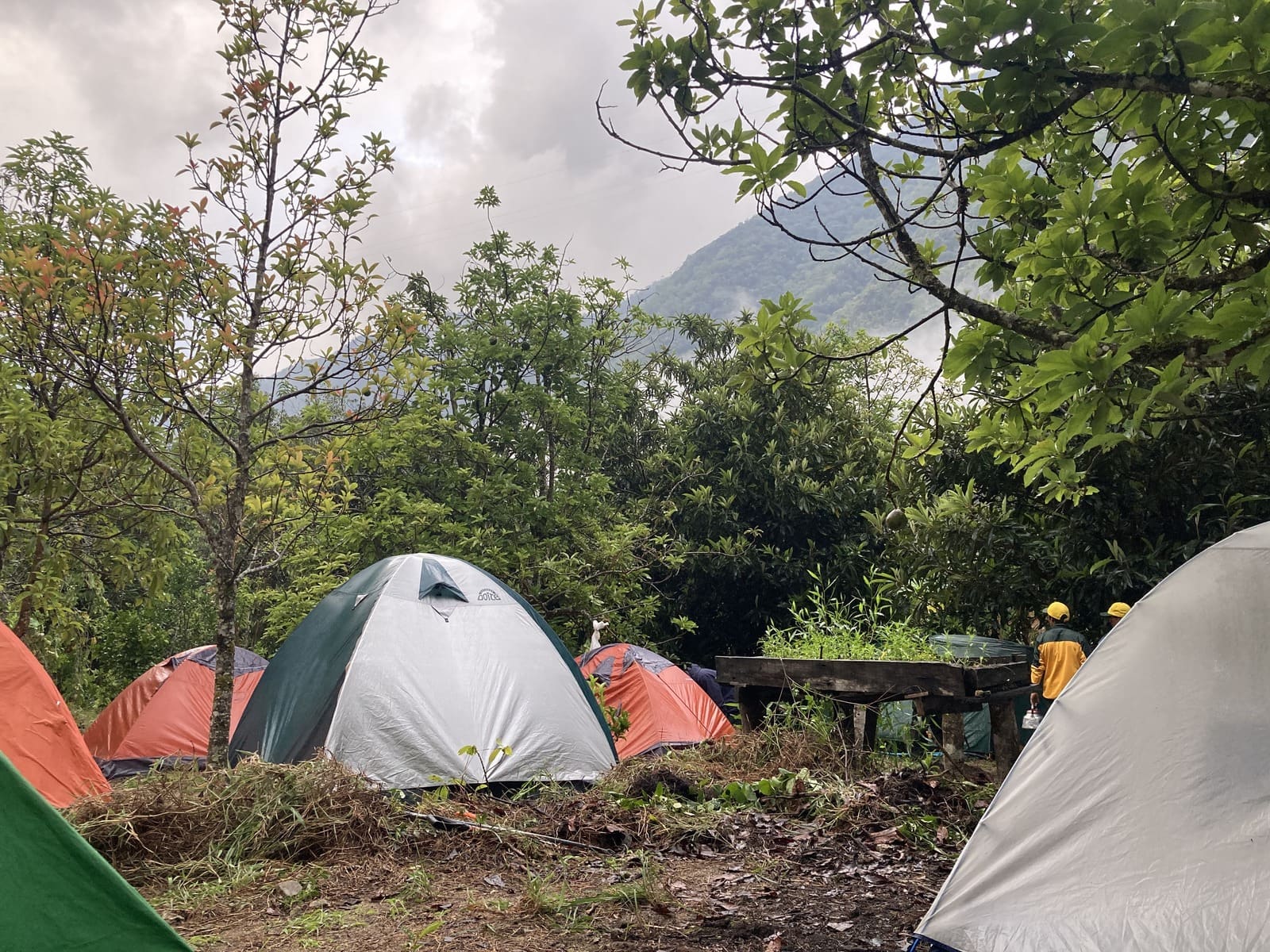
Porters carry the tents, food and kitchen over the same passes you walk with a daypack, and Peruvian law caps their load at 20 kg for men and 15 kg for women. On a 4-day Inca Trail, plan to tip about US$40–80 per trekker (about S/140–280) for the whole crew, pooled and handed over on the last evening. This guide covers what the law says, how to check that an operator follows it, and how to tip so the money reaches the people who earned it.
Porters make every Inca Trail trek possible, ours included, and the gap between what the law requires and what happens on the trail is the biggest ethical question in Inca Trail trekking. This isn’t a guilt piece. It’s the specifics: what the rules say, how to check them, and what your tip actually does. For permits and the day-by-day route, see our Inca Trail guide.
What porters carry, and what the law allows
A porter team carries the tents, sleeping mats, tables and chairs, a full kitchen (stove, pots and gas) and four days of food. A group of 12 trekkers typically needs 15 to 20 porters plus a cook and an assistant cook, who cover the same daily distances you do but leave camp after you and arrive before you to set up the next one. Your own duffel bag is not part of the standard load on our tours: you carry a daypack, and a porter can take up to 5 kg of your gear if you add that option when you book.
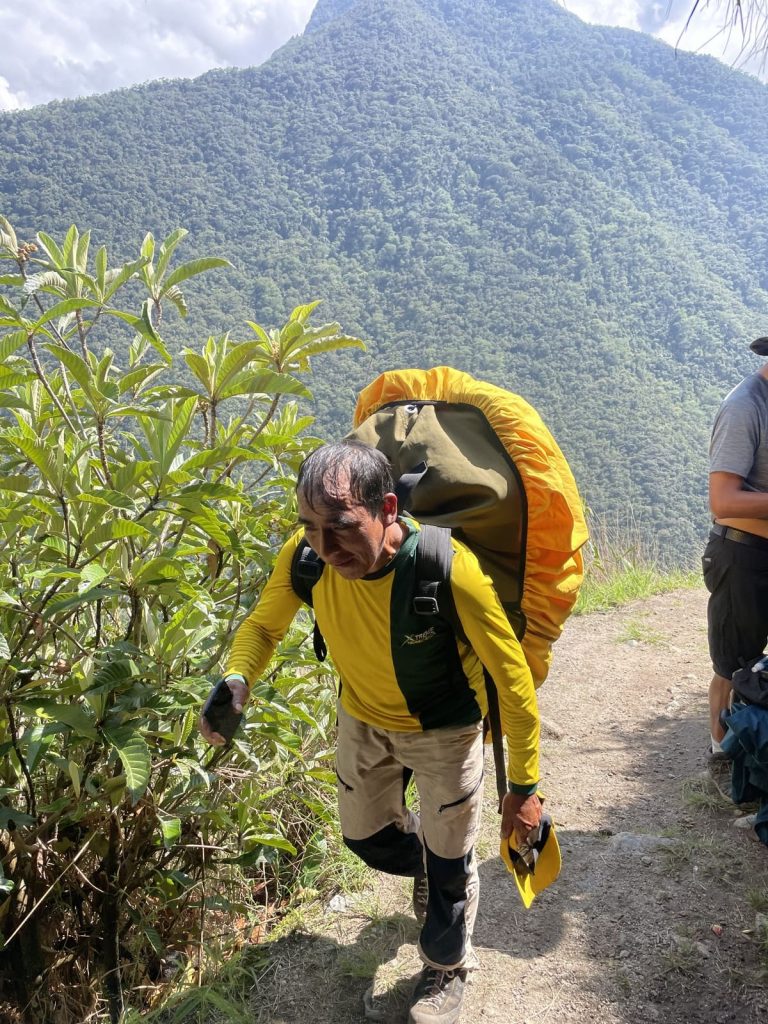
The governing law is Ley 31614, Peru’s Nueva Ley del Trabajador Porteador, published in November 2022. It limits loads to 20 kg for men and 15 kg for women, bans hiring anyone under 18 and caps the working week at 48 hours. Minimum pay is 3% of Peru’s tax unit (the UIT) for each day worked, which is S/165 in 2026, and cooks earn 30% more. Employers must provide nutritious food, suitable clothing and protective gear, insurance, and a place to sleep under a roof. A 2024 amendment, Ley 32137, made porters independent workers and replaced the original rule of five rest days between treks with mandatory weekly rest. Our tours follow these limits.
Enforcement: where it happens and where it doesn’t
The law makes the labor inspectorate (SUNAFIL) responsible for checking loads, and the protected-areas service (SERNANP) and the Ministry of Culture also supervise the trail. More than three years on, though, the law still has no implementing regulation, and in August 2026 a Peruvian senator said porters were still carrying 35 to 40 kg (Inforegión). She spoke after two porters died on 18 August 2026: one was found dead at a campsite in the Dead Woman’s Pass sector of the Inca Trail, and the other died on the Salkantay route, where officials suspected hypothermia after heavy snow (Andina).
The gap is rarely outright fraud; it is pressure. A porter paid by the trip and worried about the next contract will often agree to carry more than the law allows rather than lose the work.
How to tell if your operator follows the rules
You can’t inspect a porter’s pack without it being awkward, but you can ask direct questions before you book, and a legitimate operator answers them without hesitation:
- “What’s your porter weight limit, and how do you enforce it?” A real answer names a number (20 kg or less) and a method, such as a scale at the trailhead or a load list a manager checks. A vague “we treat our porters well” is a red flag.
- “Where do porters sleep?” The law requires a roofed place to sleep. Reputable operators give porters their own tents, not leftovers pitched away from the group.
- “What do porters eat?” Porters should eat the same food as trekkers, from the same kitchen, not a separate and lesser ration.
- “Do porters get rain gear and warm clothing?” Dead Woman’s Pass is at 4,215 m and nights drop below freezing. The law makes suitable clothing and protective gear the employer’s job.
- Price as a signal. A 4-day Inca Trail priced far below the market is a warning sign. Porter pay and gear are the easiest costs to cut, and you usually only see it on the trail, when you notice who is wearing sandals at 4,000 m.
How much to tip porters, cooks and guides
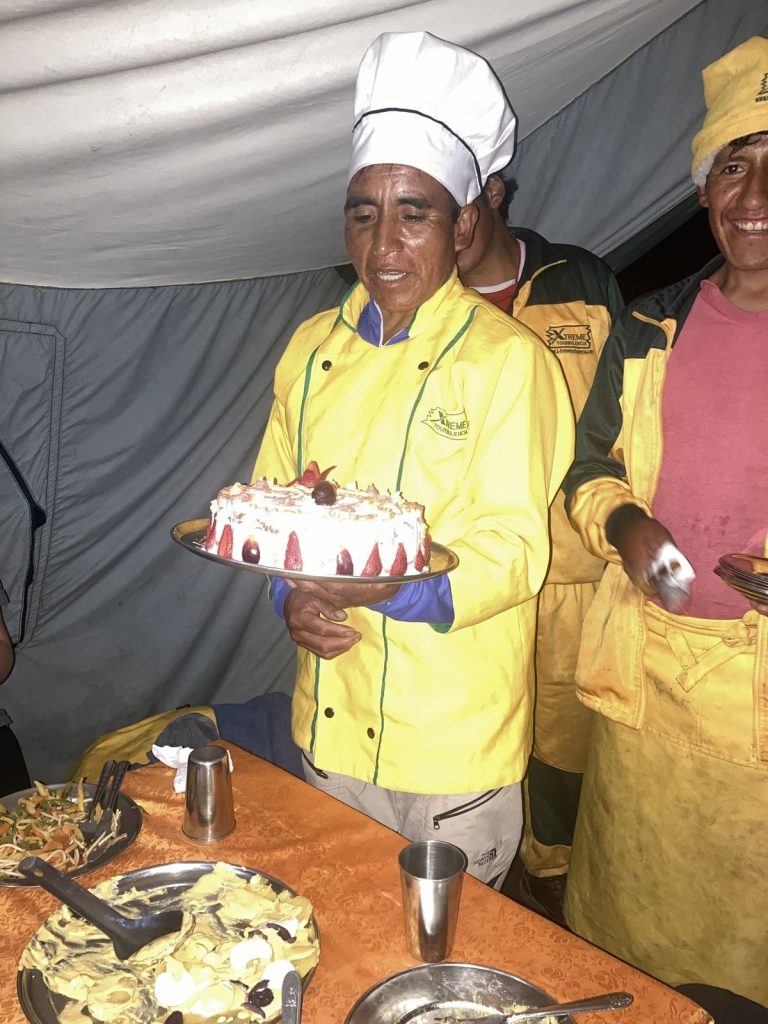
Tips aren’t included in the trek price and are up to you, but they are a meaningful part of what porters and kitchen staff take home. For a 4-day Inca Trail, plan on about US$40–80 per trekker (about S/140–280) for the whole crew: porters, cooks and guide together.
Most groups pool their tips in one envelope and give it to the crew leader, who divides it by role. Porters carry the most, so as a group they should get the largest share. If you prefer to tip each role yourself, keep the same total and split it between the porters, the cook and the guide.
Practical tips
- Bring cash in soles. US dollars are sometimes accepted, but soles spare the crew an exchange-rate loss.
- Tip on the last evening, not the final morning. On the classic 4-day trek the crew gathers after dinner on the third night, because most porters leave very early the next morning to catch the train back to Cusco.
- Give it to the crew leader to share out. A large tip to one porter you got on with can upset pay in a team that shares the same work.
- Get small bills early. Cusco ATMs run short of small notes in the high season, so withdraw and break bills a few days before the trek.
Beyond tipping: what responsible trekking means here
Tipping well matters, but it is the smallest lever you have. The larger one is which operator you book with, because porter treatment is set by company policy, not by one group’s generosity. Booking with an operator that pays fair wages, provides real gear and respects the load limit means your tip adds to a system that works instead of making up for one that doesn’t. Our responsible travel policy sets out how we work with our porters.
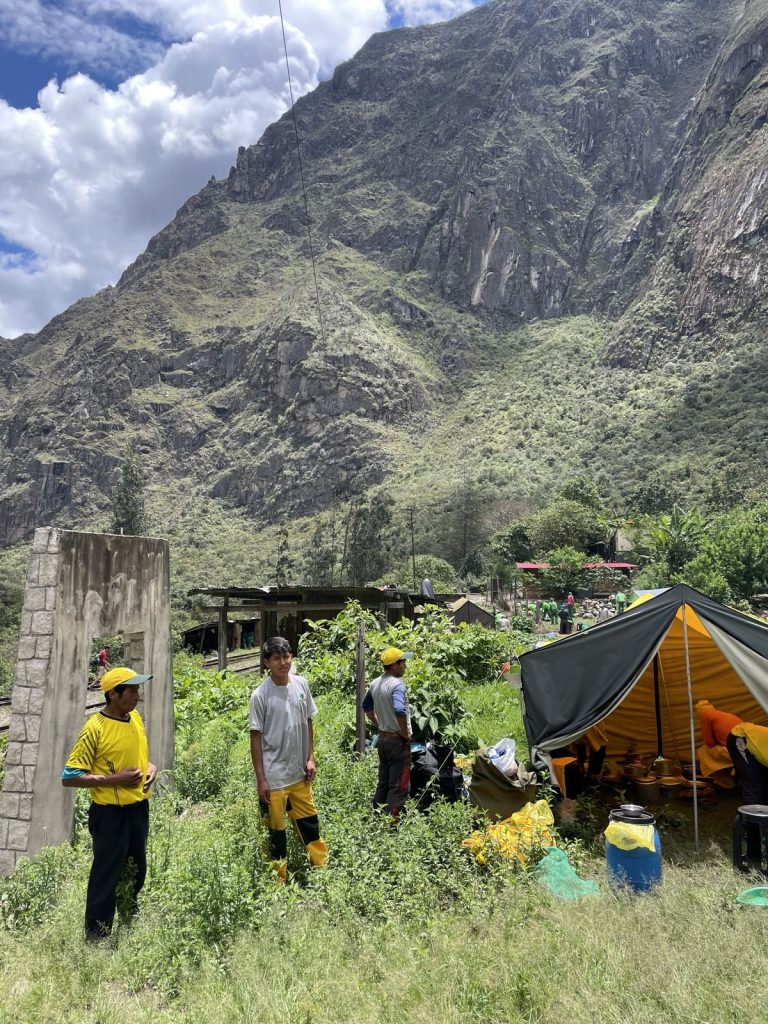
A few habits matter on the trail itself. Greet porters as they pass; a simple “buenas” costs nothing. Step aside on narrow sections to let porters through, since they move faster, carry more and have less room to maneuver. And don’t ask a porter to carry anything that wasn’t agreed, even as a favor.