
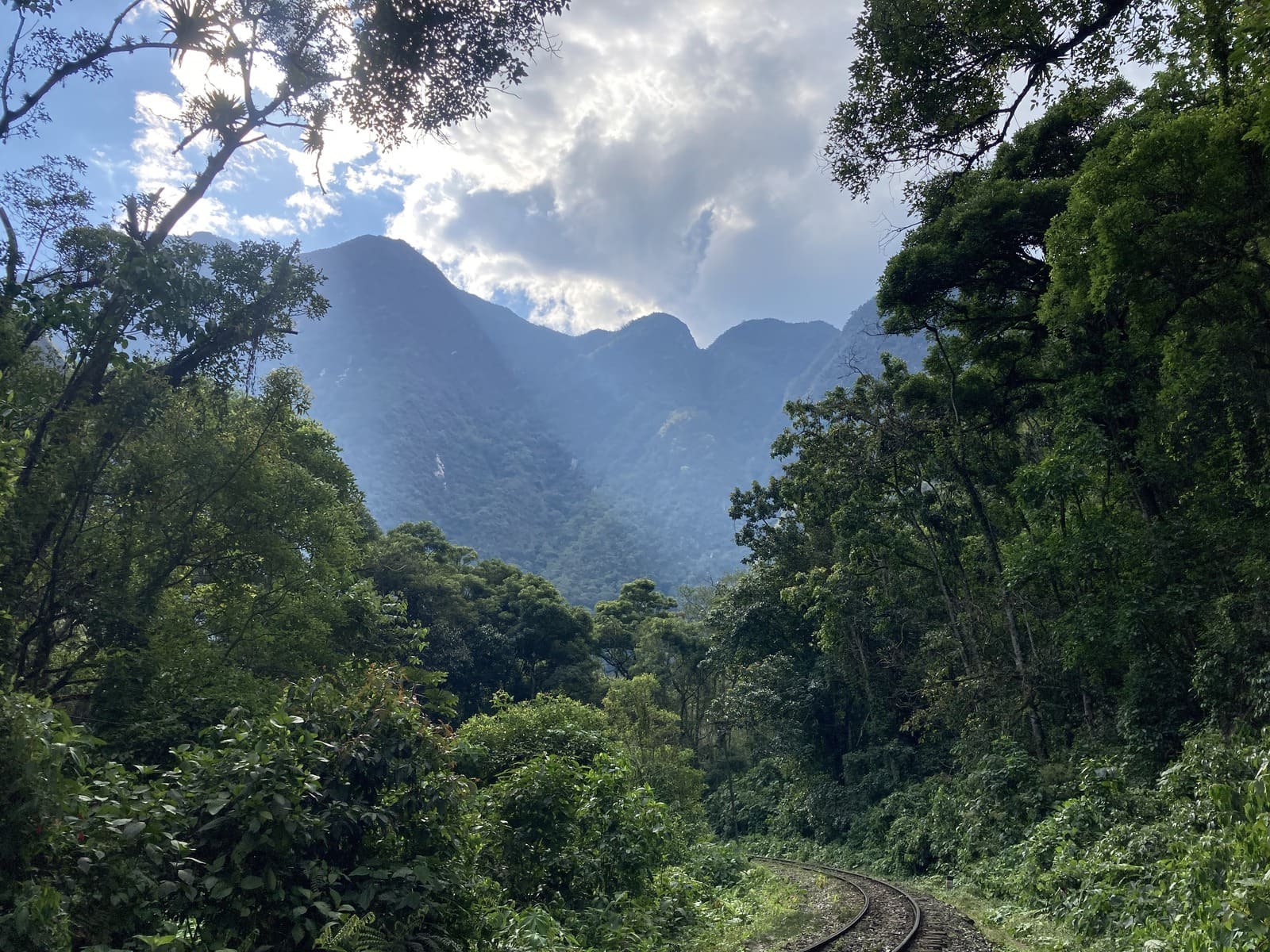
There is no road to Machu Picchu. You get there by train to Aguas Calientes, the town below the ruins, and then a 25-minute bus up the mountain. The other ways in are on foot, along the Inca Trail or the Salkantay Trek, or on the budget route through Hidroeléctrica: about six hours by road from Cusco, then a two-and-a-half-hour walk beside the railway. Coming from Lima, you fly to Cusco first.
We have organised Inca Trail treks and Machu Picchu trips since 2006. This guide covers each route with journey times and the train fares we found on PeruRail’s and Inca Rail’s own booking sites in late September 2026. It also explains what to book first. For entrance tickets, circuits and what to see inside the site, read our Machu Picchu guide.
The routes at a glance
| Route | From Cusco | Cost, one-way |
|---|---|---|
| Ollantaytambo train | 3–3½ hours | US$62–167 in the standard and panoramic classes |
| Cusco train | 3¼–5½ hours | From about US$82 |
| Hidroeléctrica | About 9 hours | Roughly US$15–20 by tourist van |
| Classic Inca Trail | 4 days | Guided tour only, permit included |
| Short Inca Trail | 2 days | Guided tour only, permit included |
| Salkantay Trek | 5 days | Guided tour; no permit needed |
The train from Ollantaytambo suits most visitors, including day trips. Taking it from Cusco saves the drive to the Sacred Valley but costs more, and the direct train from Poroy runs only from May to December. Hidroeléctrica is for budget travellers with a spare day, and the treks are for anyone who wants to arrive on foot.
Everyone except Inca Trail hikers finishes with the bus from Aguas Calientes to the entrance: US$12 one-way or US$24 return for foreign adults. You can also climb the stairs on foot.
Lima to Machu Picchu, step by step
This is the route most visitors take, one leg at a time.
1. Fly from Lima to Cusco
The flight from Lima (LIM) to Cusco (CUZ) takes about 1 hour 20 minutes. LATAM, Sky and JetSMART all fly it nonstop, and Sky’s route page lists one-way fares from US$66. An early flight leaves the rest of the day for resting at altitude.
The bus takes 21 to 24 hours. Cruz del Sur and Oltursa both run it, with Cruz del Sur fares from about S/185. It only makes sense if you have time to spare and want to save on the flight.
2. Give yourself time at altitude
Cusco sits at 3,400 m. Machu Picchu is lower, at 2,430 m, and so is the Sacred Valley, which is why many travellers spend their first nights there. Either way, allow at least one full day, ideally two, before anything strenuous: drink plenty of water, go easy on alcohol and walk slowly. Fitness doesn’t protect you from altitude sickness, and skipping this step is the most common planning mistake we see.
3. Cusco to Ollantaytambo
Most trains leave from Ollantaytambo, about 1 hour 45 minutes from Cusco by road. Shared vans and taxis run all day, and the railways sell connecting buses from Cusco. Spending a night in Ollantaytambo or elsewhere in the Sacred Valley lets you catch an early train without a 4 a.m. start.
4. Train to Aguas Calientes
The ride from Ollantaytambo to Aguas Calientes (officially Machu Picchu Pueblo) takes 1 hour 20 minutes to 1 hour 45 minutes, depending on the departure. The line follows the Urubamba River down into cloud forest. Two companies run it, PeruRail and Inca Rail; the classes and fares are compared below.
5. Bus from Aguas Calientes to Machu Picchu
The bus leaves from Avenida Hermanos Ayar in Aguas Calientes, with the first departure at 5:30 a.m. The ride up the switchback road takes 25 to 30 minutes, and foreign adults pay US$12 one-way or US$24 return. Buy tickets at the office in town or online. In June, July and August the queue for the first buses starts well before dawn.
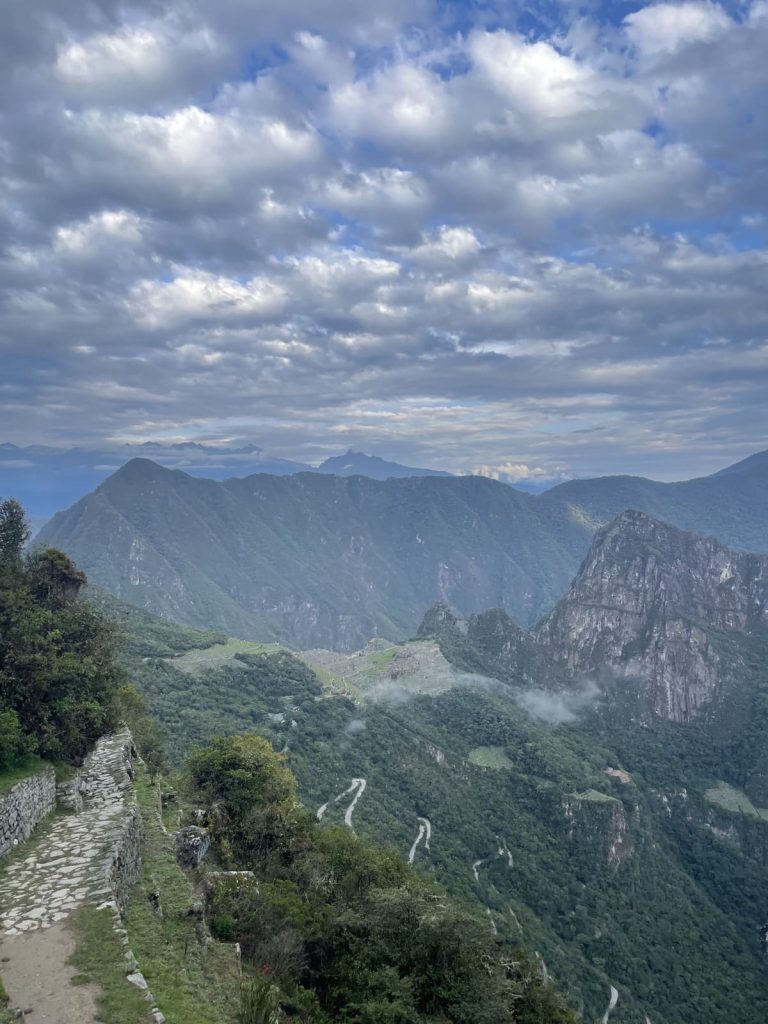
The alternative is on foot: about an hour and a half of steep stone stairs from the bridge below town. It costs nothing, but it is hard work in the heat and not a good idea in rain or darkness.
Your Machu Picchu entrance ticket
The train and bus don’t get you in. You also need a timed entrance ticket, which costs S/152 (about US$45) for a foreign adult and is sold only on the Ministry of Culture’s Tu Boleto website. Since 22 September 2026 tickets can no longer be held: once you pick one, you have 15 minutes to pay. A limited number of tickets for the next day are also sold in person in Aguas Calientes. Match your train to your entry time, and leave a margin. Our guide to Machu Picchu tickets explains the circuits and ticket types.
PeruRail and Inca Rail: classes and fares
Both companies run trains on the same line, so the views are the same whichever you choose. You pay for the seat, the size of the windows and the service on board. Fares change with the date and the departure time. The one-way fares below come from our own searches on each railway’s booking site on 30 September 2026, for one adult, one-way from Ollantaytambo, on 18 November 2026 (low season) and 14 July 2027 (peak season).
PeruRail
| Class | Fare | What you get |
|---|---|---|
| Expedition | US$62–98 | Standard class with panoramic side windows |
| Vistadome | US$69–130 | Larger windows, including in the roof |
| Vistadome Observatory | US$99–167 | Vistadome windows plus an open-air observatory carriage |
| Hiram Bingham | About US$660 | Belmond’s luxury train, one departure a day |
Inca Rail
| Class | Fare | What you get |
|---|---|---|
| The Voyager | US$62–98 | Standard class |
| The 360° | US$79–140 | Panoramic windows and an open-air viewing carriage |
| The Prime | US$100–140 | Inca Rail’s premium economy class |
| The First Class | About US$344 | Inca Rail’s top class, on selected departures |
Which train to choose
For most people, PeruRail Expedition or Inca Rail The Voyager is the sensible choice. Compare departure times as well as classes: on our low-season date, two Vistadome departures cost the same US$69 as Expedition. For a day trip, take a train that arrives at least an hour before your entry time. The cheapest early-morning seats sell out first in June, July and August, so book the train as soon as you have your entrance ticket.
Luggage is limited. PeruRail allows one backpack up to 8 kg or one carry-on bag up to 12 kg, and Inca Rail one bag up to 8 kg. Both railways check the size as well as the weight. Leave your big bag at your hotel in Cusco or Ollantaytambo; PeruRail also stores luggage free of charge.
Trains from Cusco
From May to December, PeruRail runs one direct train a day from Poroy station, about 20 minutes outside Cusco, that reaches Aguas Calientes in 3 hours 17 minutes. Every other service from Cusco is a bus and a train: PeruRail’s buses leave from its Wanchaq and San Pedro stations, and Inca Rail’s from its office on Avenida El Sol. They take about 4 to 5½ hours in total, and Inca Rail’s cost US$82–99 in The Voyager on our low-season date. Unless you are short of time, it is easier and cheaper to go to Ollantaytambo yourself.
The budget route: via Hidroeléctrica
If you have time and want to spend as little as possible, you can reach Aguas Calientes by road and on foot. It takes most of a day and nearly always means a night in Aguas Calientes before your visit.
- By road to Hidroeléctrica: tourist vans run direct from Cusco for roughly US$15–20 each way, and the drive takes 6 to 7 hours, including a stop. The public alternative is a bus to Santa María and then shared taxis through Santa Teresa, which takes about as long.
- Along the tracks to Aguas Calientes: the walk beside the railway takes about 2½ hours on mostly flat ground. PeruRail also runs a few trains from Hidroeléctrica, which take about 40 minutes.
- Back to Cusco: return the same way, or take the train to Ollantaytambo and the bus from there.
The road is long and winding, with steep drops, and landslides can close it in the rainy season, so book a reputable company and leave early. Walk the tracks in daylight only, and leave Hidroeléctrica by mid-afternoon.
Walking in: the trekking routes
Three established treks end at Machu Picchu. All of them need a guide or a tour, and the two Inca Trail routes also need a permit that only licensed operators can book. For a side-by-side comparison, see Salkantay Trek vs Inca Trail, and for all the options, our Peru trekking guide.
Classic Inca Trail (4 days)
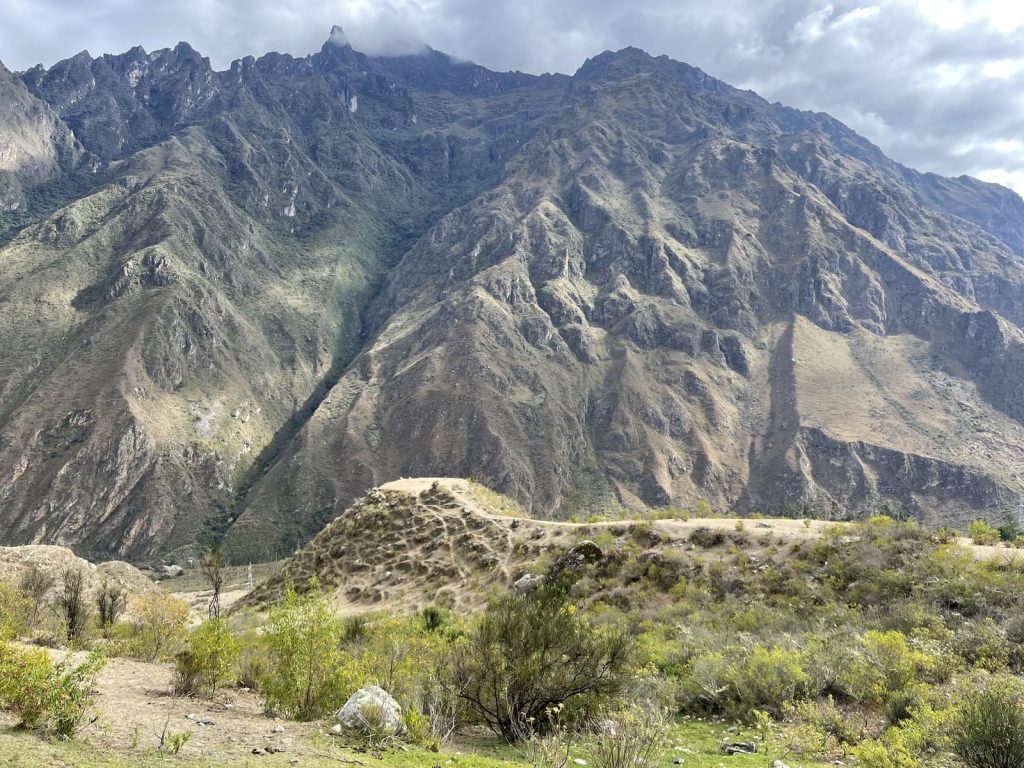
The Classic Inca Trail starts at Km 82 on the railway and covers 42 km of original Inca paths. It crosses Dead Woman’s Pass at 4,215 m and passes a string of ruins before reaching the Sun Gate on the fourth morning. Permits are capped at 500 people a day, guides and porters included, and the trail closes every February for maintenance. For peak-season dates, book about six months ahead. Our Inca Trail guide covers the route day by day, and our 4-day Inca Trail tour has dates and prices.
Short Inca Trail (2 days)
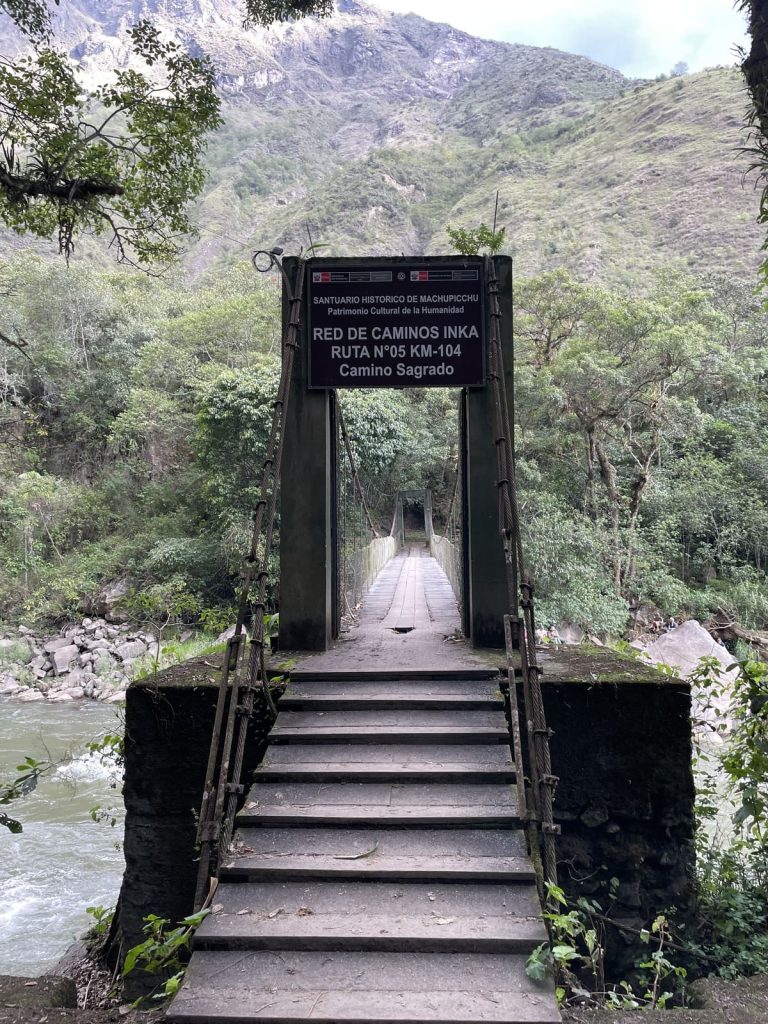
The train drops you at Km 104, and you walk the last 12 km of the Inca Trail in a day, past the terraces of Wiñay Wayna to the Sun Gate. You sleep in Aguas Calientes and visit Machu Picchu the next morning. The route has its own permit allocation of 250 people a day. See our 2-day Inca Trail tour.
Salkantay Trek (5 days)
The Salkantay Trek covers 74 km and crosses the 4,630 m Salkantay Pass beneath the glaciers of Salkantay (6,271 m). It needs no permit and has no daily limit, which makes it the usual choice when Inca Trail permits are sold out. The last stretch usually reaches Aguas Calientes along the railway from Hidroeléctrica. Read our Salkantay Trek guide, or see our Salkantay Trek tour.
Can you drive or fly to Machu Picchu?
No. The nearest road ends at Hidroeléctrica, and the road from Aguas Calientes up to the entrance is used only by the site buses and doesn’t connect to anywhere else. Helicopter flights to Machu Picchu have been banned since 2010 to protect wildlife in the sanctuary, apart from emergencies.
Planning tips
- Book in the right order: your entrance ticket (or Inca Trail permit) first, then the train, then your hotel. Tickets are timed and limited; trains and hotels are easier to change.
- Rainy season: from November to March, trains still run but delays are more common, landslides can close the Hidroeléctrica road, and the Inca Trail closes in February. From January to April, PeruRail’s services from Cusco are all bus and train.
- Mix the routes: you don’t have to come back the way you went. Hidroeléctrica in and the train out is a popular combination.
- Cash: Aguas Calientes has ATMs, but they can run out in peak season. Bring soles for the bus, meals and tips.
- Inca Trail hikers: you walk in, but you will usually take the bus down to Aguas Calientes for the train back, so budget for a one-way ticket.