
You need moderate fitness for the Inca Trail, not an athlete’s. If you can walk uphill for three hours with a daypack, climb ten flights of stairs without stopping and walk for six hours two days in a row, you can do it. What makes the trail hard is doing that on consecutive days: a climb to 4,215 m on Day 2, then long stone staircases on tired legs. Eight to twelve weeks of training aimed at those two things is the difference between getting through it and enjoying it.
We have run Inca Trail treks since 2006, and the pattern hasn’t changed: people who train for climbing and descending steps have a much better time than people who count on general fitness. This guide covers what each day demands, a self-test you can do this week, and how altitude fits in. When you are ready to train, follow our 12-week Inca Trail training plan. For permits and the route itself, see our Inca Trail guide.
What each day of the Inca Trail demands
The four days are not equally hard: Day 2 is the hardest and Day 3 is the longest. The distances and times below are for the classic route from Km 82 at a typical group pace, including short breaks.
Day 1: Km 82 to Wayllabamba (11 km, 5–6 hours)
A gentle start along the Urubamba valley, from 2,700 m at the trailhead to camp at about 3,000 m. The path is wide and mostly gradual. Most people find it easy, which can give a false idea of what comes next.
Day 2: over Dead Woman’s Pass (11 km, 7–9 hours)
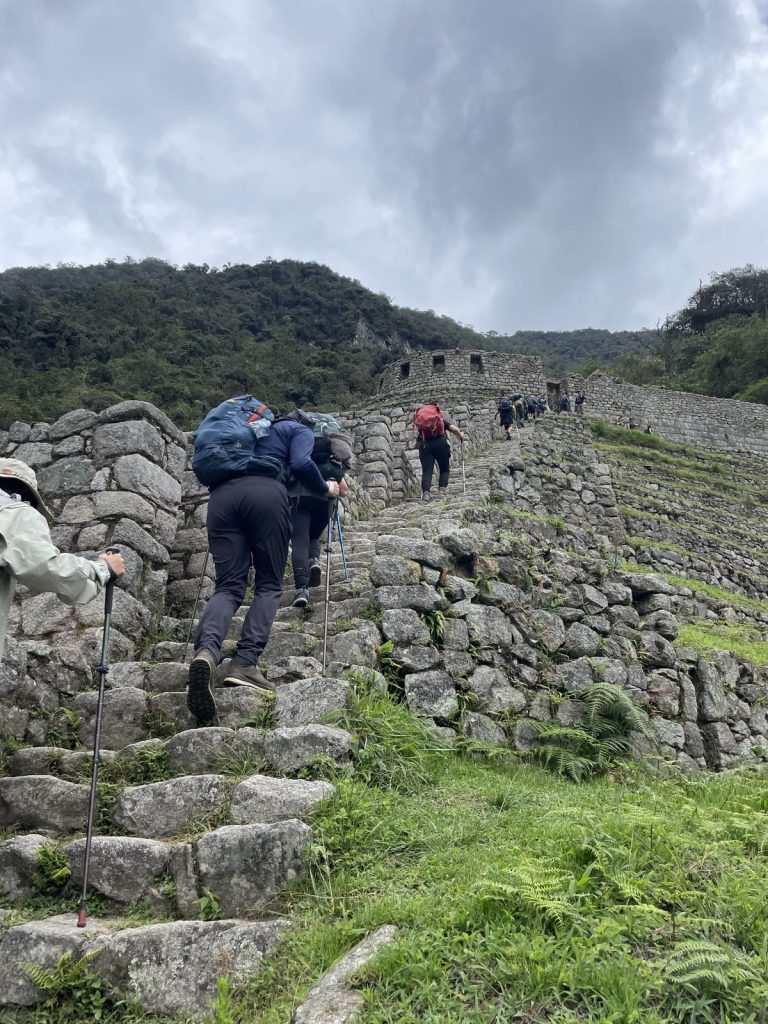
The hardest day. You climb about 1,200 m, much of it on stone steps, to Dead Woman’s Pass at 4,215 m, the highest point of the trail. Each breath there holds about 40% less oxygen than at sea level, so the last part of the climb is slow for everyone. Then you walk down about 600 m of steep steps to camp at around 3,600 m. For many people the descent is harder than the climb, because it loads the thighs and knees for a couple of hours without a break.
Day 3: the longest day (16 km, 8–10 hours)
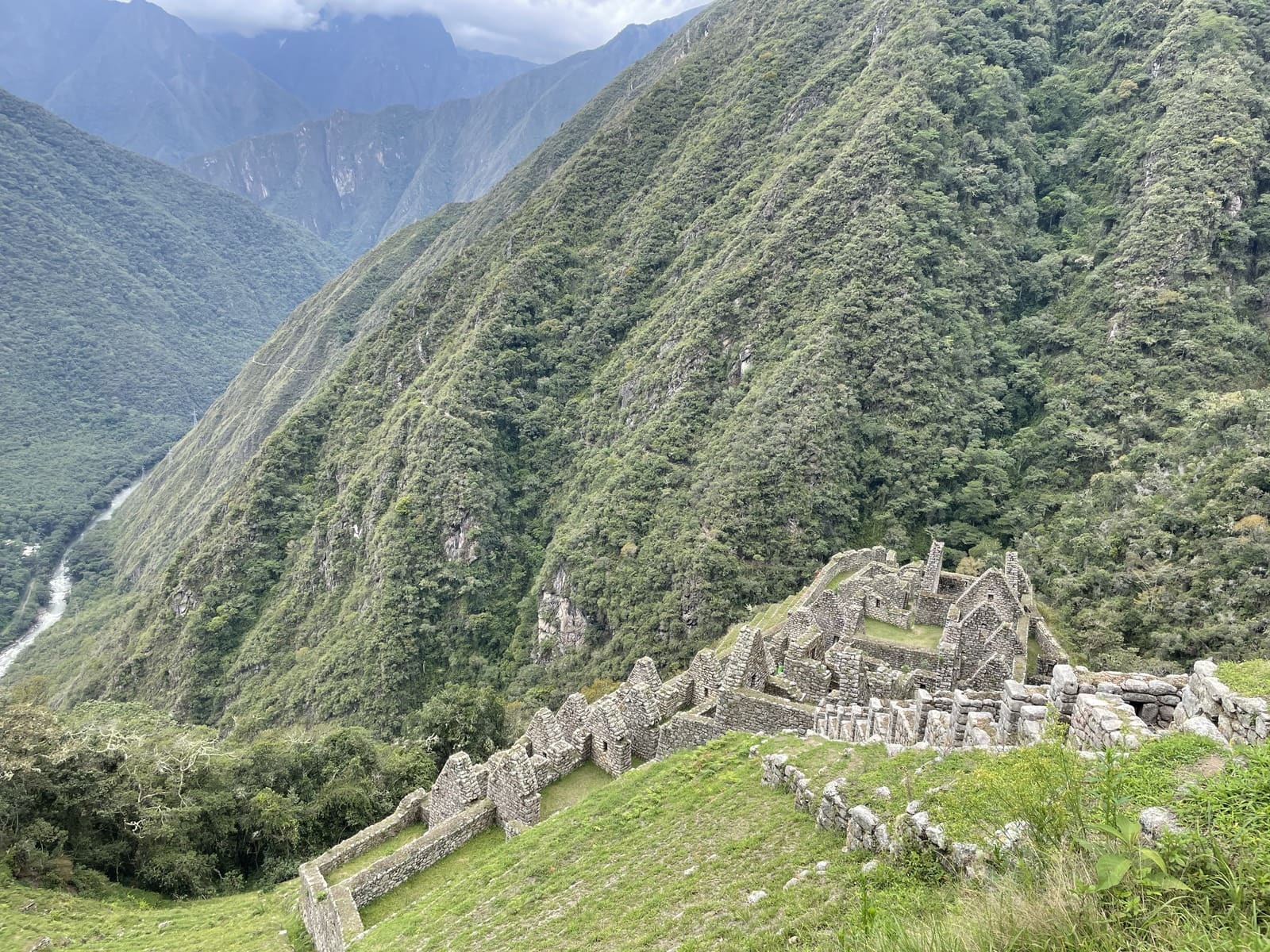
Two more passes, including Runkurakay at 3,970 m, with shorter climbs on tired legs, then a long stone staircase down through cloud forest to Wiñay Wayna, at about 2,650 m. The day passes several of the trail’s finest Inca sites, so you stop often, but it involves a lot of descending.
Day 4: to the Sun Gate (4 km, about 2 hours)
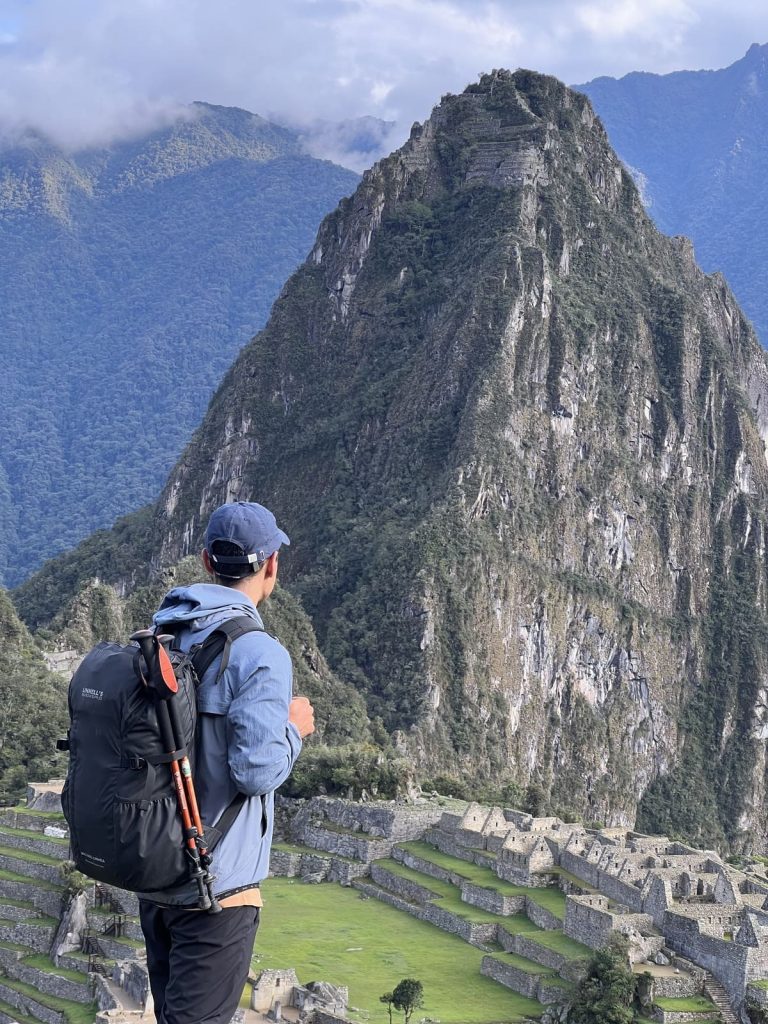
A pre-dawn start, then a mostly gentle path to the Sun Gate and down to Machu Picchu. It is short, but it comes after three long days, and you spend the rest of the morning on your feet inside the site.
Fitness self-test: are you ready?
Try these this week. If you can do six or more comfortably, you are close to ready, and eight weeks of focused training is enough: start our training plan at Week 5. If you manage four or fewer, give yourself the full 12 weeks, or longer if you don’t exercise at all at the moment.
- Stairs: climb 10 flights (about 200 steps) without stopping. You should be breathing hard but still able to speak.
- Uphill: walk uphill for 45 minutes without a break, carrying a 5 kg daypack.
- Distance: walk 15 km on mixed ground in about four hours without pain.
- Two days in a row: walk 10 km on two consecutive days without your legs feeling wrecked on the second.
- Squats: do 20 bodyweight squats with your thighs reaching parallel to the floor.
- Step-downs: step down from a knee-high ledge (about 40 cm) 30 times on each leg without knee pain.
- Plank: hold a plank for 60 seconds. A strong core keeps you steady on uneven stone.
- Steady effort: walk briskly or jog for 30 minutes without stopping.
Can a beginner do the Inca Trail?
Yes. Beginners finish the Inca Trail every season; you don’t need trekking experience or a sporting background. What you need is eight to twelve weeks of steady, progressive training. We regularly see first-time hikers in their fifties and sixties finish strongly because they trained on stairs and hills, and fit runners struggle on the descents because running doesn’t prepare you for hours of walking down steps.
Your starting fitness matters less than whether you train for what the trail asks: long uphill walking, steep descents and several long days in a row.
Altitude: the part fitness doesn’t fix
Cusco, where you start, is at 3,400 m, and Dead Woman’s Pass is at 4,215 m. Fitness helps you cope with the effort, but it doesn’t prevent altitude sickness: how well your body adapts depends on the time you spend at altitude, not on how fast you can run. Headaches, breathlessness and poor sleep are common in the first days in Cusco and on Day 2. Serious altitude sickness is less common here than on higher treks, because you spend only a few hours above 4,000 m, but it does happen. Our Inca Trail guide covers how guides handle it on the trail.
What helps
- Arrive early. Spend at least two nights in Cusco or the Sacred Valley before the trek, and take the first day easy. We ask all our trekkers to arrive at least 48 hours ahead.
- Drink plenty and go easy on alcohol for the first couple of days at altitude.
- Train with intervals. Hard efforts in training make hard efforts at altitude feel more manageable, even though they don’t acclimatise you.
- Ask your doctor about acetazolamide (Diamox) if you have had altitude sickness before.
Altitude training masks don’t help: they make breathing harder, but they don’t lower the oxygen in the air you breathe.
How many hours a day do you walk?
- Day 1: 5 to 6 hours
- Day 2: 7 to 9 hours
- Day 3: 8 to 10 hours
- Day 4: about 2 hours, plus the morning at Machu Picchu
These times include short breaks but not lunch. On Days 2 and 3 you are on your feet for most of the daylight, so your training hikes should build up to six or seven hours with the pack you will carry.
Is the Inca Trail harder than the Salkantay Trek?
They are hard in different ways. The Inca Trail has far more stone steps and a brutal Day 2. The Salkantay Trek goes higher, to 4,630 m at the Salkantay Pass, and is a day longer, but most of it is on earth paths with fewer steps. People with bad knees often find the Salkantay easier; people worried about altitude often prefer the Inca Trail, which spends less time high up. Our Salkantay Trek vs Inca Trail comparison goes through the rest of the differences.
Can you do the Inca Trail without training?
Many people do. But untrained legs pay for it on Days 2 and 3: knee pain on the descents, and a tiredness that turns the ruins into a blur. There is also no easy way off the trail. No road reaches it and helicopters aren’t allowed, so a trekker who can’t go on is walked out by the crew to the nearest exit point. Eight to twelve weeks of training is a small price for enjoying four days you will have planned for months.
How to train: the short version
Train for three things: long uphill walks, controlled descents on steps, and several long days in a row. Our 12-week Inca Trail training plan builds all three, week by week:
- Weeks 1–4: a base of three or four cardio sessions a week, two short strength sessions at home and a weekend walk that grows from 5 to 10 km.
- Weeks 5–8: hills, stairs and a light pack.
- Weeks 9–11: long hikes with your trek pack, including two days in a row.
- Week 12: ease off, so you arrive in Cusco rested.
If you do only one thing, walk up and down stairs with a loaded daypack twice a week. Nothing else is as close to the trail. And wear your trekking boots on every training walk from the start: blisters from boots that aren’t broken in are one of the commonest problems we see on the trail.