Colombia has completed one of history’s most notable national transformations. The country that once dominated news headlines for all the wrong reasons now leads South America in tourism growth, creative energy, and cultural renaissance. From Cartagena’s colonial ramparts to the emerald-green Coffee Triangle, Colombia offers experiences that feel fresh, authentic, and exciting.
Why Colombia Deserves Your Attention Now
Colombia’s transformation over the past two decades represents one of the most successful turnarounds in modern history. Cities like Medellin, once synonymous with cartel violence, now earn global recognition for urban innovation, public transportation design, and quality of life improvements that have become case studies at Harvard and MIT.
This isn’t just a safety story. Colombia always had the geography, biodiversity, and cultural depth to rival any destination in the Americas. What changed is that travelers can finally access it. Tourism infrastructure has matured rapidly but hasn’t yet reached the saturation of Peru or Costa Rica. You get professional services without the crowds, authentic communities without performative tourism, and prices that reward early adopters of what will inevitably become South America’s next major destination.
Megadiverse Wildlife
Colombia ranks second globally in biodiversity, hosting more bird species than any country on Earth. Three Andean cordilleras create distinct ecosystems within short distances: Caribbean beaches, cloud forests, paramo grasslands, and Amazon rainforest, all accessible from major cities.
Living Musical Culture
Cumbia, vallenato, champeta, and salsa pulse through everyday life from Barranquilla’s Carnival to hole-in-the-wall bars in Cali. Colombia’s music scene is part of daily life, not packaged for tourists.
Warm Human Connection
Colombians are legendary for their warmth and openness. After decades of negative international press, locals appreciate visitors who come to experience their country’s renaissance firsthand.
Colombia’s Must-Visit Regions
Cartagena and the Caribbean Coast
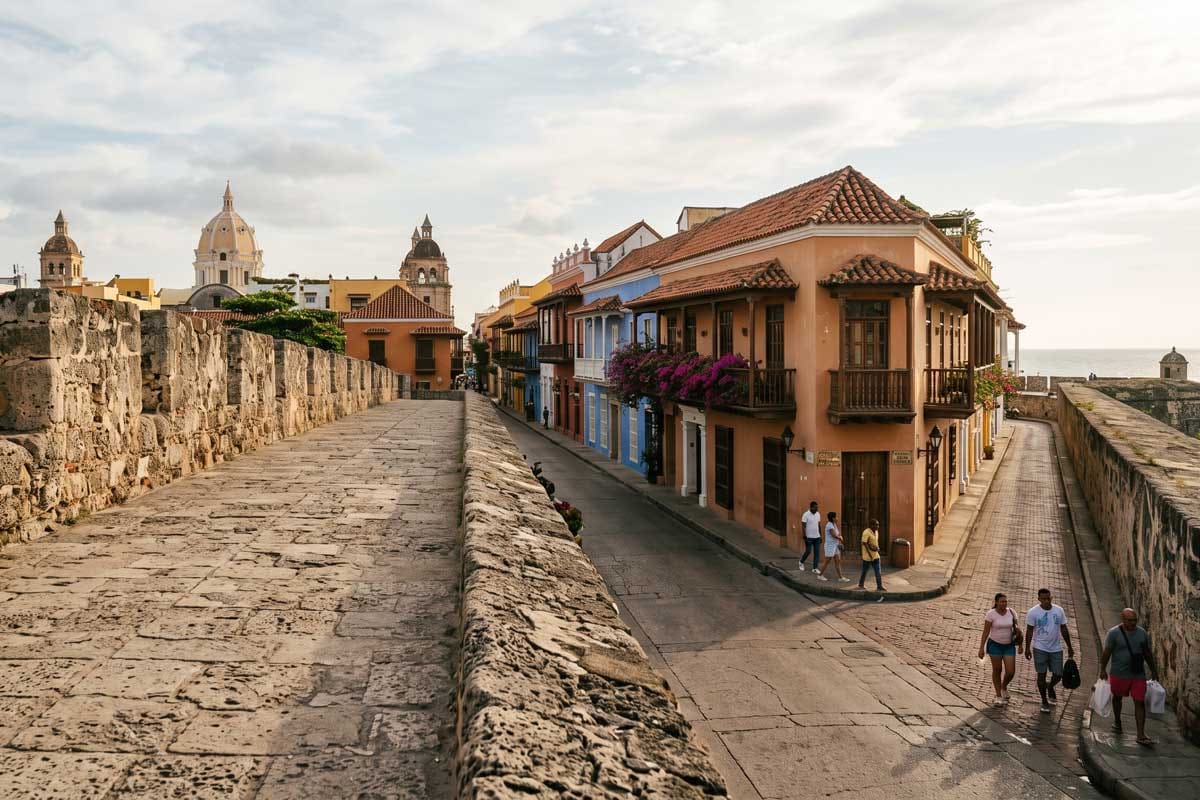
Cartagena de Indias ranks among the Americas’ most perfectly preserved colonial cities. Spanish-era walls still encircle the old town, where bougainvillea spills over wrought-iron balconies and cobblestone streets lead to plazas that haven’t changed since the colonial governors walked them. The city served as Spain’s primary South American port, and that wealth shows in every baroque church doorway and palacio-turned-boutique-hotel.
Beyond the walled city, Colombia’s Caribbean coast stretches from the Rosario Islands’ turquoise waters to Santa Marta’s beachfront promenade. The region combines colonial history, beach relaxation, and access to the Sierra Nevada de Santa Marta, the world’s highest coastal mountain range and home to the indigenous Kogi people who never submitted to Spanish conquest.
Don’t miss: Sunset drinks on Cartagena’s city walls, the Rosario Islands by boat, fresh ceviche at Mercado Bazurto, and the fishing village of La Boquilla for authentic Caribbean coast culture.
The Coffee Triangle (Eje Cafetero)
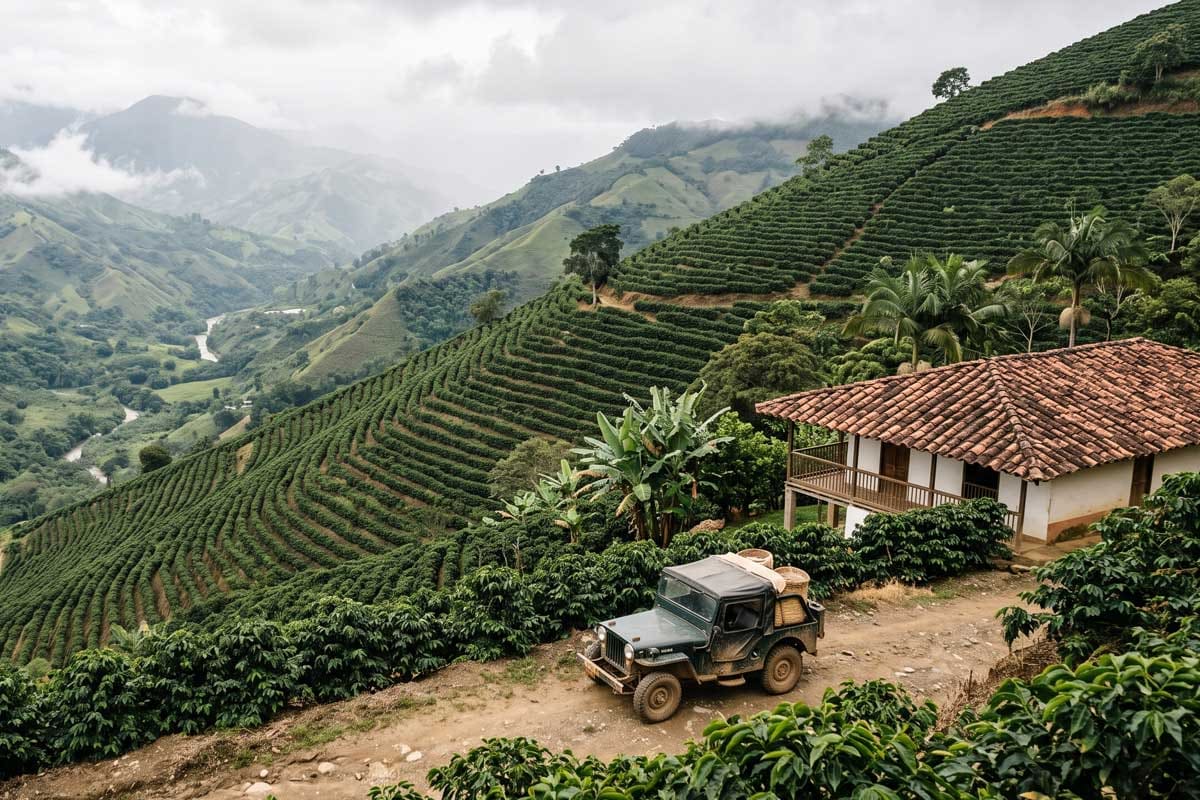
Colombia produces the world’s most prized arabica coffee, and the Eje Cafetero showcases the landscapes that make it possible. Rolling green hills carpeted with coffee plants, traditional haciendas with red-tile roofs, and the towering wax palms of Cocora Valley create scenery that feels like walking through a postcard.
The region spans three departments (Caldas, Quindio, and Risaralda) with the colonial town of Salento serving as the most popular base. Coffee farm tours reveal the hand-picking and processing methods that distinguish Colombian beans, while the Cocora Valley’s wax palms (Colombia’s national tree) reach 60 meters toward the cloud forest canopy.
Don’t miss: A working coffee finca tour with cupping session, the Cocora Valley wax palm forest, Salento’s colorful streets, and trout fresh from mountain streams.
Bogota: The Andean Capital
Colombia’s capital sprawls across a high plateau at 2,640 meters, backed by the green peaks of the Eastern Cordillera. La Candelaria, the colonial center, clusters around the Plaza Bolivar with museums, universities, and street art that has transformed once-neglected walls into open-air galleries.
The Gold Museum (Museo del Oro) displays the Western Hemisphere’s most important pre-Columbian gold collection: 55,000 pieces from cultures predating the Spanish invasion. The Botero Museum showcases Fernando Botero’s famous rotund figures alongside his personal collection of Picasso, Monet, and Dali. La Candelaria’s street art scene has earned international recognition, with guided tours revealing political commentary and artistic virtuosity on every block.
Don’t miss: The Gold Museum’s ceremonial pieces, Botero Museum (free admission), La Candelaria street art walk, the Monserrate funicular for city views, and Sunday Ciclov\u00eda when the city closes major roads to traffic.
Medellin: The City of Eternal Spring
Medellin’s transformation story has become a global model for urban renewal. The city that Pablo Escobar once terrorized now draws architects, urban planners, and entrepreneurs studying how a place can reinvent itself through innovative public infrastructure and community investment.
The Metrocable gondola system connects mountainside barrios to the city center, turning what were isolated informal settlements into integrated neighborhoods. The same approach created library parks, outdoor escalators in steep hillside communities, and public spaces that brought pride and safety to areas once controlled by gangs.
Beyond the innovation tourism, Medellin offers perfect year-round weather (18-28\u00b0C daily), a thriving food and nightlife scene, and easy access to surrounding pueblos like colorful Guatap\u00e9 with its famous piedra (rock) offering panoramic views over a lake dotted with islands.
Don’t miss: Comuna 13 graffiti tour (former conflict zone turned art destination), Metrocable to Parque Arvi, Guatap\u00e9 day trip, Plaza Botero’s sculptures, and the food halls of El Poblado.
Colombia’s Hiking & Trekking Routes
Colombia’s diverse geography creates adventure routes across every landscape type, from the jungle trails of Sierra Nevada de Santa Marta to high-altitude Andean circuits. Our Colombia trekking guide covers all routes with difficulty ratings, permits, and seasonal conditions. Key highlights:
- Ciudad Perdida (Lost City) Trek (4-5 days) – Jungle trek to a Tairona archaeological site predating Machu Picchu by 650 years. Trail details
- Cocora Valley Wax Palm Circuit (4-6 hours) – Day hike through Colombia’s iconic 60-meter wax palms. Trail details
- El Cocuy Circuit (5-7 days) – High-altitude circuit through glaciated Andean peaks. Trail details
- Tayrona National Park Coastal Trail (1-2 days) – Caribbean beach-to-beach hiking through tropical forest. Trail details
The Amazon Basin: Leticia and Beyond
Colombia’s Amazon region remains one of the least-visited portions of the great rainforest. Leticia sits at the tri-border point where Colombia, Peru, and Brazil meet on the Amazon River. You can walk between three countries in a single afternoon.
Multi-day jungle lodges offer pink river dolphin encounters, piranha fishing, caiman spotting, and visits to indigenous communities maintaining traditional lifestyles. The region provides a strong contrast to the Andean highlands and Caribbean coast, completing Colombia’s geographic diversity.
Getting to Colombia
Colombia has excellent international connectivity through two major airports: El Dorado International (BOG) in Bogota and Jose Maria Cordova International (MDE) serving Medellin. Bogota functions as a regional hub with flights throughout the Americas and to Europe.
Direct flights connect Bogota to Miami, New York, Houston, Los Angeles, Atlanta, and Fort Lauderdale. Medellin receives direct flights from Miami and Fort Lauderdale. Avianca (Colombia’s flag carrier), LATAM, Copa, JetBlue, and Spirit operate extensive schedules. Budget airlines like Viva Air and Wingo offer domestic fares under $50 between major cities.
Colombia shares borders with Ecuador (south) and Peru (Amazon region), enabling overland connections. The most common routing combines Colombia’s Caribbean coast and Coffee Triangle with Ecuador’s Galapagos and Andes, or continues south to Peru’s Machu Picchu circuit. See our Ecuador travel guide and Peru travel guide for multi-country planning.
Visa & Entry Requirements
Most nationalities (US, EU, UK, Canada, Australia) receive 90-day visa-free entry. Your passport must be valid for at least six months beyond your arrival date. The Check-Mig pre-registration form is mandatory 1-72 hours before arrival. Visitors cannot exceed 180 days total in any 12-month period. Proof of onward travel is sometimes requested but rarely enforced for obvious tourists.
Currency & Costs
Colombia uses the Colombian Peso (COP), trading at approximately 4,000-4,500 per USD (as of 2026). ATMs are widely available in cities and tourist areas; inform your bank before travel as some cards get blocked for Colombia transactions. Credit cards work in established businesses but cash remains essential for markets, small restaurants, and transportation.
Budget travelers manage on $40-60/day (hostels, local food, buses). Mid-range comfort runs $80-150/day (boutique hotels, restaurants, domestic flights). Cartagena and Bogota’s upscale districts cost more, while the Coffee Triangle and smaller cities offer exceptional value.
Language
Spanish is essential for anything beyond basic tourist transactions. Colombian Spanish is considered among the clearest and most neutral in Latin America, making it an excellent place to practice if you’re learning. English is increasingly common in tourist-facing businesses in Cartagena, Medellin, and Bogota’s upscale areas, but basic Spanish significantly enhances your experience.
Safety
Colombia’s homicide rate has dropped over 80% since its peak in the early 1990s. The 2016 peace agreement with FARC ended the Western Hemisphere’s longest-running armed conflict. Cities like Medellin and Bogota now have lower murder rates than many U.S. cities.
Standard precautions apply: stick to established tourist areas and routes, use registered taxis or ride-hailing apps (Uber, InDriver, Cabify), avoid displaying expensive equipment, book tours through reputable operators for remote areas, and keep copies of documents separate from originals. The transformation is ongoing, but the Colombia greeting today’s travelers is far removed from 1990s headlines.
Health & Altitude
Yellow fever vaccination is recommended for jungle regions (Amazon, Choco, some rural areas) and may be required if arriving from endemic countries. Hepatitis A and routine vaccinations should be current. Malaria prophylaxis isn’t needed for highland cities or Caribbean coast but is recommended for extended Amazon stays. Tap water is safe in major cities but bottled water is preferred in rural areas.
Bogota sits at 2,640 meters, high enough to cause mild altitude symptoms for some travelers. The effect is less pronounced than Cusco or La Paz, but plan light activities for your first day and stay hydrated. For altitude-specific protocols on high-altitude treks, see our Colombia trekking guide.
Best Time to Visit Colombia
December through March offers the most reliable dry weather across most regions and coincides with Northern Hemisphere winter escapes. This is peak season with higher prices and advance booking requirements. July and August provide a second dry window with fewer international tourists. Shoulder months (April-June, September-November) bring occasional rain but fewer crowds and lower prices.
Colombia’s equatorial position keeps temperatures stable year-round, so timing depends on rainfall rather than temperature. Medellin averages 18-28\u00b0C daily regardless of month. The Amazon’s driest period runs July-October. For trail-specific seasonal conditions, see our Colombia trekking guide.
Expert Insight
\”Most visitors try to see everything in two weeks and end up exhausted from internal flights. My advice: pick two regions and explore them properly. Cartagena plus the Coffee Triangle is a perfect first trip. Save the Lost City trek and Medellin for a return visit. Colombia rewards repeat visitors because each region feels like a different country.\” Andres Restrepo, licensed tourism operator, Bogota (15 years, specialist in multi-region Colombia itineraries)
Colombia Experiences Beyond the Highlights
- Villa de Leyva – Preserved colonial town two hours from Bogota with South America’s largest main plaza
- San Gil – Colombia’s adventure sports capital with rafting, paragliding, caving, and canyoning
- Barichara – Stone-paved streets and artisan workshops in what many consider Colombia’s most beautiful pueblo
- Tatacoa Desert – Red and grey badlands perfect for stargazing, a 5-hour drive from Bogota
- San Andres and Providencia – Caribbean islands closer to Nicaragua than mainland Colombia, with English-Creole speaking Raizal culture
- Cali – Salsa capital of the world, where dance schools welcome beginners and clubs keep moving until dawn
- Jardin – Colorful Antioquian pueblo with hummingbird-filled cloud forest and traditional finca culture
Plan Your Colombia Adventure
Colombia rewards travelers who arrive with curiosity rather than preconceptions. Coffee farms, colonial cities, Caribbean beaches, and cloud forests await, all connected by increasingly efficient domestic flights and improving road infrastructure. Our team brings regional expertise to help you navigate logistics, timing, and experiences that match your interests.