Salkantay Trail: Route Data, Elevation & Trail Conditions

High Mountain Alternative to Machu Picchu

Scroll
  1. Challenging Difficulty
  2. 74km Total Distance
  3. 4,630m Max Elevation
  4. 5days Duration

April to October (dry season with clear mountain views)

Best Season

Interactive Trail Map

Trail Route

Trail Information

Essential Stats

Distance

74 km

Duration

5 Days

Difficulty

Challenging

Max Elevation

4,630 m

Trail Details

Trail Status

Open

Starting Coordinates

-13.3275, -72.5458

Best Season

April to October (dry season with clear mountain views)

Andean Survey · Altitude Data

Elevation Profile

4,630 m
Peak
+1,250 m
Gain
8
Points
Salkantay Trail: Route Data, Elevation & Trail Conditions – Elevation Profile Trail waypoints: Challacancha Trailhead at 3,380 m, Soraypampa Camp at 3,900 m, Humantay Lake (Optional) at 4,200 m, Salkantay Pass at 4,630 m, Collpapampa Camp at 2,900 m, Lucmabamba Camp at 2,000 m, Llactapata Ruins (Optional) at 2,700 m, Aguas Calientes at 2,040 m 1,606 2,745 3,885 5,025 ELEVATION (M) 1 2 3 4 4,630 m 5 6 7 8
STN 01
Challacancha Trailhead
3,380 m
Start
STN 02
Soraypampa Camp
3,900 m
STN 03
Humantay Lake (Optional)
4,200 m
STN 04
Salkantay Pass
4,630 m
Peak
STN 05
Collpapampa Camp
2,900 m
STN 06
Lucmabamba Camp
2,000 m
STN 07
Llactapata Ruins (Optional)
2,700 m
STN 08
Aguas Calientes
2,040 m
End

The Salkantay Trek offers an exceptional alternative to the permit-restricted Inca Trail, traversing 74 kilometers through dramatically diverse terrain from snow-capped Andean peaks to subtropical cloud forest. This 5-day route crosses the spectacular Salkantay Pass at 4,630 meters before descending through microclimates to reach Machu Picchu via Aguas Calientes.

For complete planning resources and expert trekking strategies in the Cusco region, explore our comprehensive Salkantay Trek guide covering route options, seasonal considerations, and booking recommendations.

Route Overview and Daily Breakdown

Day one begins with a 3-hour drive from Cusco to Challacancha at 3,380 meters. The trek ascends 13 kilometers to Soraypampa camp at 3,900 meters, with an optional afternoon side trip to turquoise Humantay Lake at 4,200 meters gaining an extra 300 meters elevation.

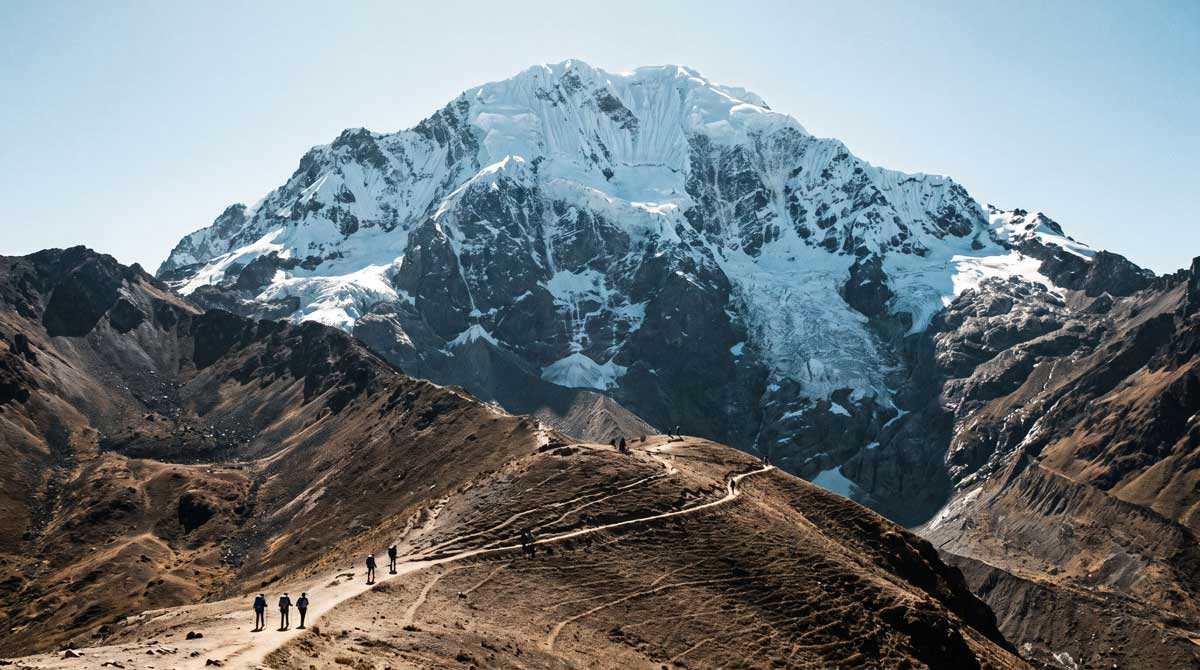
Day two presents the trek’s most demanding section: climbing 730 meters over 8 kilometers to Salkantay Pass at 4,630 meters, the route’s highest point. From this windswept saddle below the glaciated Salkantay Mountain (6,271 meters), the trail descends 1,730 meters through 14 additional kilometers to Collpapampa at 2,900 meters, transitioning from alpine tundra to cloud forest.

Day three continues descending 16 kilometers through increasingly lush vegetation to Lucmabamba at 2,000 meters, where coffee plantations replace high-altitude grasslands. The trail enters subtropical zones with waterfalls, bamboo forests, and diverse bird species.

Day four covers 19 kilometers to Aguas Calientes, including an optional visit to Llactapata ruins offering unique perspectives on Machu Picchu from across the valley. The route follows the Urubamba River through the Santa Teresa Valley before reaching Machu Picchu town at 2,040 meters.

Day five features early morning bus ascent to Machu Picchu for sunrise exploration and comprehensive guided tour before returning to Cusco by train and bus, completing the journey.

No Permits Required

Unlike the Classic Inca Trail, the Salkantay Trek requires no advance permits or daily visitor limits. Tours can be booked weeks or even days before departure, providing flexibility for travelers unable to secure Inca Trail permits 6 months ahead. This accessibility makes Salkantay the most popular alternative route to Machu Picchu, especially during peak season May through September.

While guides are not legally mandatory, hiring experienced operators is strongly recommended for safety, logistics, camping equipment, meals, and navigation through remote mountain sections. Independent trekking is possible for experienced mountaineers but requires advanced preparation and high-altitude camping gear.

Altitude and Physical Demands

The Salkantay Trek reaches higher maximum elevation than the Inca Trail at 4,630 meters versus 4,215 meters. The primary challenge comes from day two’s sustained climb to the pass combined with thin air at extreme altitude. Proper acclimatization for 2 to 3 days in Cusco before starting is essential to prevent altitude sickness.

Daily hiking ranges from 6 to 8 hours over varied terrain including rocky mountain paths, forested trails, and some road walking. Good physical fitness enables comfortable completion, though the trek remains achievable for moderately fit trekkers who train beforehand. Cardiovascular conditioning and practice hikes with elevation gain for 8 to 12 weeks before departure optimize preparation.

Best Time to Trek

April through October dry season offers optimal conditions with minimal rainfall, clear mountain views, and stable trail surfaces. May through September provides the most reliable weather, with June, July, and August experiencing highest demand but best conditions for viewing Salkantay’s glaciers and crossing the high pass.

November through March rainy season brings afternoon thunderstorms, muddy sections, obscured mountain views, and increased landslide risk. However, lower prices (20 to 40 percent discounts), fewer trekkers, and lush green landscapes attract those willing to accept weather variability. Pack comprehensive rain protection if trekking wet season.

Camping and Accommodation Options

Traditional camping tours provide tents, sleeping mats, dining equipment, and porter-prepared meals at designated campsites in Soraypampa, Collpapampa or Chaullay, and Lucmabamba. Budget operators offer basic camping for 300 to 400 USD per person.

Premium lodge-based options have emerged offering upgraded accommodations including glass dome tents, eco-lodges with hot showers, and even “sky camps” with transparent roofs for stargazing. These luxury experiences cost 800 to 1,500 USD but eliminate camping discomfort while maintaining the trekking route.

Day four concludes in Aguas Calientes where hostels (30 to 50 USD) and hotels (80 to 200+ USD) provide final night comfort before Machu Picchu visit. Most tour packages include basic Aguas Calientes accommodation.

Essential Gear for Variable Climates

The dramatic elevation change from 4,630 meters to 2,000 meters creates extreme temperature variation requiring careful layering strategy. Pack for freezing conditions at Salkantay Pass (possible -10 degrees Celsius at night) and humid warmth in cloud forest (25+ degrees Celsius daytime).

Essential items include waterproof hiking boots, sleeping bag rated to -10 degrees Celsius, rain jacket and pants, warm down jacket for high camp, thermal base layers, moisture-wicking mid-layers, sun protection (SPF 50+ sunscreen, UV-blocking sunglasses, wide-brimmed hat), trekking poles, headlamp, 3-liter water capacity, and daypack 25 to 35 liters.

Operators provide tents, sleeping mats, dining equipment, and meals. Consider bringing personal items like camera with protective bag, power bank for charging, insect repellent for lower elevations, and personal first aid supplies including blister treatment and altitude medication if prescribed.

Wildlife and Natural Highlights

The trek’s ecological diversity supports varied wildlife. High-altitude sections around Salkantay Pass host Andean condors, viscachas (rabbit-like rodents), and occasional glimpses of spectacled bears. Cloud forest zones support over 400 bird species including hummingbirds, tanagers, and the brilliant cock-of-the-rock.

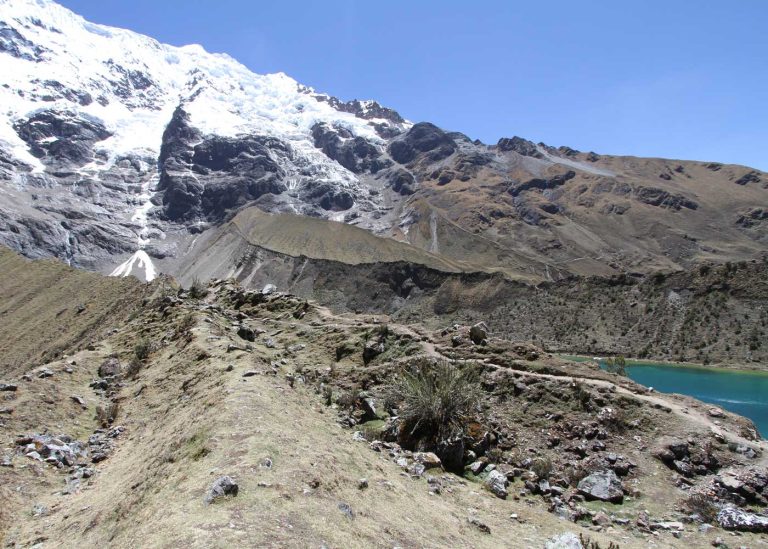
Humantay Lake’s turquoise waters, fed by glacial melt, provide stunning photography opportunities. Salkantay Mountain’s massive ice-covered south face dominates day two’s skyline. The descent through cloud forest showcases orchids, bromeliads, and massive tree ferns in subtropical abundance.

Related Tours and Route Variations

Our comprehensive Salkantay Trek package includes expert guides, camping equipment, meals, and train tickets for a complete 5-day adventure to Machu Picchu without permit restrictions.

For those seeking cultural immersion alongside trekking, consider the Lares Valley Trek visiting traditional weaving villages. If permits are available, the Classic Inca Trail offers more archaeological sites and original Inca stone pathways.

Trail Information

Getting There
Access
From Cusco: Tours provide 6:00-7:00 AM pickup for 3.5-hour drive (100 km) via Limatambo and Mollepata to Challacancha or Soraypampa trailhead. Route crosses Apurimac valley with spectacular views. Road paved to Mollepata, then unpaved final section (high-clearance vehicle required). Independent option: Bus from Cusco to Mollepata (3 hours, 15 soles), then taxi to trailhead (1-1.5 hours, 50-80 soles negotiable). Return via train from Aguas Calientes to Ollantaytambo (Expedition class 60-80 USD, Vistadome 80-120 USD), then bus to Cusco (2.5 hours, 10-15 soles). Book train tickets advance during peak season.
Parking
Limited parking at Soraypampa/Challacancha trailhead for private vehicles. Informal attendants offer vehicle watching for tips (10-20 soles). Most trekkers use operator-arranged transportation. If driving personal vehicle, secure parking available in Mollepata town (10 soles per day). Trek is point-to-point ending in Aguas Calientes – arrange vehicle return from Cusco or store in Mollepata for pickup after returning via train.
Nearest Town
Mollepata (2,900 m) – 3 hours from Cusco by vehicle, last town before trek with basic supplies, simple restaurants, and emergency services. Limited accommodation options (basic hostels 15-25 USD/night). Aguas Calientes (Machu Picchu Pueblo) at trek end offers full services including ATMs, restaurants, hotels, hot springs, and train connections to Cusco. No significant towns between Mollepata and Aguas Calientes – trek passes through small settlements and homesteads with minimal facilities.
Permits & Fees
Permits Required
No permits required for Salkantay Trek itself. Machu Picchu entrance ticket must be booked separately (152 soles, advance booking recommended during peak season). No daily trekker limits or advance permit requirements. Tours can depart any day March through December. Licensed guides recommended but not legally mandatory.
Trail Fees
Budget camping tours: 300-450 USD including guide, camping equipment, meals, Machu Picchu ticket, and train from Aguas Calientes. Mid-range tours: 500-650 USD with upgraded meals and accommodations. Luxury lodge-based options: 800-1,500 USD with sky camps and eco-lodges. Costs include all camping/lodging, meals from lunch day one through breakfast day five, guide, porters, train tickets, and bus to Machu Picchu. Tips not included (budget 50-70 USD for guide and staff).
On the Trail
Equipment
ESSENTIAL: Waterproof hiking boots (broken in), sleeping bag rated -10°C (rental 20-30 USD), trekking poles, daypack 25-35L, rain jacket and pants (Gore-Tex recommended), warm down jacket for Salkantay Pass, fleece or insulated mid-layer, thermal base layers (top and bottom), moisture-wicking hiking clothes, sun hat, warm beanie, gloves, headlamp with extra batteries, sunglasses UV400, sunscreen SPF 50+, lip balm SPF, water bottles/bladder (3L capacity), water purification (tablets or filter), personal toiletries, quick-dry towel, personal medications, copies of passport. RECOMMENDED: Camera with protective bag, power bank (limited charging), insect repellent (cloud forest sections), biodegradable soap, hand sanitizer, toilet paper, wet wipes, trekking gaiters, swimsuit (hot springs in Aguas Calientes), plastic bags for wet clothes. PROVIDED: Tents, sleeping mats, dining tent, cooking equipment, meals.
Best Season
April to October (dry season with clear mountain views)
Camping
Night 1: Soraypampa (3,900 m) – exposed high-altitude camp below Humantay glaciers with basic facilities. Night 2: Collpapampa or Chaullay (2,900 m) – cloud forest setting with warmer temperatures. Night 3: Lucmabamba (2,000 m) – coffee plantation area with mild climate. Night 4: Aguas Calientes (2,040 m) – hotel/hostel accommodation included in packages. Tour operators provide tents, sleeping mats, dining tents for first three nights. Luxury options offer glass domes and eco-lodges with hot showers. Personal sleeping bags required (rental 20-30 USD).
Safety
Safety Tips
Start day two very early (4:00-5:00 AM) to cross Salkantay Pass before afternoon weather deterioration. Weather changes rapidly at high altitude – pack rain gear and warm layers in accessible location. Use trekking poles on steep descents to prevent knee injuries. Stay hydrated despite cold conditions reducing thirst sensation. Apply sunscreen every 2 hours – UV radiation extreme at altitude with snow reflection. Inform guide of pre-existing medical conditions and altitude symptoms immediately. Keep personal items in waterproof bags as afternoon rain common. River crossings possible during rainy season – follow guide instructions carefully. Carry emergency snacks (energy bars, chocolate) for quick energy. Download offline maps before departure. Keep passport copy separate from original.
Altitude Warning
CRITICAL: Salkantay Pass reaches 4,630 m – higher than Inca Trail’s maximum elevation. Acclimatize minimum 2-3 days in Cusco (3,400 m) before starting. Day two’s 730 m ascent to pass creates highest altitude sickness risk. Symptoms include severe headache, nausea, vomiting, extreme fatigue, dizziness, and confusion. Walk slowly, hydrate 3-4 liters daily, eat light frequent meals. Diamox (acetazolamide) helps prevention – consult doctor before trip. Guides carry emergency oxygen. If severe symptoms occur, descend immediately to lower elevation. Optional Humantay Lake side trip on day one (4,200 m) aids acclimatization but adds 2-3 hours hiking.
Water Sources
Natural streams and springs available throughout route but all water requires purification. Operators provide boiled water at meals and camps. Carry minimum 3 liters personal capacity. Refill opportunities: Soraypampa camp, streams before and after Salkantay Pass (purify all water), Collpapampa/Chaullay camps, Lucmabamba camp, and Aguas Calientes. Water abundant in cloud forest sections but always purify. Use purification tablets, filters, or SteriPEN. Dehydration at altitude increases altitude sickness risk – drink even when not thirsty.
Navigation
Trail Signage
Trail markings vary by section. Well-defined path on day two to Salkantay Pass due to heavy use. Cloud forest sections (days three and four) have multiple social trails requiring navigation experience. Some road walking on day four to Hidroelectrica. GPS recommended for independent trekkers. Cairns and occasional painted markers at key junctions. Trail can be difficult to follow in fog or rain without guide. Licensed guides navigate confidently and know best camping locations. Independent hiking possible but challenging – guide strongly recommended for first-time visitors.
Guide Requirement
Guides not legally required but strongly recommended for safety, navigation, altitude management, camping logistics, and emergency support. Independent trekking possible for experienced mountaineers with high-altitude camping experience, GPS navigation skills, and Spanish language ability. Most trekkers (95%) book guided tours for camping equipment, meals, porter support, and route expertise. Solo hiking requires carrying all gear including tent, sleeping bag, cooking equipment, and food (significant weight at altitude). Guides provide cultural context, coordinate campsites, carry emergency oxygen, and communicate with rescue services if needed.
Cell Coverage
No reliable cellular signal for most of trek. Possible intermittent coverage in Mollepata and Aguas Calientes. High mountain sections (Salkantay Pass) and cloud forest valleys lack coverage. Download offline maps (Maps.me, Google Maps offline, AllTrails) before departure. Guides with reputable operators carry satellite phones or radios for emergencies. Some lodges along route offer Wi-Fi for premium tours. Inform family of communication blackout period spanning 4 days. Emergency coordination handled via guide’s communication equipment – another reason to book guided tours.

Emergency Information

Know before you go – important emergency contacts

Tourist Police Cusco (DIRTURE) +51 84 221961 24/7 English-speaking tourist police. WhatsApp: +51 980 122335 for emergency assistance and coordination.
National Police Emergency 105 Peru national emergency line. Free from any phone. Request tourist police for English language support.
Medical Emergency (SAMU) 106 National ambulance service. Cusco Hospital Regional: +51 84 223691. Clinica Pardo (English staff): +51 84 240387
Mountain Rescue Cusco +51 984 621369 Mountain rescue coordination for trekking emergencies and altitude evacuation. Contact tour operator first for fastest response.

Frequently Asked Questions

Salkantay offers higher maximum elevation (4,630 m vs 4,215 m), more dramatic mountain scenery, no permit restrictions allowing flexible booking, and lower costs (300-650 USD vs 550-800 USD). Inca Trail provides more archaeological sites, original Inca stone pathways, finishing through the Sun Gate, and smaller group sizes due to permit limits. Salkantay suits those unable to secure Inca Trail permits 6 months ahead, preferring mountain wilderness over ruins, or seeking budget options. Both reach Machu Picchu and require similar fitness levels with proper acclimatization.

Yes, independent trekking is legal unlike the Inca Trail. However, it’s challenging and not recommended for first-timers. You must carry all camping equipment (tent, sleeping bag, cooking gear, food) totaling 15-20 kg at altitude. Navigation requires GPS skills and offline maps as trails can be confusing in cloud forest sections. Camping locations aren’t obvious – local knowledge essential. You’ll miss cultural insights from guides. Emergency support requires satellite communication device. Most independent trekkers have extensive backpacking experience and high-altitude camping backgrounds. 95% of Salkantay trekkers book guided tours for equipment, meals, safety, and convenience. Budget tours start at 300 USD making independent effort rarely worthwhile unless seeking solitude.

April through October dry season provides optimal conditions with clear skies, minimal rain, and best views of Salkantay Mountain’s glaciers. May through September offers most reliable weather, with June-August peak season bringing highest demand but clearest conditions for crossing the high pass. Shoulder months (April, May, September, October) balance good weather with fewer crowds and 10-20% lower prices. Rainy season (November-March) brings afternoon storms, muddy trails, obscured mountain views, but 20-40% discounts and lush green landscapes. Avoid January-February for heaviest rainfall. December and March offer transition weather with variable conditions.

Yes, Salkantay Pass at 4,630 m creates significant altitude sickness risk, especially on day two’s climb from 3,900 m. Proper acclimatization is critical – spend 2-3 days in Cusco before starting. Symptoms include severe headache, nausea, vomiting, extreme fatigue, and dizziness. Prevention strategies: ascend slowly, hydrate 3-4 liters daily, avoid alcohol 48 hours before trek, consider Diamox after doctor consultation. Optional Humantay Lake hike (4,200 m) on day one helps acclimatization. Guides carry emergency oxygen and monitor all trekkers. If severe symptoms occur, immediate descent to lower elevation is the only treatment. Most trekkers complete successfully with proper acclimatization and pacing.

Standard packages include professional bilingual guide, porters for group camping equipment and food, all meals from lunch day one through breakfast day five, camping equipment (tents, sleeping mats, dining tent), portable toilets, emergency oxygen and first aid, Machu Picchu entrance ticket, bus to Machu Picchu, train from Aguas Calientes to Ollantaytambo, and bus to Cusco. Not included: sleeping bags (rental 20-30 USD), personal porter service for your backpack (optional 70-100 USD), tips for staff (budget 50-70 USD total), travel insurance, personal gear. Budget tours use basic camping, mid-range offers better meals and equipment, luxury options provide eco-lodges with hot showers instead of camping.

Salkantay is rated Challenging primarily due to altitude rather than technical difficulty. Day two’s 730 m climb to 4,630 m pass tests endurance and altitude tolerance. Daily hiking averages 6-8 hours over varied terrain including rocky paths, muddy sections, and some road walking. Moderately fit trekkers who train beforehand (8-12 weeks cardio and hill climbing) complete successfully with proper acclimatization. Not recommended for sedentary individuals or those without prior multi-day hiking experience. The dramatic descent from 4,630 m to 2,000 m helps recovery. Age matters less than fitness level and altitude tolerance – successful trekkers range from 18 to 65 years old.