
Classic Inca Trail: Route Data & Elevation Profile

Peru’s Most Iconic Trek to Machu Picchu

Scroll
  1. Hard Difficulty
  2. 43km Total Distance
  3. 4,215m Max Elevation
  4. 4days Duration

April to October (dry season with optimal conditions)

Best Season

Interactive Trail Map

Trail Route

Trail Information

Essential Stats

Distance

43 km

Duration

4 Days

Difficulty

Hard

Max Elevation

4,215 m

Trail Details

Trail Status

Open

Starting Coordinates

-13.1631, -72.5448

Best Season

April to October (dry season with optimal conditions)

Andean Survey · Altitude Data

Elevation Profile

4,215 m
Peak
+1,495 m
Gain
9
Points
Classic Inca Trail: Route Data & Elevation Profile – Elevation Profile Trail waypoints: Kilometer 82 Trailhead at 2,720 m, Llaqtapata Archaeological Site at 2,840 m, Wayllabamba Camp at 3,000 m, Dead Woman's Pass (Warmiwañusca) at 4,215 m, Runkurakay Ruins at 3,760 m, Phuyupatamarca at 3,670 m, Wiñayhuayna at 2,650 m, Sun Gate (Inti Punku) at 2,745 m, Machu Picchu at 2,430 m 2,162 2,936 3,709 4,483 ELEVATION (M) 1 2 3 4 4,215 m 5 6 7 8 9
STN 01
Kilometer 82 Trailhead
2,720 m
Start
STN 02
Llaqtapata Archaeological Site
2,840 m
STN 03
Wayllabamba Camp
3,000 m
STN 04
Dead Woman's Pass (Warmiwañusca)
4,215 m
Peak
STN 05
Runkurakay Ruins
3,760 m
STN 06
Phuyupatamarca
3,670 m
STN 07
Wiñayhuayna
2,650 m
STN 08
Sun Gate (Inti Punku)
2,745 m
STN 09
Machu Picchu
2,430 m
End

The Classic Inca Trail represents Peru’s most iconic trekking experience, following 43 kilometers of original Inca stone pathways through the Andes Mountains to reach Machu Picchu at sunrise. This 4-day, 3-night journey ascends through multiple ecological zones, passing spectacular archaeological sites that remain inaccessible except on foot.

For comprehensive planning resources and expert insights on Peru’s premier trekking destination, visit our complete Inca Trail guide covering permits, preparation, and booking strategies.

Trail Overview and Route

The trek begins at Kilometer 82 near Ollantaytambo at 2,720 meters elevation and follows ancient Inca roads through the Urubamba Valley. Day one covers 12 kilometers of gradual ascent to Wayllabamba camp at 3,000 meters, passing the Llaqtapata archaeological site overlooking the river valley.

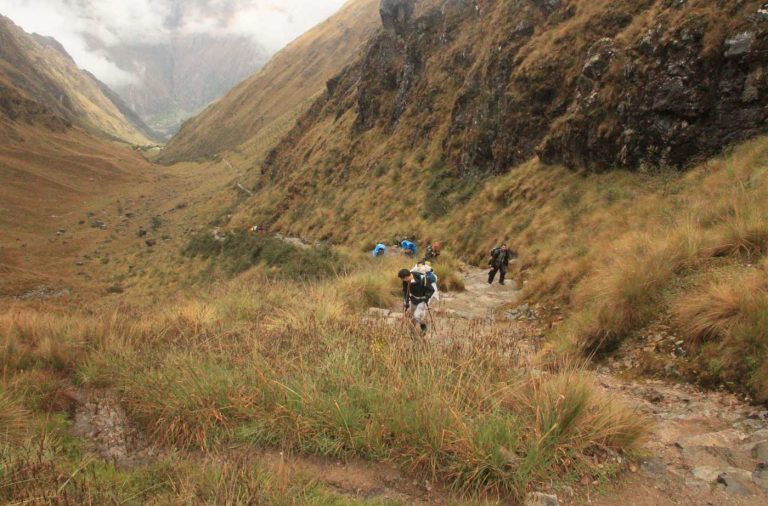
Day two presents the trail’s most demanding challenge: climbing 600 meters to Dead Woman’s Pass (Warmiwañusca) at 4,215 meters, the trek’s highest point. From this windswept saddle, the path descends steeply to Pacaymayo camp at 3,600 meters after covering 11 kilometers.

The third day traverses two additional passes while visiting the remarkable ruins of Runkurakay, Sayacmarca, Phuyupatamarca, and Wiñayhuayna. This 16-kilometer section showcases the Inca’s sophisticated mountain engineering and offers perspectives across the Vilcabamba range.

Day four begins before dawn with the final 4-kilometer walk to Inti Punku (Sun Gate), timed to witness sunrise illuminating Machu Picchu from above. After descending to the citadel for a guided tour, trekkers take the afternoon train from Aguas Calientes back to Cusco.

Permits and Booking Requirements

The Peruvian government limits Inca Trail access to 500 people daily, including trekkers, guides, porters, and cooks. Only 200 actual trekker permits are available each day. Permits must be purchased through licensed tour operators and require exact passport information matched to the passport carried during the trek.

Book permits 6 months in advance for peak season (May through September), with high-demand dates like June through August often selling out within hours of release. Permits are non-transferable and non-refundable. The trail closes every February for annual maintenance and restoration.

Physical Demands and Altitude

This trek demands good physical fitness and proper altitude acclimatization. Daily hiking ranges from 6 to 8 hours over steep, uneven stone steps and mountain passes. The combination of elevation gain, altitude effects, and variable weather creates significant physical challenges.

Spend minimum 2 to 3 days in Cusco (3,400 meters) before starting the trek. The rapid ascent to Dead Woman’s Pass at 4,215 meters can trigger altitude sickness symptoms including headaches, nausea, and fatigue. Walk slowly, hydrate consistently with 3 to 4 liters daily, and inform your guide immediately if symptoms worsen.

Best Season and Weather

April through October constitutes the dry season, offering optimal trekking conditions with minimal rainfall and clear mountain views. May, June, July, and August provide the most reliable weather but highest tourist numbers requiring earliest permit booking.

Temperatures vary dramatically by elevation and time of day. Expect 15 to 20 degrees Celsius during daylight hours at lower elevations, dropping to -5 to 5 degrees Celsius at high camps overnight. Pack layered clothing to adjust quickly as conditions change throughout each day.

November through March brings rainy season with afternoon thunderstorms, muddy trail conditions, and obscured mountain views. February closure prevents trekking during the wettest month. Consider shoulder season (April or October) for fewer crowds with acceptable weather.

What’s Included in Tours

Licensed operators provide comprehensive support including professional bilingual guides, porters to carry camping equipment and food, all meals from lunch day one through breakfast day four, tents and sleeping mats, portable toilets, and emergency oxygen and first aid equipment.

Porters carry up to 25 kilograms of group equipment but cannot carry personal items. Trekkers must carry their own daypack with water, rain gear, sun protection, camera, and personal items needed during each day’s hike. Optional porter service for 5 kilograms of personal gear costs approximately 70 to 100 USD extra.

Essential Gear and Packing

Essential items include waterproof hiking boots broken in before arrival, trekking poles to reduce knee strain on steep descents, sleeping bag rated to -10 degrees Celsius, headlamp with extra batteries, water bottles totaling 3 liter capacity, high SPF sunscreen and UV-blocking sunglasses, rain jacket and pants, warm down jacket, thermal base layers, and personal medications including altitude sickness prevention if prescribed.

Leave valuables in Cusco hotel storage. Bring photocopies of passport (original required for permit verification at checkpoints), Peruvian soles for tips and emergency purchases, camera with protective bag, and personal toiletries in small quantities. Tour operators provide detailed packing lists upon booking confirmation.

Archaeological Highlights

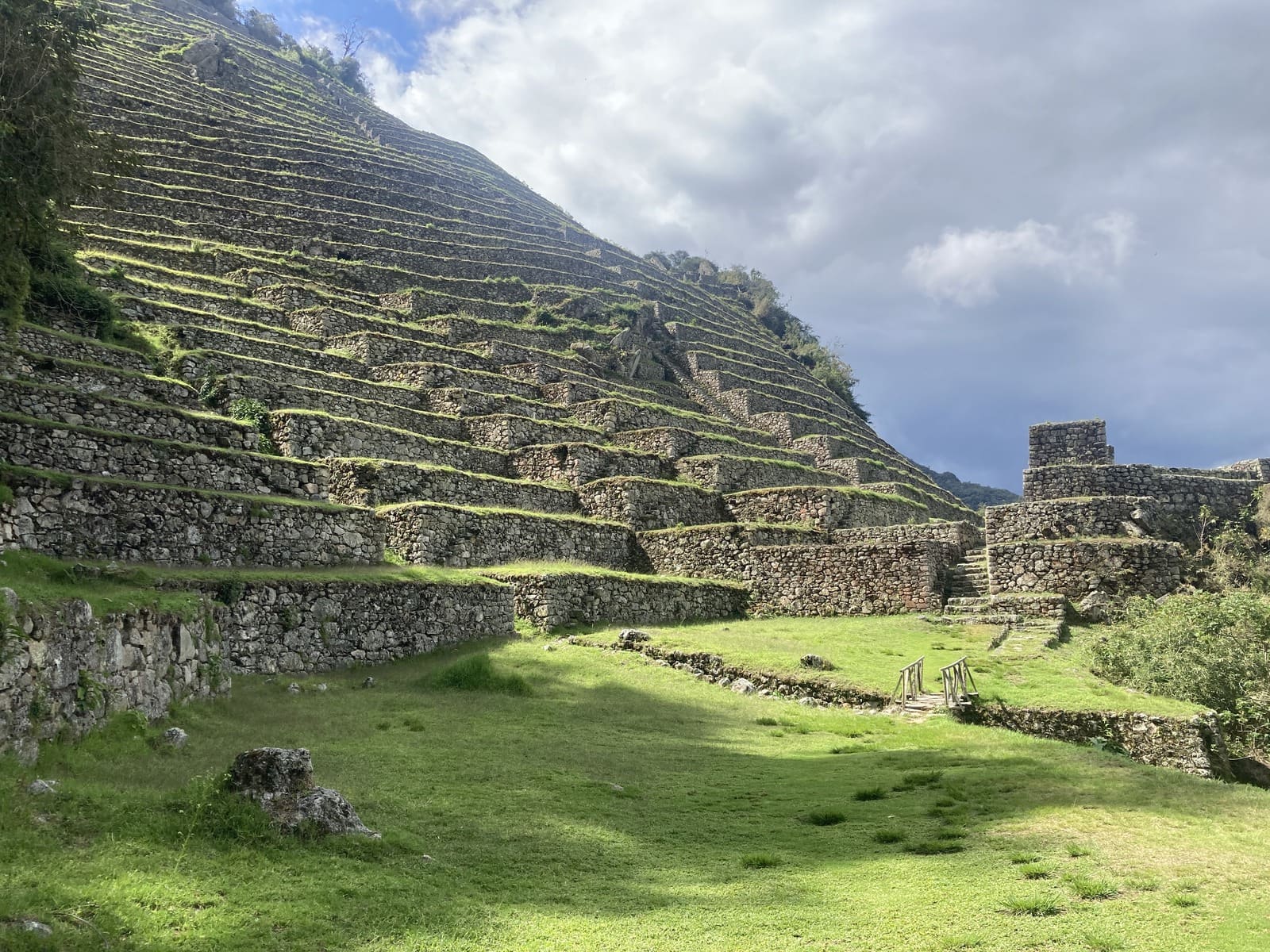
Beyond Machu Picchu itself, the trail passes numerous significant Inca sites. Llaqtapata served as a ceremonial center and checkpoint. Runkurakay functioned as a tambo (rest station) for Inca messengers. Sayacmarca’s fortress location demonstrates military engineering. Phuyupatamarca (Town Above the Clouds) features intricate water channels and ceremonial baths. Wiñayhuayna showcases extensive agricultural terraces still visible against the mountainside.

These sites receive far fewer visitors than Machu Picchu, allowing contemplative exploration with your guide’s historical context. Many feature original Inca stonework, water systems, and architectural designs that illuminate the empire’s sophisticated construction techniques.

Related Tours and Alternative Routes

For those unable to secure Inca Trail permits or seeking different experiences, consider our Salkantay Trek, which approaches Machu Picchu via high mountain passes and cloud forest without permit restrictions. The Lares Valley Trek emphasizes cultural immersion in traditional weaving communities.

Our Inca Trail 4 Days Trek package provides comprehensive logistics including permits, equipment, meals, and expert guides for worry-free trekking to Machu Picchu.
Trail Information

Getting There
Access
From Cusco: Operators provide 6:00 AM pickup for 3-hour drive (82 km) via Urubamba Valley to Kilometer 82 checkpoint near Ollantaytambo. Paved road entire route. Independent access possible via colectivo from Cusco to Ollantaytambo (10 soles, 2 hours), then taxi to trailhead (20-30 soles). Mandatory permit verification and registration at Kilometer 82 checkpoint before entering trail. Return via train from Aguas Calientes to Ollantaytambo (expedition class 60-80 USD, Vistadome 80-120 USD), then bus to Cusco.
Parking
No parking at Kilometer 82 trailhead. Vehicles cannot access beyond checkpoint. All tour groups arrive via operator-arranged transportation. Independent trekkers using taxis must arrange return pickup time or continue to Aguas Calientes for train service. Secure parking available in Ollantaytambo town (5-10 soles per day) if driving personal vehicle.
Nearest Town
Ollantaytambo – 20 minutes by taxi from Kilometer 82 trailhead. Full services including ATMs, restaurants, pharmacies, hostels (40-80 USD/night), and markets for last-minute supplies. Tourist police available. Final reliable location for cash withdrawal – no ATMs on trail. Aguas Calientes (Machu Picchu Pueblo) at trail end offers comprehensive services and hot springs after trek completion.
Permits & Fees
Permits Required
Required – 500 total daily permits (200 for trekkers). Book 6+ months in advance through licensed operators only. Permits are non-transferable and require exact passport details. Trail closed every February for maintenance. Peak season (June-August) sells out within hours.
Trail Fees
Trekking packages range from 550-800 USD per person including permits (70 USD), guide, porters, camping equipment, meals, and train tickets. Entrance to Machu Picchu included (152 soles). Tips for guides and porters not included (budget 50-80 USD total).
On the Trail
Equipment
ESSENTIAL: Waterproof hiking boots (broken in), trekking poles, sleeping bag rated -10°C (rental available), daypack 25-35L, rain jacket and pants, warm layers (fleece, down jacket for nights), thermal base layers, sun hat, warm beanie, gloves, headlamp with extra batteries, sunglasses (UV400), sunscreen SPF 50+, water bottles/bladder (3L capacity), personal toiletries, quick-dry towel, personal medications, copies of passport. RECOMMENDED: Camera with protective bag, power bank, biodegradable soap, hand sanitizer, toilet paper, wet wipes, insect repellent (for lower elevations), plastic bags for wet clothes. PROVIDED BY OPERATORS: Tents, sleeping mats, dining tent, cooking equipment, tables, chairs, portable toilets. Optional porter service (70-100 USD) carries 5 kg personal items.
Best Season
April to October (dry season with optimal conditions)
Camping
Three campsites along route with designated camping areas. Night 1: Wayllabamba (3,000 m) or Ayapata. Night 2: Pacaymayo (3,600 m). Night 3: Wiñayhuayna (2,650 m). Tour operators provide tents, sleeping mats, dining tents, and portable toilets. Personal sleeping bags required (rental available for 20 USD). No campsite facilities except basic toilets.
Safety
Safety Tips
Start each day slowly to gauge altitude effects. Inform guide of pre-existing medical conditions. Carry personal first aid kit with blister treatment, pain relievers, and altitude medication. Use trekking poles on steep descents to prevent knee injuries. Stay with your group – becoming separated on remote sections is dangerous. Weather changes rapidly – pack rain gear in accessible location. Apply SPF 50+ sunscreen every 2 hours as UV is extreme at altitude. Bring water purification tablets as backup. Keep passport copy separate from original. Download offline maps before trek. Respect archaeological sites – no climbing on ruins. Leave no trace – pack out all trash.
Altitude Warning
CRITICAL: Trek reaches 4,215 m at Dead Woman’s Pass. Acclimatize minimum 2-3 days in Cusco (3,400 m) before starting. Altitude sickness symptoms include severe headache, nausea, dizziness, extreme fatigue, and shortness of breath. Ascend slowly, hydrate 3-4 liters daily, avoid alcohol 48 hours before trek. Diamox (acetazolamide) available from pharmacies after medical consultation. Guides carry emergency oxygen. Descend immediately if severe symptoms occur. No evacuation possible except on foot – medical emergencies require porter-assisted descent.
Water Sources
Natural springs at kilometer 5, 12, and 18 provide water sources. All water must be purified using tablets, filters, or boiling. Tour operators provide boiled water at meals and fill stations at camps. Carry minimum 3 liters personal capacity. Water availability reduces in dry season – verify refill points with guide. Do not drink untreated stream water due to contamination risk from upstream camps.
Navigation
Trail Signage
Ancient Inca stone pathways clearly defined throughout route. No modern signage – navigation via original Inca road network. Trail well-worn and obvious in most sections. Some steep stairways can be slippery when wet. Licensed guide required by Peruvian law for all trekkers – independent hiking prohibited regardless of experience. Guides navigate checkpoints, campsites, and archaeological site access. GPS useful for orientation but guide expertise essential.
Guide Requirement
Mandatory by Peruvian law. Independent trekking prohibited. All trekkers must book through licensed tour operators providing certified guides. Guides handle permit verification, checkpoint registration, campsite coordination, archaeological site interpretation, emergency response, and group pacing for altitude management. Guide-to-trekker ratio typically 1:10. English-speaking guides standard. Solo travelers join group departures.
Cell Coverage
No cellular signal beyond Ollantaytambo. Entire trail section from Kilometer 82 to Machu Picchu lacks coverage. Guides carry satellite phones or radios for emergencies. Download offline maps (Maps.me, Google Maps offline) before departure. Inform family of communication blackout period. Limited Wi-Fi available in Aguas Calientes after completing trek. Emergency coordination handled via guide’s satellite communication – this is why independent hiking is prohibited.

Emergency Information

Know before you go – important emergency contacts

Tourist Police Cusco (DIRTURE) +51 84 221961 24/7 English-speaking tourist police for emergency assistance. WhatsApp: +51 980 122335
National Police Emergency 105 Peru national police emergency line. Free call from any phone. Request tourist police for English support.
Medical Emergency (SAMU) 106 National ambulance service. Cusco Hospital Regional: +51 84 223691. Clinica Pardo: +51 84 240387
Mountain Rescue Cusco +51 984 621369 Trekking emergency coordination, altitude evacuation. Contact tour operator first for fastest response.

Frequently Asked Questions

Book minimum 6 months in advance, especially for peak season (June-August) which sells out within hours of permit release. Only 200 trekker permits available daily out of 500 total including support staff. Permits are non-transferable and require exact passport details matching the passport you carry. February is closed for maintenance. April-May and September-October offer better availability with good weather.

Good physical fitness essential. You’ll hike 6-8 hours daily over steep, uneven terrain with sustained climbs totaling 600+ meters on day two. Primary challenge is altitude (4,215 m highest point) rather than technical difficulty. Train with cardio exercise and hill climbing for 8-12 weeks before departure. Ability to walk 10+ km daily with daypack required. Proper acclimatization in Cusco for 2-3 days before trek is mandatory regardless of fitness level.

No. Peruvian law prohibits independent hiking on the Inca Trail. All trekkers must book through licensed tour operators providing certified guides. This regulation protects the trail, limits visitor numbers through permit system, ensures safety with trained guides carrying emergency equipment, and supports local communities through employment. Guides handle permit verification, navigate checkpoints, coordinate campsites, interpret archaeological sites, and manage emergencies in areas without cell coverage or road access.

Standard packages include Inca Trail permit (70 USD), professional bilingual guide, porters for group equipment and food, all meals from lunch day one through breakfast day four, tents and sleeping mats, portable toilets, dining tent with tables and chairs, emergency oxygen and first aid, train ticket from Aguas Calientes to Ollantaytambo, and bus tickets between Cusco-Ollantaytambo-Cusco. Not included: sleeping bags (rental 20 USD), personal porter service (70-100 USD for 5 kg), tips for guides/porters/cooks (budget 50-80 USD), Machu Picchu entrance ticket sometimes separate, travel insurance.

Guides monitor all trekkers for altitude symptoms. For mild symptoms (slight headache, breathlessness), slow your pace, rest frequently, hydrate aggressively, and breathe deeply. Guides provide coca tea and emergency oxygen if needed. If symptoms worsen (severe headache, vomiting, confusion, difficulty breathing), you must descend immediately – the only definitive treatment. Guides coordinate porter-assisted descent to lower elevation and arrange transportation to Cusco medical facilities. This is why travel insurance with high-altitude coverage and evacuation is essential. Proper acclimatization before starting prevents most cases.

The Classic Inca Trail offers unique advantages: original Inca stone pathways, multiple archaeological sites inaccessible by other routes, finishing through the Sun Gate with sunrise views of Machu Picchu, and historical authenticity of walking the royal road. Disadvantages include permit restrictions requiring 6-month advance booking, higher costs (550-800 USD vs 300-500 USD for alternatives), and crowded campsites during peak season. Alternative treks like Salkantay offer more availability, lower prices, higher mountain scenery, and fewer crowds but miss the archaeological richness and historic Inca roads. Choose based on your priorities: history and tradition (Inca Trail) or mountain scenery and flexibility (alternatives).