Argentina stretches from subtropical waterfalls to glacial wilderness, from high-altitude wine valleys to the windswept end of the world. Iguazu’s 275 cataracts thunder through rainforest in the northeast. Fitz Roy’s granite spires draw trekkers to Patagonia. Mendoza pours Malbec at 1,500 meters with Aconcagua as backdrop. Few countries pack this range of landscape into a single trip.
Why Argentina Captivates Adventure Travelers
Argentina offers a rare combination: modern infrastructure paired with wilderness that stays remote. The country’s size (eighth largest globally) creates space for experiences that range from cosmopolitan to raw wilderness within a single trip. Fly from Buenos Aires in the morning, stand before a calving glacier by afternoon, and dine on grass-fed steak under Patagonian stars by evening.
Patagonia lodges match the best hotels anywhere. Mendoza winemakers pour award-winning vintages with snow-capped Aconcagua as backdrop. Even remote El Chalten, a tiny village at the base of Fitz Roy, serves craft beer and wood-fired pizza after mountain days. Comfort and adventure coexist here without either one losing its edge.
Patagonian Grandeur
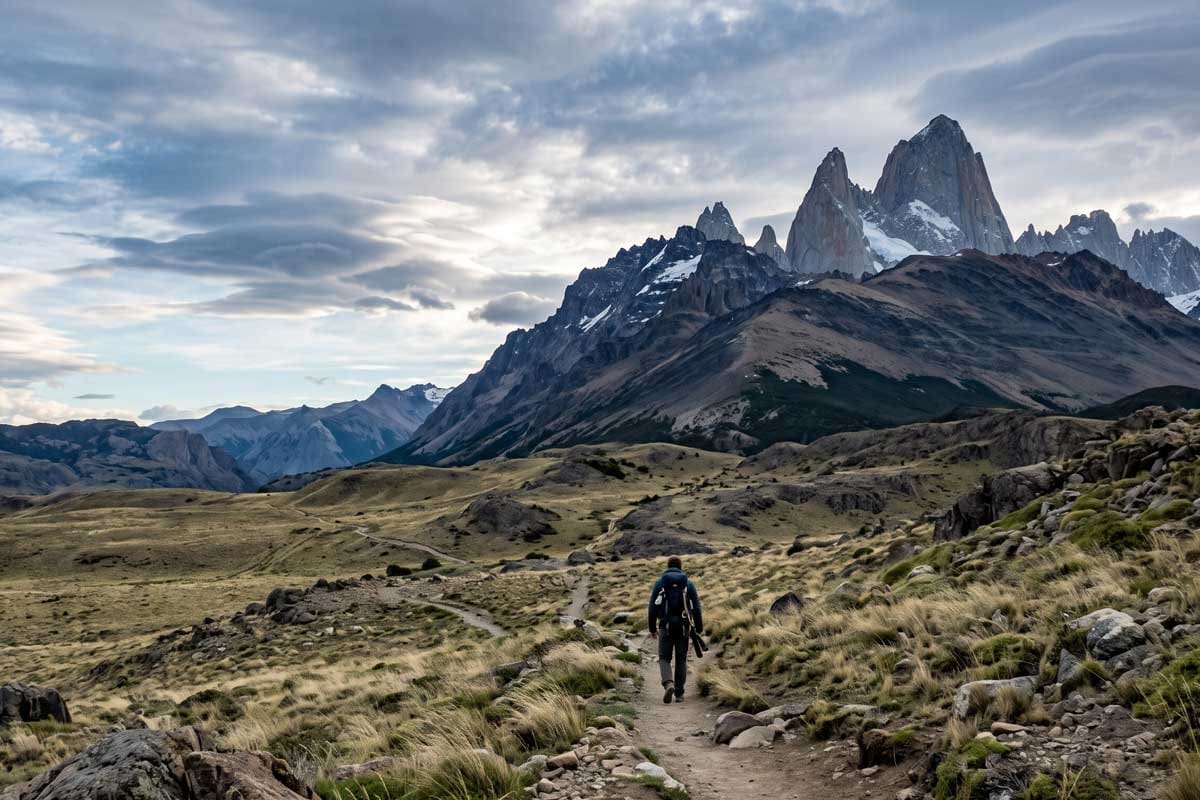
Fitz Roy’s granite spires pierce Patagonian skies. Perito Moreno Glacier advances into turquoise waters, calving house-sized icebergs. The Carretera Austral winds through fjords no road should traverse. This is landscape stripped to its essentials.
Mendoza Wine Country
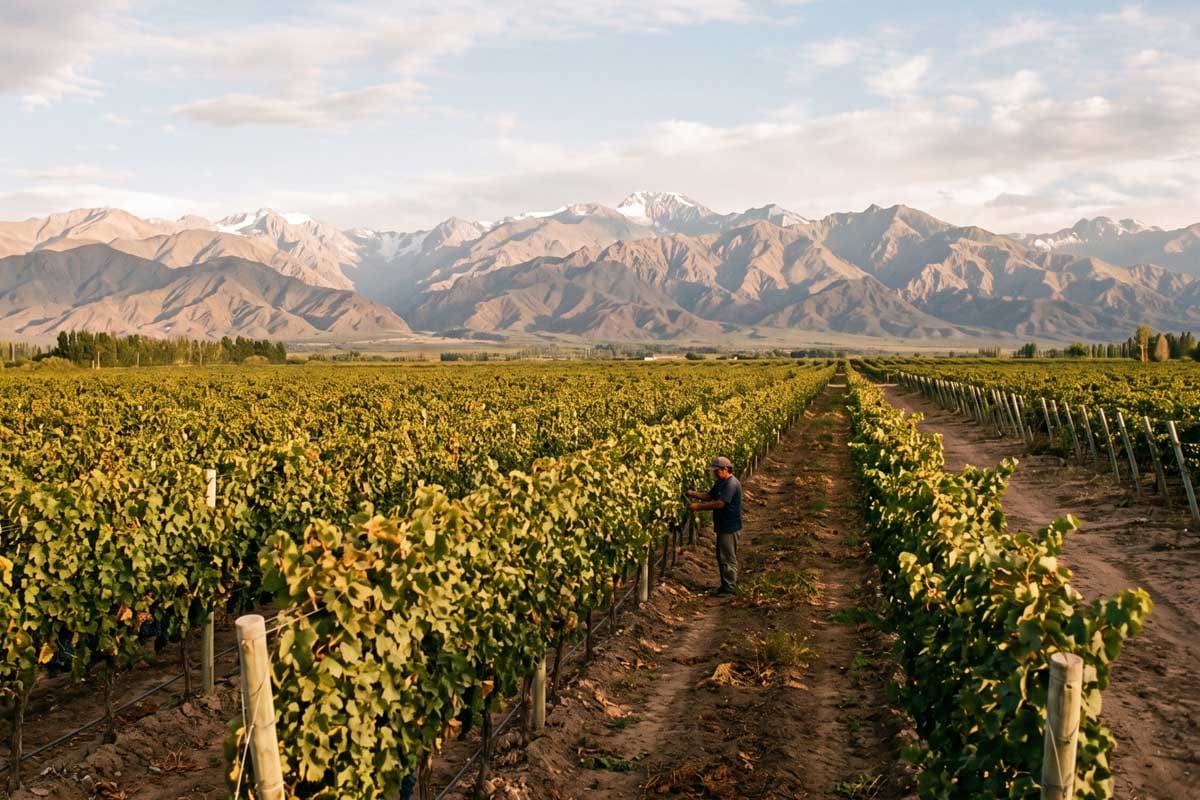
Mendoza’s high-altitude vineyards produce Argentina’s prized Malbec at elevations reaching 1,500 meters. Boutique wineries, gourmet restaurants, and Andes views create a wine country experience that holds its own against Napa and Bordeaux.
Cultural Depth
Buenos Aires pulses with tango, inventive cuisine, and European-influenced architecture. The northwest preserves pre-Columbian culture in adobe villages. Gaucho traditions endure on the pampas. Argentina’s culture runs as deep as its landscapes.
Argentina’s Adventure Regions
Patagonia: Glaciers, Peaks, and Endless Steppe
Argentine Patagonia dominates the country’s adventure identity. The region splits into distinct zones, each offering different experiences but sharing that raw Patagonian character: vast horizons, relentless wind, and landscapes that humble even seasoned travelers.
Los Glaciares National Park anchors southern Patagonia with two world-famous attractions. Perito Moreno Glacier, one of the few advancing glaciers on Earth, terminates in Lago Argentino where visitors watch ice towers collapse from wooden walkways mere meters away. The spectacle is accessible to anyone who can walk a boardwalk, making it one of the most powerful natural spectacles you can witness without technical skill.
El Chalten, Argentina’s self-proclaimed trekking capital, sits at the base of the Fitz Roy massif, whose granite towers define Patagonian mountain photography. This small village of 1,500 exists to serve outdoor enthusiasts, with well-marked trails departing directly from town. See our Argentina hiking trails guide for route details, difficulty ratings, and trail logistics.
Ushuaia, the “End of the World,” marks Patagonia’s southern terminus on the Beagle Channel. The city serves as departure point for Antarctica cruises, gateway to Tierra del Fuego National Park, and adventure base for sub-Antarctic kayaking, sailing, and hiking. The Drake Passage begins here. For many travelers, Ushuaia represents either the final destination or the jumping-off point for Earth’s last continent.
“People fly to Patagonia expecting the mountains, but what changes them is the silence. You walk for hours and the only sound is wind on rock,” says Marcelo Griffa, a Patagonia guide with 20 years leading treks from El Chalten. “I tell visitors: bring good boots, a windproof jacket, and patience. The weather decides when you see Fitz Roy, not your itinerary.”
Explore our complete Argentina trekking trail guide for route details, permits, difficulty ratings, and seasonal conditions across Patagonia and the Andes.
Mendoza: Wine, Mountains, and Aconcagua
Mendoza sits at the base of the Andes where desert irrigation created one of the world’s great wine regions. The province produces 70% of Argentina’s wine, specializing in Malbec that thrives at high altitude with intense sun and cool nights. But Mendoza offers far more than vineyard tours.
Aconcagua Provincial Park protects the Western Hemisphere’s highest peak, drawing mountaineers and trekkers to Mendoza’s high Andes. The park’s valleys reward trekkers even without a summit attempt. For climbing routes, permit requirements, and expedition logistics, see our Argentina trails guide.
Wine touring centers on three main valleys. Maipu offers the easiest access from Mendoza city with established bike routes between bodegas. Lujan de Cuyo houses many premium wineries at slightly higher elevation. Uco Valley, an hour south, produces Argentina’s most prestigious wines at altitudes reaching 1,500 meters, with snow-capped Andes forming a permanent backdrop.
Beyond wine, Mendoza serves as base for white-water rafting on the Mendoza River, horseback riding into the foothills, and the scenic drive across the Andes to Chile via the Paso Los Libertadores, one of South America’s most spectacular mountain crossings.
Iguazu Falls: Where Water Overwhelms
Iguazu Falls defies adequate description. The system of 275 waterfalls stretches nearly 3 kilometers across the Iguazu River, straddling the Argentina-Brazil border. The cascade plunges through subtropical rainforest alive with toucans, butterflies, and coatis that have lost all fear of camera-wielding visitors.
The Argentine side offers the most immersive experience. Walkways extend to the brink of Garganta del Diablo (Devil’s Throat), the largest cataract, where you stand surrounded by falling water on three sides, mist and thunder filling your senses. Lower circuits wind beneath smaller falls where you will get soaked; bring a dry change of clothes.
The Brazilian side (easily visited via border crossing from Puerto Iguazu) provides the panoramic view: one sweeping vista encompassing the entire falls system. Most visitors spend two days seeing both perspectives. The Argentine park deserves the longer visit for its walkway network and wildlife encounters.
Northwestern Argentina: Ancient Landscapes, Living Culture
Argentina’s northwest feels like a different country. Geographically, it resembles Bolivia more than Buenos Aires. The provinces of Salta and Jujuy contain pre-Columbian ruins, colonial churches, and indigenous Quechua culture that survived Spanish colonization in ways the pampas did not.
Quebrada de Humahuaca, a UNESCO World Heritage Site, carves through the Andes displaying rock formations in bands of red, orange, pink, and green. The 155-kilometer gorge connects colonial villages like Purmamarca (famous for its seven-colored hill), Tilcara (with its restored pre-Columbian fortress), and Humahuaca itself. This is road-trip territory. Rent a car from Salta and allow 3-4 days to explore side valleys and remote villages.
Salta serves as regional capital and gateway, preserving colonial architecture around its central plaza. The city offers excellent restaurants, artisan markets, and serves as departure point for excursions to Cachi via the Cuesta del Obispo pass, Cafayate’s wine country (Argentina’s other great wine region, specializing in Torrontes white), and the salt flats of the Puna.
The northwest connects naturally with Bolivia’s similar landscapes. Travelers combining both countries often cross at La Quiaca/Villazon, continuing to Uyuni’s salt flats, one of South America’s most scenic overland routes.
Buenos Aires: Gateway with Its Own Gravity
Most Argentina trips transit through Buenos Aires, but the capital demands more than airport connections. This is South America’s most European city: wide boulevards, Belle Epoque architecture, major museums, and a cafe culture where ordering a single coffee earns hours of people-watching real estate.
Buenos Aires invented tango in its working-class neighborhoods, and the dance remains central to porteño identity. Attend a milonga (tango dance hall), watch professionals at a dinner show, or simply observe couples practicing in San Telmo’s plaza on Sunday afternoons. The city’s food scene ranges from classic parrillas (steakhouses) serving asado cuts to innovative closed-door restaurants pushing Argentine cuisine forward.
Allocate minimum 2-3 days for Buenos Aires. Walk the cobblestones of San Telmo, explore the colorful houses of La Boca, browse the antique markets, and understand why Argentines consider their capital one of the world’s great cities.
Best Time to Visit Argentina
The best time to visit Argentina is November or March, when Patagonia’s trekking season overlaps with comfortable conditions in Buenos Aires, Mendoza, and the northwest. Patagonia peaks December through February with 18-hour days. Iguazu is best March through May or August through November, avoiding summer humidity. The northwest stays dry April through November.
Argentina’s 3,500-kilometer length spans climates from subtropical to subpolar. Timing depends entirely on which regions you prioritize:
| Region | Best Months | Conditions | Notes |
|---|---|---|---|
| Patagonia | Nov–Mar | Long days (18+ hours Dec), milder temps, all services open | Dec–Feb peak season; wind constant year-round |
| Mendoza/Wine | Mar–May, Sep–Nov | Harvest (Mar), pleasant temps, clear skies | Jan–Feb hot; Jun–Aug cold but ski season |
| Iguazu Falls | Mar–May, Aug–Nov | Lower humidity, good water flow, fewer crowds | Dec–Feb very hot and humid; waterfalls fullest Apr–Jul |
| Northwest | Apr–Nov | Dry season, clear skies, cool nights | Dec–Mar rainy; roads can flood |
| Buenos Aires | Mar–May, Sep–Nov | Mild temps, spring/fall weather | Jan–Feb locals flee heat; Jul–Aug chilly |
| Ushuaia/Tierra del Fuego | Nov–Mar | “Summer” (10-15C), longest days, wildlife active | Winter stark but very cold; many closures |
Multi-region tip: November and March bookend Patagonia’s peak season while offering pleasant conditions nationwide. For a full trip covering both north and south, late October to early December or late February to early April provide the best overlap.
Getting to Argentina
International Flights
Buenos Aires operates two airports: Ezeiza International Airport (EZE) handles most international flights; Aeroparque Jorge Newbery (AEP) serves domestic routes and some regional flights. The airports sit 40 kilometers apart, so factor this into connections.
Direct flights reach Buenos Aires from Miami, New York, Houston, Dallas, Atlanta, Toronto, London, Madrid, Rome, Paris, and most South American capitals. Aerolineas Argentinas (the flag carrier), LATAM, American, United, Delta, Iberia, and Air France operate the main routes.
For Patagonia-focused trips, consider flying directly to El Calafate (FTE) or Ushuaia (USH) to maximize time in the region. Both airports receive daily flights from Buenos Aires; El Calafate also connects to Bariloche and other Patagonian cities.
Overland from Chile
Chile and Argentina share one of the world’s longest borders, with multiple crossing points enabling overland adventures:
- Patagonia South: El Calafate (Argentina) to Puerto Natales (Chile), gateway pairing Perito Moreno with Torres del Paine
- Lake District: Bariloche (Argentina) to Puerto Varas (Chile) via the scenic Cruce Andino lake crossing
- Central: Mendoza (Argentina) to Santiago (Chile) via Paso Los Libertadores, a spectacular Andes crossing
The Patagonia circuit combining Argentine and Chilean sides makes perfect geographic sense. Many travelers fly into El Calafate, visit Perito Moreno and El Chalten, bus to Puerto Natales for Torres del Paine, then fly out of Punta Arenas, or reverse the route.
See our Chile travel guide for planning the Chilean portions of cross-border itineraries.
Overland from Bolivia
The northwest Argentina to Bolivia crossing at La Quiaca/Villazon connects Salta and Jujuy province with Bolivia’s Tupiza and onwards to Uyuni. This route allows travelers to combine Argentina’s Quebrada de Humahuaca with Bolivia’s salt flats and high-altitude landscapes, one of South America’s most scenic overland corridors.
Combine with our Bolivia travel guide for planning the complete crossing.
Argentina Travel Practicalities
Getting Around
Argentina’s size makes flying essential for multi-region trips. Aerolineas Argentinas, LATAM, and low-cost carriers Flybondi and JetSMART operate extensive domestic networks. Book Patagonia routes early in peak season; flights fill months ahead.
Long-distance buses remain popular and comfortable. Companies like Andesmar and Via Bariloche offer cama (full-flat) and semi-cama seats with meals and wine for overnight journeys. Bus travel works well for routes like Buenos Aires to Mendoza (12-14 hours), Mendoza to Bariloche (18 hours), or Buenos Aires to Iguazu (16-18 hours), though internal flights save significant time.
Car rental opens road-trip possibilities: Ruta 40 along the Andes, the Quebrada de Humahuaca circuit from Salta, or the Seven Lakes Road from Bariloche. Argentine drivers navigate with characteristic confidence; defensive driving is essential.
Currency and Costs
Argentina uses the Argentine Peso (ARS), though the economy’s complexity means exchange rates fluctuate significantly. Many travelers find favorable rates using international debit cards at ATMs or exchanging USD/EUR at official cambios. Credit cards work widely in cities and tourist areas.
Costs vary dramatically by region. Buenos Aires and Patagonia approach European prices; the northwest remains affordable. Budget travelers manage on $50-80/day with hostels and local restaurants. Mid-range comfort runs $100-200/day. Patagonia lodges and wine country estates push luxury budgets to $300+/day.
Language
Argentine Spanish (castellano rioplatense) differs notably from other Latin American varieties. The “ll” and “y” sound like “sh,” and “vos” replaces “tu.” English is widely spoken in Buenos Aires tourism contexts and Patagonia’s international trekking scene, but less common elsewhere. Basic Spanish helps significantly outside major tourist areas.
Safety
Argentina is generally safe for travelers. Buenos Aires requires standard big-city awareness. Petty theft occurs in crowded areas and on public transport. Avoid displaying expensive electronics and use registered taxis or ride-sharing apps. Patagonia’s main risks are weather-related: sudden storms, strong winds, and cold exposure in the mountains. Iguazu’s wildlife is bold but not dangerous.
Combining Argentina with Peru
Argentina and Peru bookend the Andes, creating epic multi-country itineraries for travelers with 3-6 weeks. The classic South America circuit flows:
- Buenos Aires (2-3 days) → Fly to El Calafate
- Perito Moreno Glacier and El Chalten (4-5 days)
- Bus to Puerto Natales → Torres del Paine, Chile (3-5 days)
- Fly Punta Arenas → Santiago → Lima
- Lima → Cusco → Sacred Valley
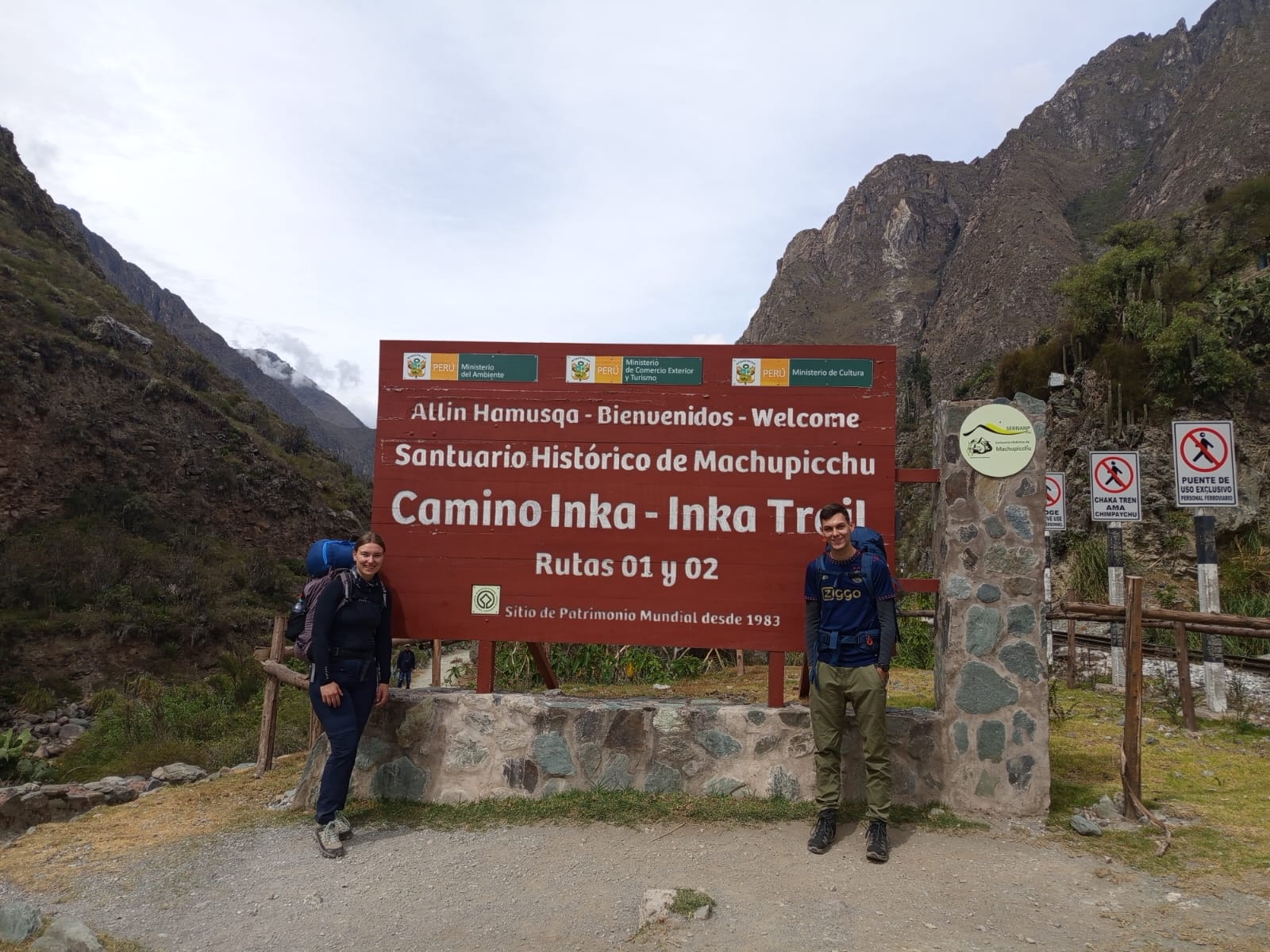
- Inca Trail or Salkantay Trek → Machu Picchu
For overland purists, the route through Bolivia connects northern Argentina (Salta, Jujuy) → Bolivia (Uyuni, La Paz, Lake Titicaca) → Peru (Puno, Cusco). This 4-6 week journey covers South America’s Andean spine without backtracking.
We specialize in Peru trekking. See our Peru destination guide and guided tour options for planning the Peruvian portions of your journey.
Plan Your Argentina Adventure
Argentina rewards travelers who match ambition to itinerary. A week allows deep exploration of one region: Patagonia, wine country, or Iguazu plus Buenos Aires. Two weeks enable meaningful combinations. Three weeks or more open the full north-to-south traverse that showcases why Argentina matches entire continents for diversity.
The country’s infrastructure makes independent travel straightforward, while the landscapes, particularly Patagonia’s, benefit from local knowledge about weather windows, trail conditions, and logistics. Fitz Roy’s spires, Malbec at altitude, the thunder of Iguazu, the colors of the Quebrada: Argentina’s adventures have a way of staying with you long after you get home.