
Introduction
The animals and birds on the Inca Trail change with altitude: the trail traverses five distinct ecological zones from subtropical Urubamba valley (2,600m) through high-altitude puna grasslands (4,215m) and into lush cloud forests (2,700m), creating exceptional biodiversity rarely encountered on single multi-day trek. Trekkers can spot over 400 bird species including the Andean condor, 70+ mammal species from elusive spectacled bears to photogenic vizcachas, cloud forest orchids from a sanctuary list of 400+ species, and high-altitude adaptations like polylepis trees surviving at 4,000+ meters elevation.
Understanding wildlife distribution by elevation zone turns casual observation into intentional nature watching. Day 1’s subtropical valley hosts hummingbirds and agricultural birds, Day 2’s high pass reveals vizcachas and caracaras hunting at extreme altitude, while Day 3’s cloud forest descent showcases orchid diversity, mixed-species bird flocks, and potential (though rare) spectacled bear habitat. The trail’s protected status within Machu Picchu Historical Sanctuary (32,592 hectares) preserves ecosystems supporting this species diversity.
This guide to animals and birds on the Inca Trail covers species profiles for the top 20 sightings, elevation-zone breakdowns for targeted spotting, photography ethics to minimize disturbance, conservation context for threatened species like spectacled bears, and practical tips for maximizing wildlife encounters across four days on the trail. For trekking logistics and permits, see our Inca Trail planning guide.
Quick Answer: Inca Trail wildlife includes 400+ bird species (Andean condor, torrent ducks, hummingbirds), 70+ mammals (spectacled bears, vizcachas, white-tailed deer), 400+ orchids, and cloud forest ecosystems. Best wildlife viewing: early morning/late afternoon, Days 1 and 3 in diverse habitats. Elevation determines species: the subtropical valley (2,600m) has different wildlife than high-altitude pass (4,215m) or cloud forest (2,700-3,000m). Binoculars recommended; photography requires telephoto lens and ethical distance practices.
Table of Contents
- Ecological Zones: Five Distinct Habitats
- Top 20 Wildlife Species Profiles
- Birds: 400+ Species Including Andean Condor
- Mammals: From Spectacled Bears to Vizcachas
- Cloud Forest Orchids: 400+ Species
- High-Altitude Flora: Polylepis Forests & Ichu Grass
- Day-by-Day Wildlife Expectations
- Spotting Tips: Best Times & Techniques
- Photography Ethics & Wildlife Safety
- Conservation Status & Threatened Species
Ecological Zones: Five Distinct Habitats
The Inca Trail’s dramatic elevation changes (2,600m to 4,215m) create distinct ecological zones, each supporting its own wildlife communities.
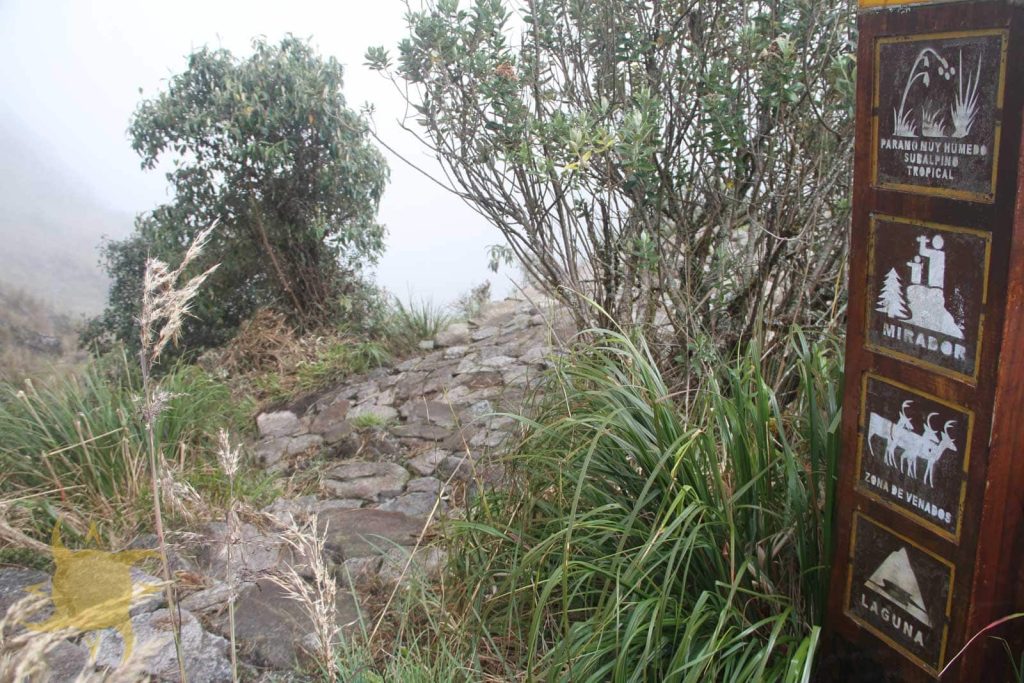
Zone 1: Subtropical Valley (2,600-3,000m)
Location: Day 1, Km 82 to Wayllabamba Characteristics:
- Urubamba River valley microclimate
- Agricultural lands (corn, potatoes)
- Semi-arid scrubland
- Cacti, eucalyptus, agave plants
Wildlife:
- Agricultural birds (thrushes, sparrows, finches)
- Hummingbirds (multiple species)
- Lizards basking on warm rocks
- Introduced species (cattle, horses)
Zone 2: Montane Forest (3,000-3,600m)
Location: Day 1 afternoon to Day 2 morning, Wayllabamba to Dead Woman’s Pass approach Characteristics:
- Dense vegetation transitioning to high altitude
- Mixed forest and grassland
- Cooler temperatures, increased moisture
Wildlife:
- Mixed-species bird flocks
- Small rodents (mice, rats)
- Andean fox (rare sightings)
- Polylepis tree patches
Zone 3: High-Altitude Puna (3,600-4,215m)
Location: Day 2, Dead Woman’s Pass area Characteristics:
- Treeless grassland (puna)
- Ichu grass dominates
- Extreme weather (cold, wind, intense sun)
- Limited vegetation diversity
Wildlife:
- Vizcachas (rabbit-like rodents)
- Mountain caracaras (predatory birds)
- Andean condors (occasional sightings)
- Hardy high-altitude plants
Zone 4: Cloud Forest (2,700-3,600m)
Location: Day 3, Pacaymayo descent to Wiñay Wayna Characteristics:
- Humid, mist-covered forests
- Moss and epiphyte-covered trees
- High biodiversity
- 179 orchid species recorded around Wiñay Wayna alone
Wildlife:
- Spectacled bear habitat (rarely seen)
- Mixed bird flocks
- Orchids, ferns, bromeliads
Zone 5: Upper Cloud Forest/Subtropical (2,400-2,700m)
Location: Day 4, descent to Machu Picchu Characteristics:
- Warm, humid microclimate
- Dense vegetation
- Protected forest within sanctuary
Wildlife:
- Torrent ducks in streams
- Hummingbird diversity peaks
- Butterflies (365 species recorded in the sanctuary, SERNANP)
- Small mammals in undergrowth
Pro Tip: Wildlife viewing success depends on matching expectations to elevation zones. Don’t expect orchids at Dead Woman’s Pass (too high/cold) or condors in dense cloud forest (need open sky).
By the Numbers: The Machu Picchu Historical Sanctuary (encompassing the Inca Trail) protects 444 bird species, 75 mammal species, 14 amphibian species, 24 reptile species and 332 tree species across its 32,592 hectares (SERNANP), plus more than 420 orchid species (2015 management plan).
Headline Species at a Glance:
| Species | Where to look | Elevation range | Status |
|---|---|---|---|
| Vizcacha | Rocks around Dead Woman’s Pass (Day 2) | about 3,000-5,000 m (Animal Diversity Web) | Least Concern |
| Andean condor | Open sky over the high passes | 0-5,000 m (BirdLife) | Vulnerable |
| Spectacled bear | Cloud forest (rarely seen) | 200-4,750 m (IBA) | Vulnerable |
| Grey-breasted mountain toucan | Day 3 cloud forest and the final approach | 2,000-3,650 m (BirdLife) | Least Concern |
| Andean cock-of-the-rock | Urubamba valley around Aguas Calientes, below the trail | 500-2,400 m (BirdLife) | Least Concern |
Top 20 Wildlife Species Profiles
1. Andean Condor (Vultur gryphus)
Status: Vulnerable (BirdLife) Where: Dead Woman’s Pass area (Day 2), high-altitude sections Spotting: Soaring on thermals once the day warms up, often far overhead Identification: Enormous wingspan (3+ meters), white neck ruff (males), bald head Why Special: Largest flying land bird in Western Hemisphere, sacred in Inca culture
2. Vizcacha (Lagidium peruanum)
Status: Least Concern, common in range Where: Dead Woman’s Pass summit area, rocky outcrops Day 2 Spotting: Basking on exposed rocks for much of the day; feeds from late afternoon Identification: Rabbit-like rodent with long curled tail, gray-brown fur Why Special: Photogenic, approachable (though keep distance), colonial living
3. Spectacled Bear (Tremarctos ornatus)
Status: Vulnerable (IUCN), South America’s only bear species Where: Cloud forest Day 3 (rarely seen) Spotting: Active by day, but keeps away from people Identification: Black fur with cream facial markings (spectacles) Why Special: Mostly eats plants, and is active by day (IBA)
4. Cock-of-the-Rock (Rupicola peruvianus)
Status: Least Concern, national bird of Peru Where: Below the trail: BirdLife gives its range as 500-2,400 m, so look in the Urubamba valley around Aguas Calientes rather than on Day 3 Spotting: Early morning lek displays (males gathering) Identification: Brilliant orange male with disk-shaped crest, females brown Why Special: Bright orange plumage, elaborate courtship displays
5. Mountain Caracara (Phalcoboenus megalopterus)
Status: Least Concern, common at altitude Where: High passes Day 2, puna grasslands Spotting: Any time of day, often near groups hoping for food scraps Identification: Black and white plumage, yellow legs, hawk-like appearance Why Special: Bold scavenger, curious about human activity
6. Torrent Duck (Merganetta armata)
Status: Least Concern, specialized species Where: Fast-flowing streams Day 1 and Day 4 Spotting: Morning/afternoon near Urubamba River tributaries Identification: Sleek duck with striped pattern, swims in rapids Why Special: Adapted to torrential mountain streams
7. Giant Hummingbird (Patagona gigas)
Status: Least Concern, world’s largest hummingbird Where: Flowering plants across all elevations Spotting: Hovering near red/orange tubular flowers Identification: 21cm length, slower wing beat than smaller hummingbirds Why Special: Impressive size for hummingbird family
8. Andean Fox (Lycalopex culpaeus)
Status: Least Concern, elusive predator Where: Early morning/dusk sightings, edges of campsites Spotting: Wary, usually glimpsed briefly Identification: Red-gray coat, bushy tail, dog-like appearance Why Special: Top predator in Andean ecosystem
9. White-Tailed Deer (Odocoileus virginianus)
Status: Least Concern, adaptable species Where: Forest edges Day 1 and Day 3 Spotting: Dawn/dusk grazing in clearings Identification: Brown coat, white tail flashes when alarmed Why Special: Inca hunting target, still present in protected areas
10. Andean Gull (Chroicocephalus serranus)
Status: Least Concern, high-altitude specialist Where: Campsite areas, following groups for food Spotting: Throughout day, often audible before visible Identification: White body, gray wings, red beak and legs Why Special: Opportunistic scavenger, campsite visitor
11-20. Additional Notable Species:
11. Chinchilla Rat (Abrocoma sp.) – Rare, nocturnal 12. Mountain Wren – Vocal, high-altitude resident 13. Andean Flicker – Woodpecker at altitude 14. Shining Sunbeam Hummingbird – Cloud forest specialist 15. Rufous-Collared Sparrow – Common, campsite visitor 16. Andean Swift – Aerial insectivore 17. Green-Tailed Trainbearer Hummingbird – Long green tail 18. Red-and-white Antpitta – Ground-dwelling forest bird found only in Peru, at 1,380-3,740 m (BirdLife) 19. Barred Fruiteater – Cloud forest fruit specialist 20. Band-Tailed Seedeater – Grassland finch
Pro Tip: Vizcachas (species #2) offer the best photography opportunities among mammals. They’re common, diurnal, and tolerate human presence at moderate distances. Position yourself downwind, move slowly, and allow them to habituate to your presence. They spend much of the day basking and preening on exposed rocks and feed from late afternoon until after sunset (Animal Diversity Web, after Pearson 1948), so scan the rocks around Dead Woman’s Pass as you climb.
Birds: 400+ Species Including Andean Condor
The Inca Trail’s position at the eastern Andes-Amazon interface creates exceptional bird diversity, with over 400 recorded species within the Machu Picchu Historical Sanctuary.
Key Bird Families:
Hummingbirds (Trochilidae):
- 30+ species recorded in the sanctuary (33 in the Ministry of Culture’s 2022 count, 36 in the 2015 management plan’s bird list)
- Giant Hummingbird (largest), Sparkling Violetear, Green-Tailed Trainbearer
- Feed on tubular flowers (Salvia, Fuchsia, Puya species)
- Peak activity: early morning and late afternoon
- Hovering behavior makes photography easier than many birds
Tanagers (Thraupidae):
- Colorful seed/fruit eaters
- Blue-and-Yellow Tanager, Hooded Mountain-Tanager, Grass-Green Tanager
- Travel in mixed-species flocks (20+ birds)
- Spotting: Follow bird activity sounds in cloud forest
Mountain Toucans (Ramphastidae):
- Grey-Breasted Mountain Toucan: multicolored coral, black, and yellow-striped bill
- Best chances: midway through Day 3 (Phuyupatamarca toward the Sun Gate) and the final approach to Machu Picchu
- Often heard before seen: loud, nasal calls echo through the canopy
- Also on the sanctuary’s bird list: the emerald toucanet and the crested and golden-headed quetzals (2015 management plan)
- Forages in pairs or small groups in the forest canopy at 2,000-3,650 m (BirdLife)
Raptors (Accipitridae, Falconidae):
- Andean Condor (rare), Mountain Caracara (common), Variable Hawk
- Soar on thermals mid-morning
- Dead Woman’s Pass offers best raptor viewing
- Look up often, since they usually fly high overhead
Endemic & Range-Restricted Species:
Green-and-White Hummingbird: Endemic to Peru, at 350-2,500 m, so mostly below the trail (BirdLife) Inca Wren: Endemic to Peru, at 1,650-4,040 m (BirdLife) Royal Cinclodes: Endangered; lives in Polylepis woodland at 3,700-4,800 m (BirdLife)
These species attract birding enthusiasts specifically for trail’s avifauna.
Bird Checklist Strategy:
Morning (5:00-9:00 AM):
- Peak bird activity (feeding after cold night)
- Dawn chorus (many species singing)
- Hummingbirds active at flowers
Midday (10:00 AM-3:00 PM):
- Reduced activity (heat, predator avoidance)
- Raptors soaring on thermals
- Focus on high-altitude species less affected by heat
Afternoon (3:00-6:00 PM):
- Renewed feeding activity
- Pre-roost calling/singing
- Good lighting for photography
Why elevation matters: Bird species sort by elevation, so the climb from the river valley to Dead Woman’s Pass and the descent into the cloud forest pass through different bird communities. The sanctuary’s bird list runs to 444 species (SERNANP); how many you see depends on time, binoculars and a birding guide.
Mammals: From Spectacled Bears to Vizcachas
Mammals prove harder to spot than birds (mostly nocturnal/crepuscular, wary of humans), but several species reward patient observers.
Spectacled Bear (Tremarctos ornatus):
Conservation Status: Vulnerable (IUCN), population declining Habitat: Cloud forest and grassland; the species ranges from 200 to 4,750 m (IBA) Diet: Omnivore, but up to 90% plant matter: bromeliads, palms and bamboo, plus seasonal fruit Behavior: Solitary, diurnal and does not hibernate (IBA) Trail Sightings: Rare; no sighting rate has been published
Why So Rare:
- Hard to see rather than scarce: a year-long Wildlife Conservation Society survey found bears in more than 95% of a 368 km² study area that includes Machu Picchu
- Human-shy due to historical hunting
- Excellent hearing: detects groups before they are visible
If Encountered:
- Do NOT approach (dangerous despite “peaceful” reputation)
- Observe from minimum 100 meters distance
- No flash photography
- Report sighting to guide and park rangers
Vizcacha (Lagidium peruanum):
Behavior: Colonial: colonies of up to 80, in family units of 2 to 5 (Animal Diversity Web) Habitat: Rocky outcrops, scree slopes, puna grasslands Activity: Basks on rocks for much of the day; feeds from late afternoon until after sunset Diet: Grasses, lichens, hardy high-altitude plants
Spotting Tips:
- Scan rocky areas with binoculars Dead Woman’s Pass area
- Look for movement on boulders through the day
- Colonial: if you spot one, others are nearby
- Approachable to ~15-20 meters before fleeing
Photography:
- Telephoto lens (200-400mm) for close-ups
- Slow movements: sudden motion spooks them
- Low angle shots (ground level) more dramatic
- Morning light ideal (side lighting on fur)
Other Mammals:
Andean Fox: Rarely seen, crepuscular scavenger around camps White-Tailed Deer: Dawn/dusk forest edge grazer Taruca (Hippocamelus antisensis): Andean deer, Vulnerable; one of four deer species in the sanctuary, which the 2015 management plan lists among its large mammals with minimal populations Puma (Puma concolor): Present in the sanctuary but rarely seen; no confirmed recent sightings but habitat exists Rodents: Various mice and rat species, mostly nocturnal
Pro Tip: Most mammal sightings are opportunistic, and staying quiet and alert while hiking improves your chances. Vizcachas are the exception: they bask on exposed rocks for much of the day, so scanning the rocky outcrops around Dead Woman’s Pass with binoculars is the best way to find them.
Cloud Forest Orchids: 400+ Species
The Inca Trail’s cloud forest sections (especially Day 3 descent) host exceptional orchid diversity, with more than 420 species documented within Machu Picchu Historical Sanctuary, 179 of them around Wiñay Wayna alone (Ministry of Culture, 2022).
Key Orchid Species:
Wiñay Wayna Orchid (Epidendrum secundum):
- Pink-purple flowers, namesake of Wiñay Wayna ruins
- Can be found in flower at any time of year; its Quechua name means “forever young”
- Common along Day 3 trail sections
- Easy to photograph (accessible along trail edges)
Masdevallia Species:
- Small, jewel-like flowers
- Red, orange, yellow variations
- Epiphytic (grow on trees, not ground)
- Photographed in flower in the sanctuary in April and May (EGEMSA orchid catalogue, 1999)
Sobralia Species:
- Large, showy flowers (5-10cm across)
- Short-lived blooms: Sobralia setigera’s flowers last only hours
- Terrestrial (ground-growing)
- Photographed in flower in the sanctuary in October, November and February (EGEMSA orchid catalogue, 1999)
Odontoglossum Species:
- “Tiger” patterned flowers (spotted/striped)
- Multiple blooms per stalk
- Epiphytic on mossy branches
- No single season: photographed in flower in the sanctuary in February, April and October (EGEMSA orchid catalogue, 1999)
Orchid Viewing Tips:
Where to Look:
- Mossy tree branches (epiphytes)
- Shaded trail banks (terrestrial species)
- Near water sources (preferred microclimate)
- Cloud forest sections Day 3 (Phuyupatamarca to Wiñay Wayna)
When to See:
- Orchids flower all year, each species in its own season
- Most flowering: the rainy season, November to March (EGEMSA orchid catalogue, 1999)
- Dry season (June-August): fewer species in flower
These bloom windows track the trail’s broader wet/dry season pattern. See our guide to the best time to hike the Inca Trail for the full seasonal trade-offs.
Photography:
- Macro lens (100mm+) for details
- Overcast days ideal (soft, even lighting)
- Reflector/flash for dark understory
- Respect the “no picking” rules and photograph only
Conservation Status:
Many orchid species face threats:
- Habitat loss (deforestation outside protected areas)
- Illegal collection (ornamental trade)
- Climate change (shifting microclimates)
- Trail sections within sanctuary offer protection
The sanctuary’s 2015 management plan puts its orchids at 25% of the orchid species reported for Peru, in about 0.03% of the country’s land area.
High-Altitude Flora: Polylepis Forests & Ichu Grass
Polylepis Trees (Queñua):
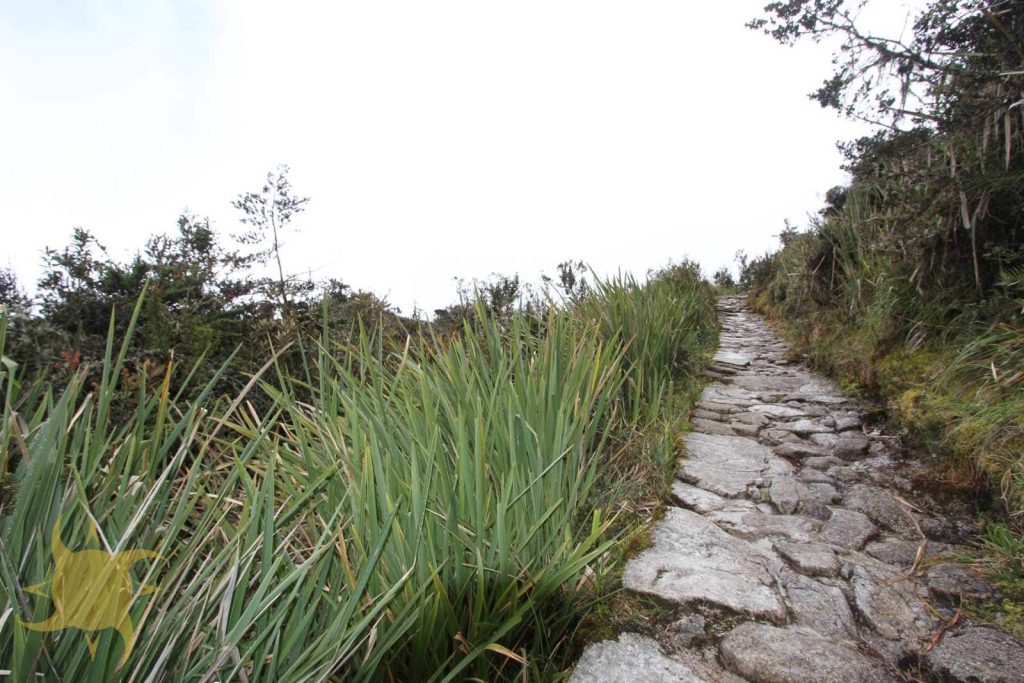
- World’s highest-elevation trees (grow to 5,000m)
- Red, peeling bark (insulation against cold)
- Provide critical habitat for high-altitude birds
- Threatened by firewood collection, agriculture
Ichu Grass (Stipa ichu):
- Dominant puna grassland vegetation
- Thatching material for Inca roofs
- Food source for grazing animals
- Fire-adapted (recovers quickly from burning)
Puya Raimondii: Not a plant of the Inca Trail; the Puya near Dead Woman’s Pass are other species, known locally as achupalla
- World’s largest bromeliad, endemic to the Andes of Peru and Bolivia
- Grows for 40 to 100 years, flowers once, then fruits and dies (Aquino et al. 2019)
- Grows in stands between 3,500 and 4,800 m; the sanctuary’s management plan lists it only as typical of the wider puna region
Day-by-Day Wildlife Expectations
Day 1 (Km 82 to Wayllabamba):
- Birds: Hummingbirds, sparrows, thrushes
- Mammals: Unlikely (human activity, daytime hiking)
- Plants: Cacti, agave, eucalyptus (agricultural zone)
- Best Opportunity: Morning bird activity near river
Day 2 (Dead Woman’s Pass):
- Birds: Mountain Caracaras, possible condor sightings
- Mammals: Vizcachas on the rocky slopes around the pass
- Plants: Ichu grass, hardy cushion plants
- Best Opportunity: Vizcachas basking on the rocks during the day
Day 3 (Cloud Forest Descent):
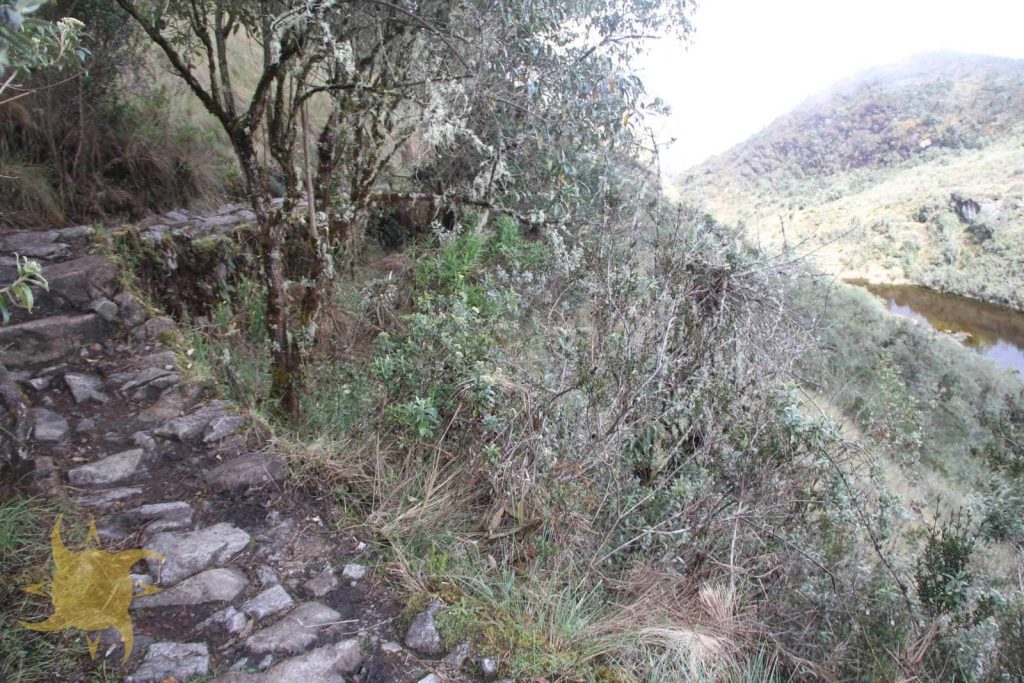
- Birds: Mixed flocks, tanagers, hummingbirds
- Mammals: Spectacled bear habitat (but rarely seen)
- Plants: orchids (179 species recorded around Wiñay Wayna alone), ferns, bromeliads, mosses
- Best Opportunity: Early morning bird activity, afternoon orchid photography
Day 4 (Descent to Machu Picchu):
- Birds: Torrent ducks, hummingbirds, forest species
- Mammals: Small rodents (rarely seen)
- Plants: Lush subtropical vegetation
- Best Opportunity: Pre-dawn wildlife before groups arrive
Spotting Tips: Best Times & Techniques
Equipment:
- Binoculars: 8×42 or 10×42 for birds/distant mammals
- Camera: Telephoto lens 200-400mm for wildlife
- Field Guide: “Birds of Peru” or regional guide
- Apps: Merlin Bird ID, iNaturalist for identification
Techniques:
- Move slowly: Sudden movements scare wildlife
- Stay quiet: Loud groups see less wildlife
- Scan systematically: Don’t just look at the trail. Check trees, rocks and sky.
- Early/Late: Dawn/dusk see most activity
- Follow sounds: Bird calls lead to sightings
Photography Ethics & Wildlife Safety
Ethical Guidelines:
- Distance: Minimum 15-20m from mammals, 5-10m from birds
- No baiting: Don’t use food to attract wildlife
- No flash: Disturbs nocturnal species, stresses animals
- Brief observation: Don’t follow/harass individuals
- Respect breeding: Extra distance during nesting seasons
Safety Considerations:
- Spectacled bears: Potentially dangerous, so never approach
- Andean foxes: Rabies risk, so never feed or touch them
- Vizcachas: Harmless but can bite if cornered
- Birds: No safety concerns beyond nest defense (rare)
Conservation Status & Threatened Species
Protected Area Context:
Machu Picchu Historical Sanctuary (32,592 hectares) provides legal protection:
- Hunting prohibited
- Habitat preservation
- Research/monitoring programs
- Limited human access (permits required)
Threatened Species on Trail:
Spectacled Bear (Vulnerable):
- Habitat loss primary threat
- About 5,000 breeding bears in Peru, from genetic studies (IBA)
- Sanctuary protects critical habitat
Andean Condor (Vulnerable):
- Poisoning, lead contamination threats
- Slow reproduction: a single egg every 2 to 3 years (Animal Diversity Web)
- Cultural reverence aids conservation
34 Threatened Orchid Species: 2 Critically Endangered, 29 Vulnerable and 3 Near Threatened on Peru’s national list (2015 management plan)
- Illegal collection for ornamental trade
- Climate change threatens microhabitats
- Sanctuary protection critical
Trekker Impact:
Responsible trekking helps conservation:
- Stay on trails (prevents habitat trampling)
- No plant/animal collection
- Support trail conservation efforts
- Report illegal activity to rangers
Conclusion
Knowing which elevation zone you’re in, when to look (early morning and late afternoon), and how to watch without disturbing anything turns the trek from an archaeological tour into a natural history experience.
Key Takeaways:
- Ecosystem diversity: Five zones (subtropical valley, montane forest, high-altitude puna, cloud forest, upper cloud forest) support distinct wildlife communities
- Top mammals: Vizcachas on the rocks around Dead Woman’s Pass; spectacled bears live in the sanctuary but are rarely seen
- Bird diversity: 444 species recorded in the sanctuary (SERNANP); binoculars and a birding guide make the biggest difference to how many you see
- Orchid hotspot: Day 3’s cloud forest, with 179 species recorded around Wiñay Wayna alone; most flowering November to March
- Best wildlife days: Day 2 (vizcachas, raptors at altitude) and Day 3 (cloud forest biodiversity)
- Photography ethics: Minimum 15-20m distance, no flash, no baiting, brief observation periods
- Conservation status: Protected area safeguards spectacled bears, Andean condors (both Vulnerable) and threatened orchids
If wildlife is a priority, book with us and ask for natural history-focused guiding and responsible wildlife viewing.
Related Articles
- Aguas Calientes Hotels: Where to Stay Near Machu Picchu
- Machu Picchu Photography Guide: Light, Viewpoints & Rules
- Inca Trail Packing List 2026: 27 Essentials Under 7kg
- Inca Trail Camping: Only 1 of 3 Campsites Has a Shower
- Inca Trail Archaeological Sites: 200 Visitors a Day, Not 3,000+
- Machu Picchu: The Complete Guide to Peru’s Lost City
- Inca Trail 4 Days: Classic Trek to Machu Picchu
- Inca Trail Itinerary Day by Day: 42km, Hour by Hour
About This Guide: Updated October 2026. Species counts and ranges on this page come from SERNANP, the sanctuary’s 2015 management plan, the Ministry of Culture’s 2022 biodiversity paper, BirdLife DataZone, the International Association for Bear Research and Management and Animal Diversity Web. For conservation information, consult SERNANP (Peru National Protected Areas Service).